
Tourists curious about Sumo have a few ways to get closer to the sport when they visit Tokyo.
They can observe a morning practice at an active sumo stable, watching rikishi hone their craft through intense training sessions. Or, if their timing is right, they can score tickets to a grand tournament, held just three times a year, in January, May, and September.
Both are unforgettable, but if you’re looking for something even more immersive, something that goes beyond being a mere spectator, then this “Enter the Sanctuary” Sumo experience may be for you. Not only will it teach you about the sport of Sumo, but it’ll allow you to square off with rishiki in the sacred dohyo.
Hakkeyoi!
SUMO IN TOKYO
A selection of Sumo experiences to make your trip to Tokyo even more memorable.
Save This on Pinterest!
No time now to read this guide on Sumo in Tokyo? Click on the save button and pin it for later!

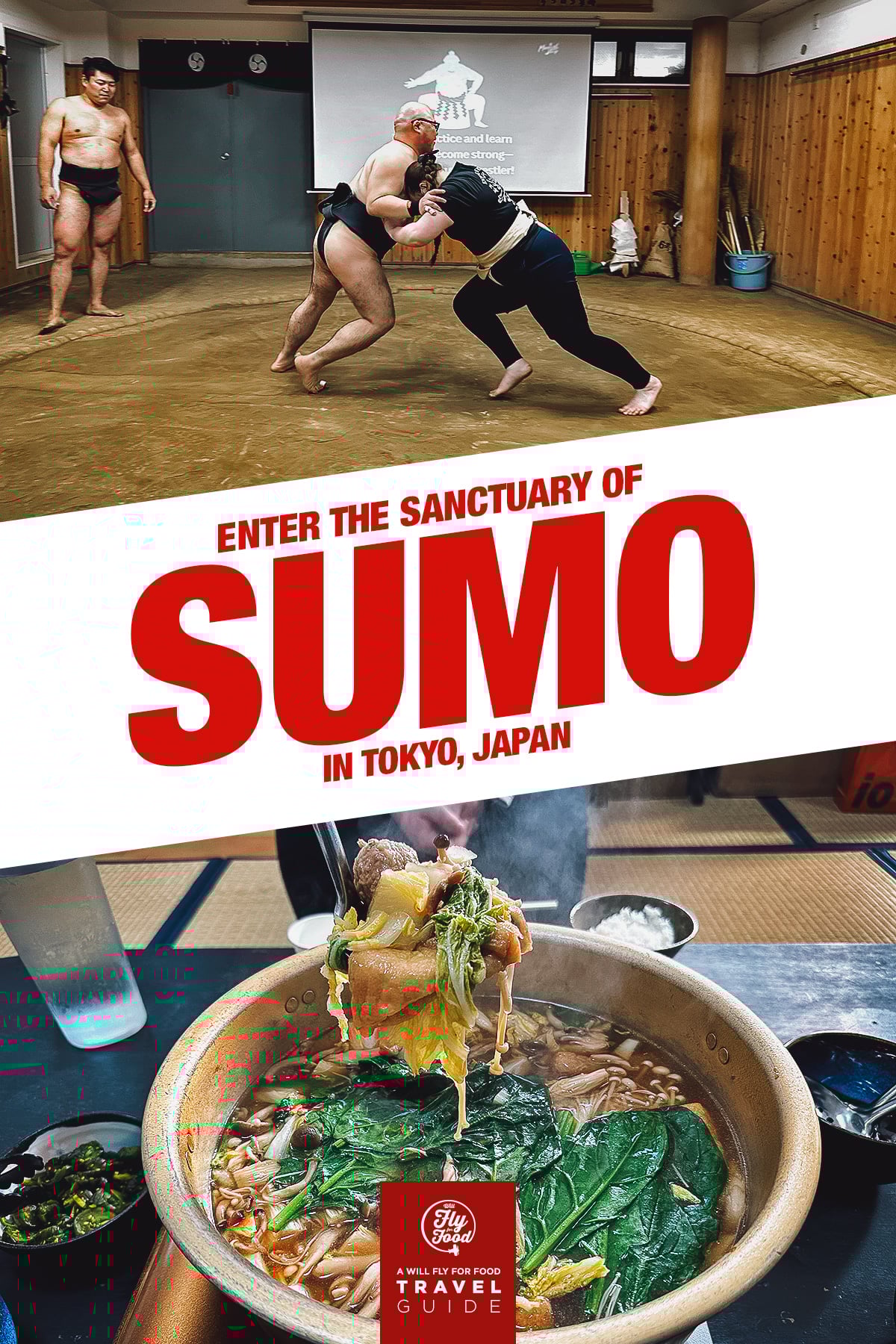
WHAT CAN I EXPECT FROM THIS TOUR?
This “Enter the Sanctuary” tour from Magical Trip is an immersive deep dive into the world of Sumo in Tokyo. It’s quite different from tours that only allow you to quietly observe morning training sessions at active sumo stables.
The tour takes place at a former Sumo stable in Kawasaki, where you’ll be given a brief lesson on the history and art of Sumo, before witnessing a demonstration by retired rishiki. Willing participants will then have the unique opportunity of stepping into the dohyo and squaring off with the rishiki.
After a few playful matches, guests will sit down with the rishiki and enjoy a well-deserved lunch of chanko nabe – a traditional hot pot dish – prepared by the wrestlers themselves. Souvenirs will be handed out before the conclusion of the tour, which lasts for around four hours.
You can visit the Magical Trip website for more information and to book this tour.
ENTER THE SANCTUARY: A HANDS-ON SUMO EXPERIENCE IN TOKYO
Unlike traditional Sumo practices that typically start at 7 am, this experience begins a little later, at a more tourist-friendly 9:30 am. Participants will meet their guide at Shin-Kawasaki Station, which is roughly 30 minutes south of Shinjuku Station.
After meeting up with your guide, you’ll be taken by taxi to this inactive Sumo stable in Saiwai Ward, Kawasaki. The moment you enter, you’ll see the dohyo (Sumo ring) and a platform with seats for spectators. Entering the stable and seeing the ring was quite exciting, even though it’s no longer active.
I asked our guide why this stable was no longer being used, and according to her, it was because the owner and trainer had retired from the sport.
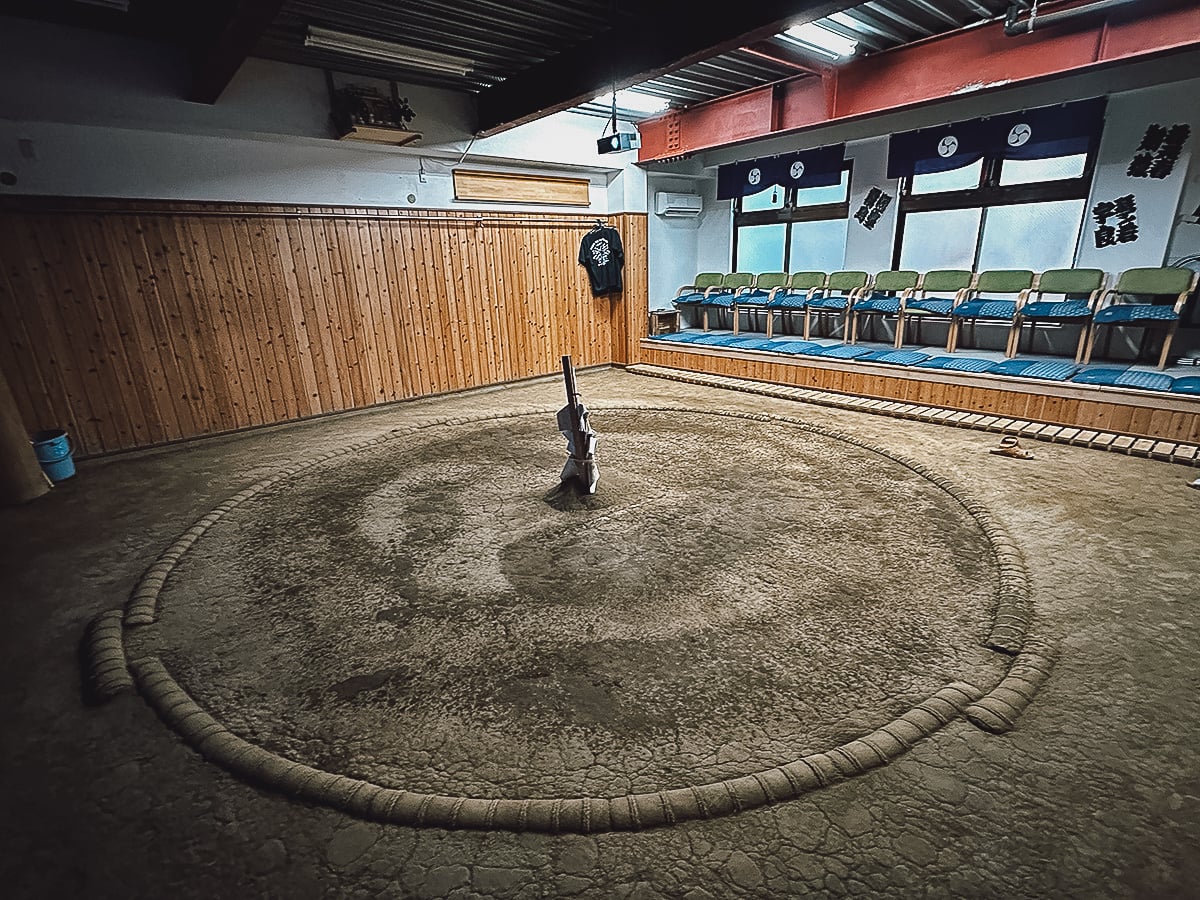
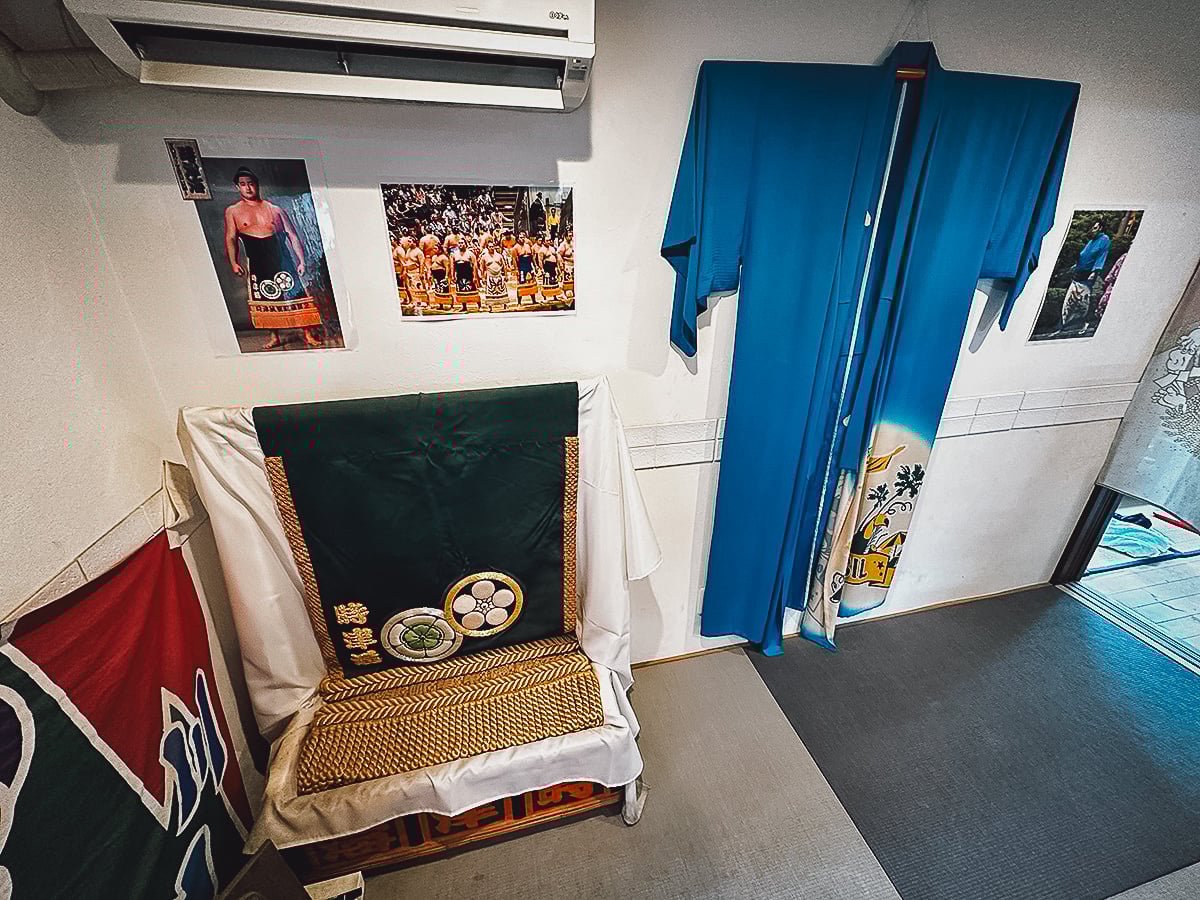
We had some time, so our guide briefly showed us around. Hanging in this corner of the room are a few pictures and former belongings of Kaisei Ichiro, a Japanese-Brazilian Sumo wrestler originally from Sao Paulo, Brazil. He made his debut in 2006 and enjoyed some success in the sport – finishing as runner-up in two tournaments – before retiring from Sumo in 2022. You can see a picture of him wearing that blue kimono on the far right.
Draped over a stand on the left is the green kesho-mawashi he once wore. A kesho-mawashi is an ornate, heavily embroidered apron that Sumo wrestlers wear during the ring-entering ceremony at tournaments. They feature elaborate designs and often bear the company logos of sponsors.
According to our guide, kesho-mawashi can cost anywhere from tens of thousands of dollars to over a million, with some of the priciest being decorated with precious stones like diamonds.
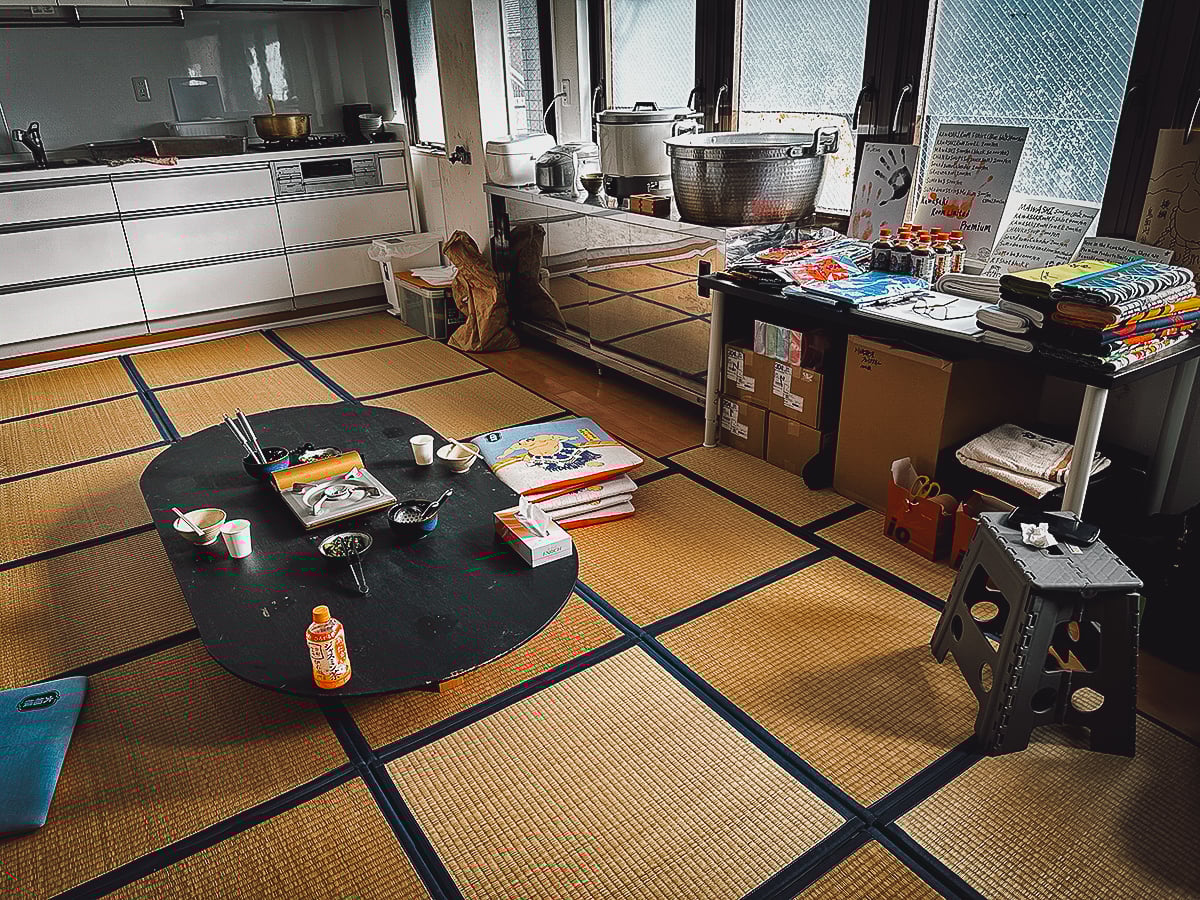
This is the kitchen and dining area where Sumo wrestlers cooked and enjoyed their meals. They would engage in intense practice sessions in the mornings without breakfast, before sitting down to a heavy lunch of chanko nabe and rice.
Our guide explained how they would eat as much as they could as quickly as possible, so as not to give their brains enough time to realize they were full. They would then take an immediate nap to help them gain more bulk.
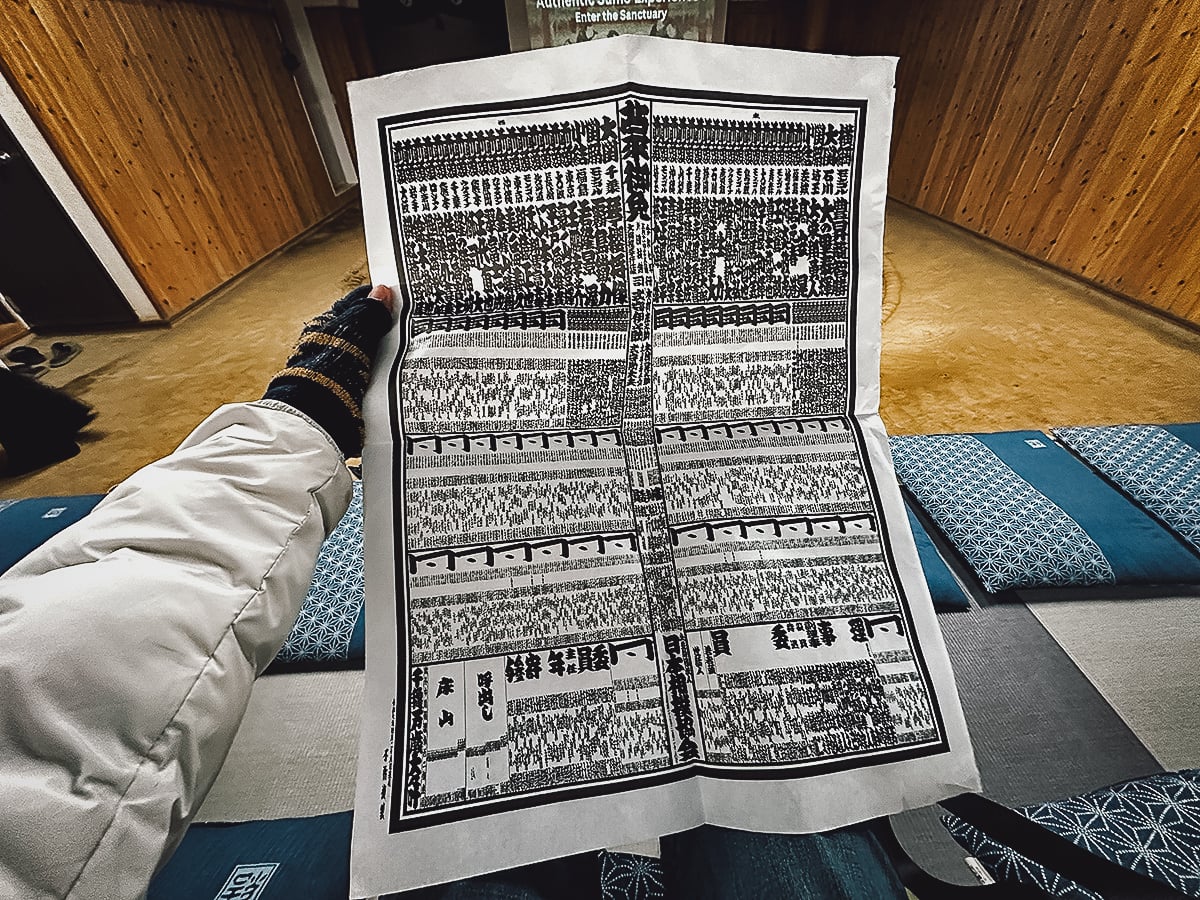
Before giving us a lesson on the history and basics of Sumo, our guide gave each of us a banzuke to take home.
A banzuke is the official ranking sheet of a Sumo tournament. Meticulously hand-painted in a calligraphic style, it contains the names, division, and rank of all participating rishiki, starting from the highest-ranked at the top all the way to the lowest at the bottom.
To the Westerner, it may not look like much at first glance, but it takes a remarkable amount of concentration and patience to handwrite these ranking sheets. Written only by high-ranking gyoji (referees), any mistake means having to start the entire process from the beginning.
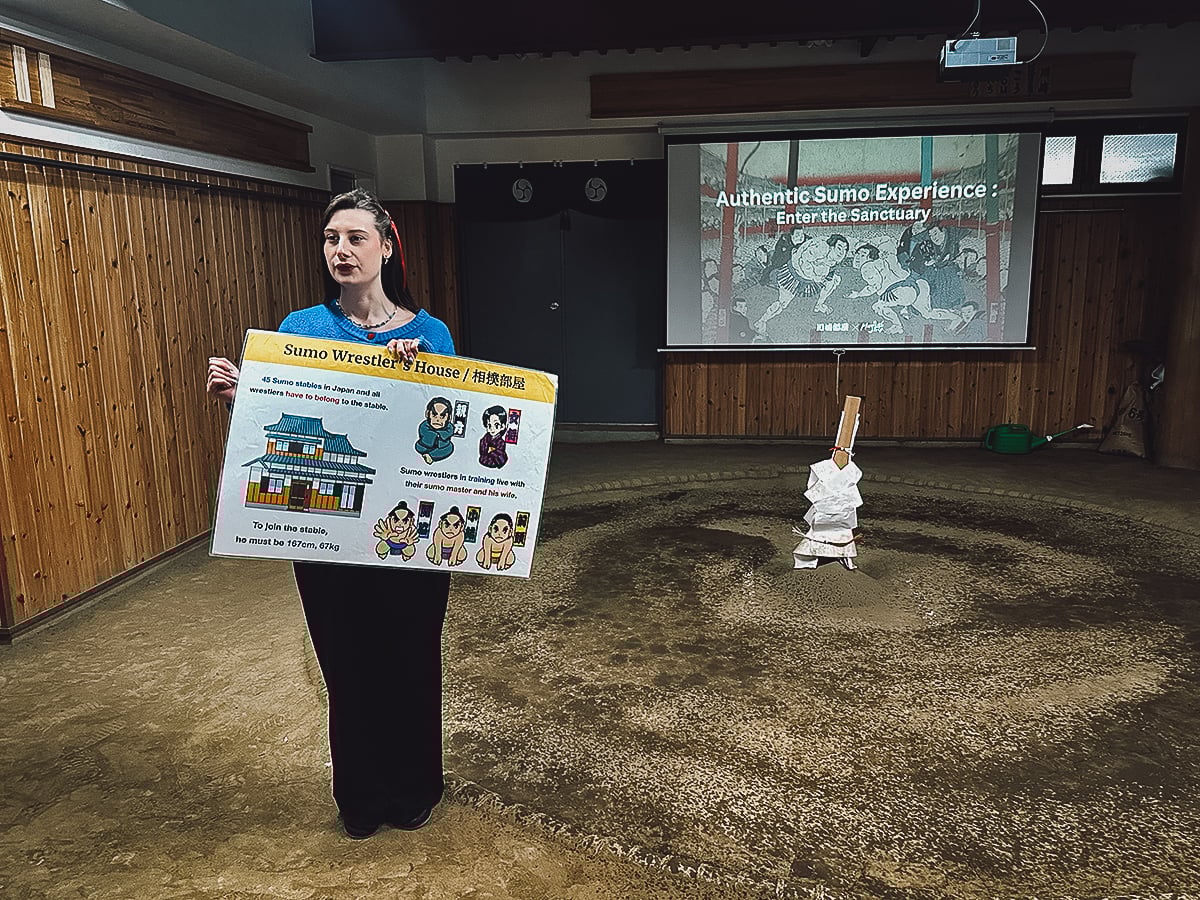
Meet Marie, our Sumo-obsessed guide from Germany. Expecting a local Japanese guide, I was surprised to see her holding up the Magical Trip sign at the metro station, but her knowledge and passion for Sumo were second to none.
Originally from Germany and formerly based in Vienna, she admitted to us that she moved to Tokyo for one reason and one reason only – her obsession with Sumo. And it clearly shows. I had three Sumo-related experiences on this trip, and she was far and away the most knowledgeable guide.
While waiting for the rishiki to arrive, Marie gave us a fascinating presentation on Sumo. Beyond techniques and tournament facts, we learned about the sport’s history and its spiritual roots. There’s far more to Sumo than just two big guys pushing each other out of a ring.
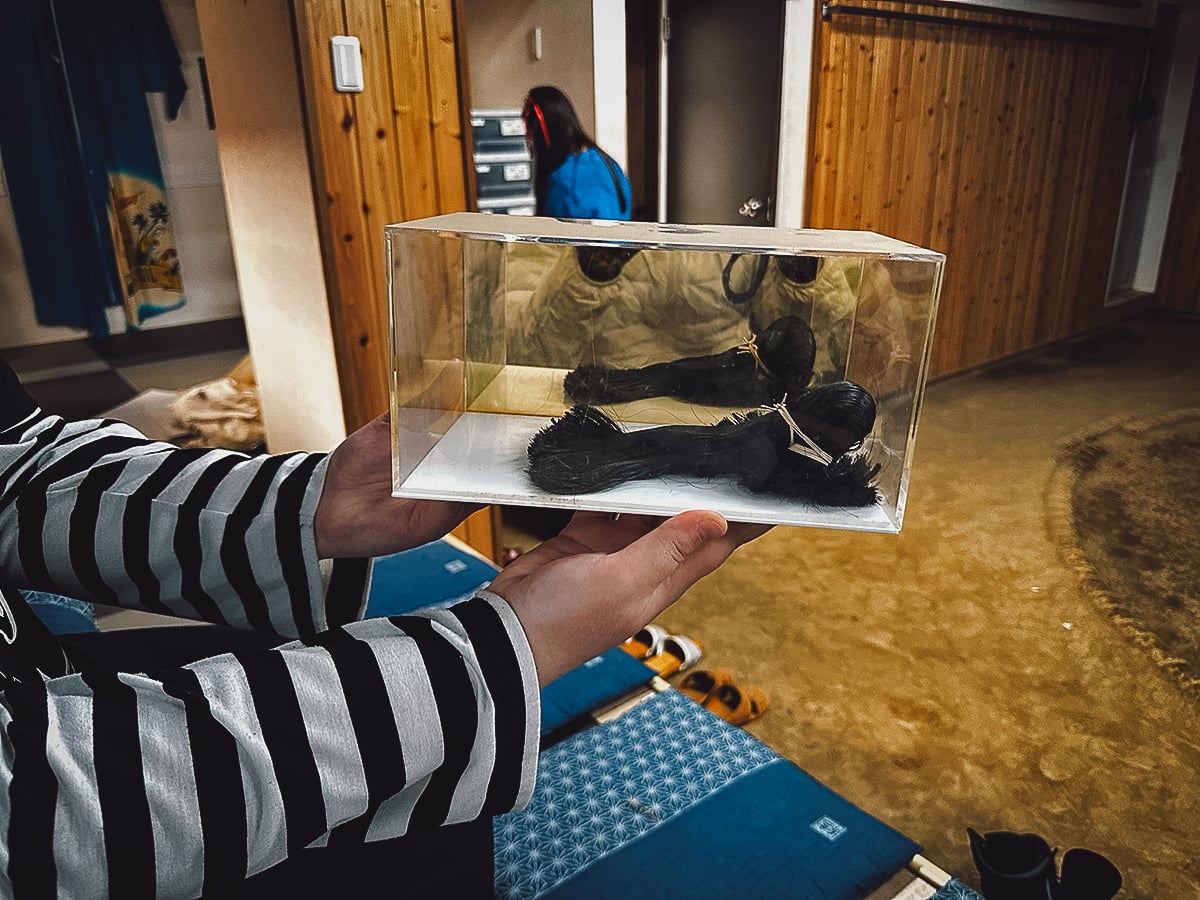
Before ending her slide show, Marie showed us a former Sumo wrestler’s top knot encased in fiberglass. When a rishiki retires, his top knot is cut off in a ceremonial event known as danpatsu-shiki.
The topknot is a hallmark of a wrestler’s rank and status, so cutting it off is a symbolic and highly emotional event that signifies the end of his career.
INSIDE THE DOHYO: SUMO FROM UP CLOSE
After finishing her presentation on Sumo, Marie became giddy like a schoolgirl while waiting for the stable’s main doors to open. She said that she never knows which rishiki will walk through those doors, so it’s always an exciting moment for her.
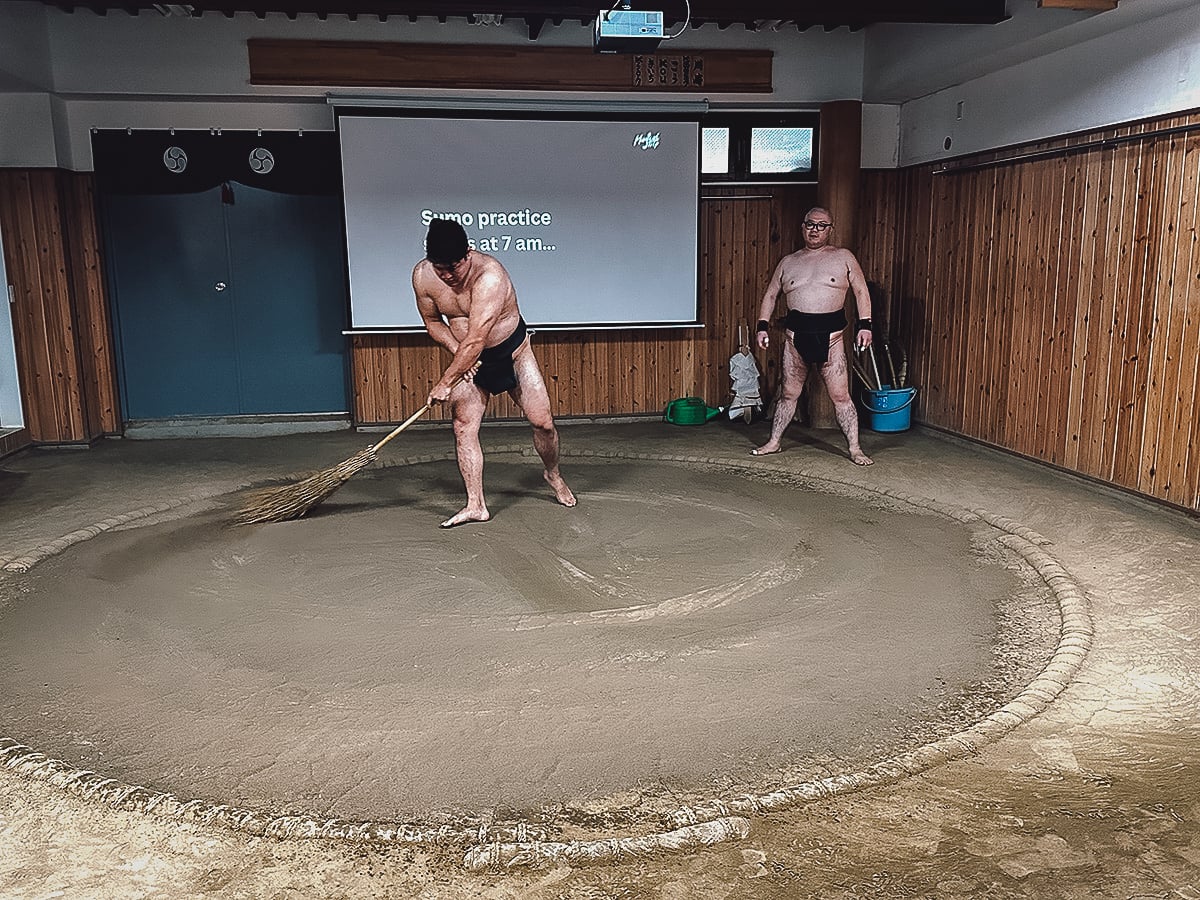
Based on the photographs on the Magical Trip website, two retired Sumo wrestlers join every tour. They start by sweeping the dohyo, not just to clean and prepare it for practice, but to honor it as a sacred space.
As previously mentioned, Sumo practices typically start at 7 am.
Shiko is one of the most common exercises you see in Sumo. It’s the movement where a wrestler lifts one leg high to the side, then brings it down forcefully, before repeating it on the other side. You’ll often see rikishi doing this over and over during training.
Aside from building strength, balance, and flexibility, it was interesting to learn that shiko also has a ritualistic purpose. The stomping motion is meant to drive away evil spirits and purify the ring. This harkens back to its Shinto roots, where matches were held as part of ceremonies to pray for (and give thanks to) a bountiful harvest.
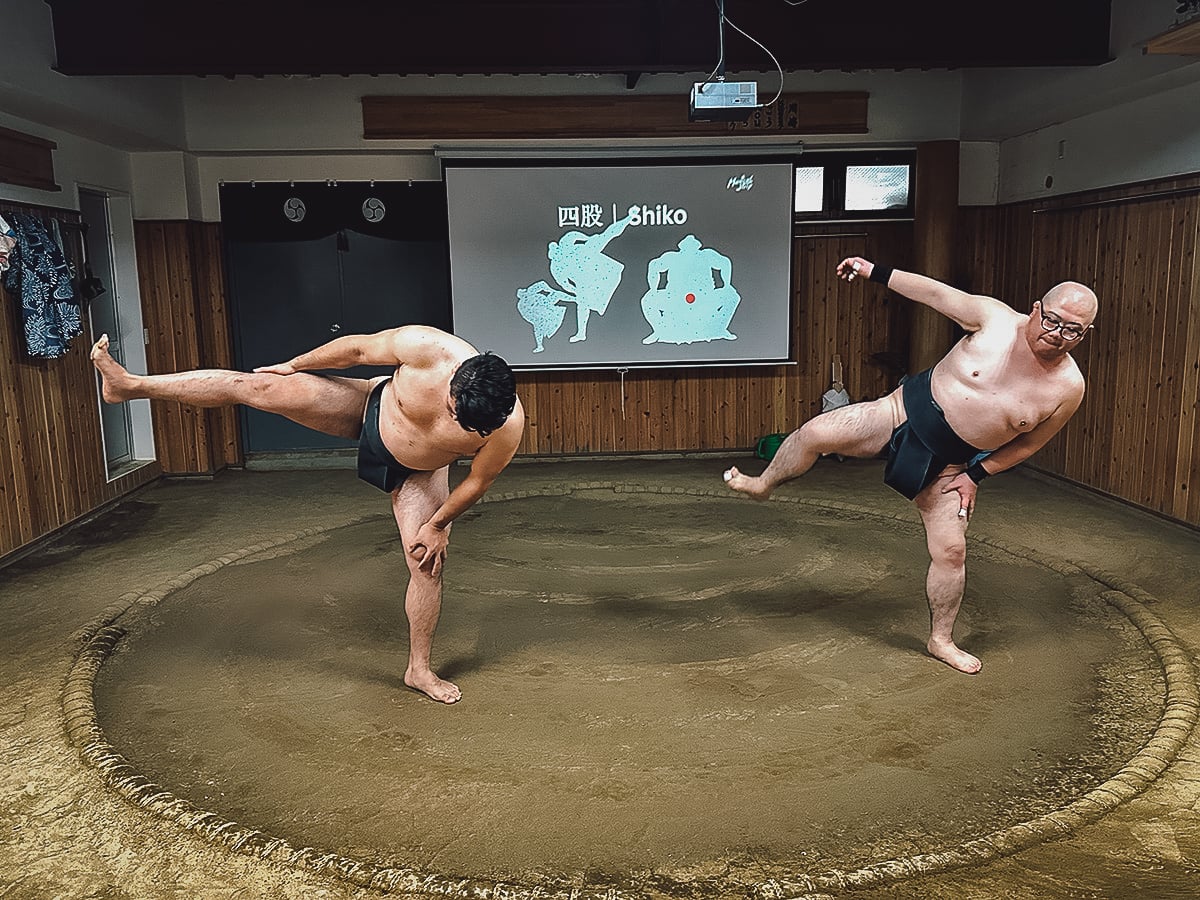
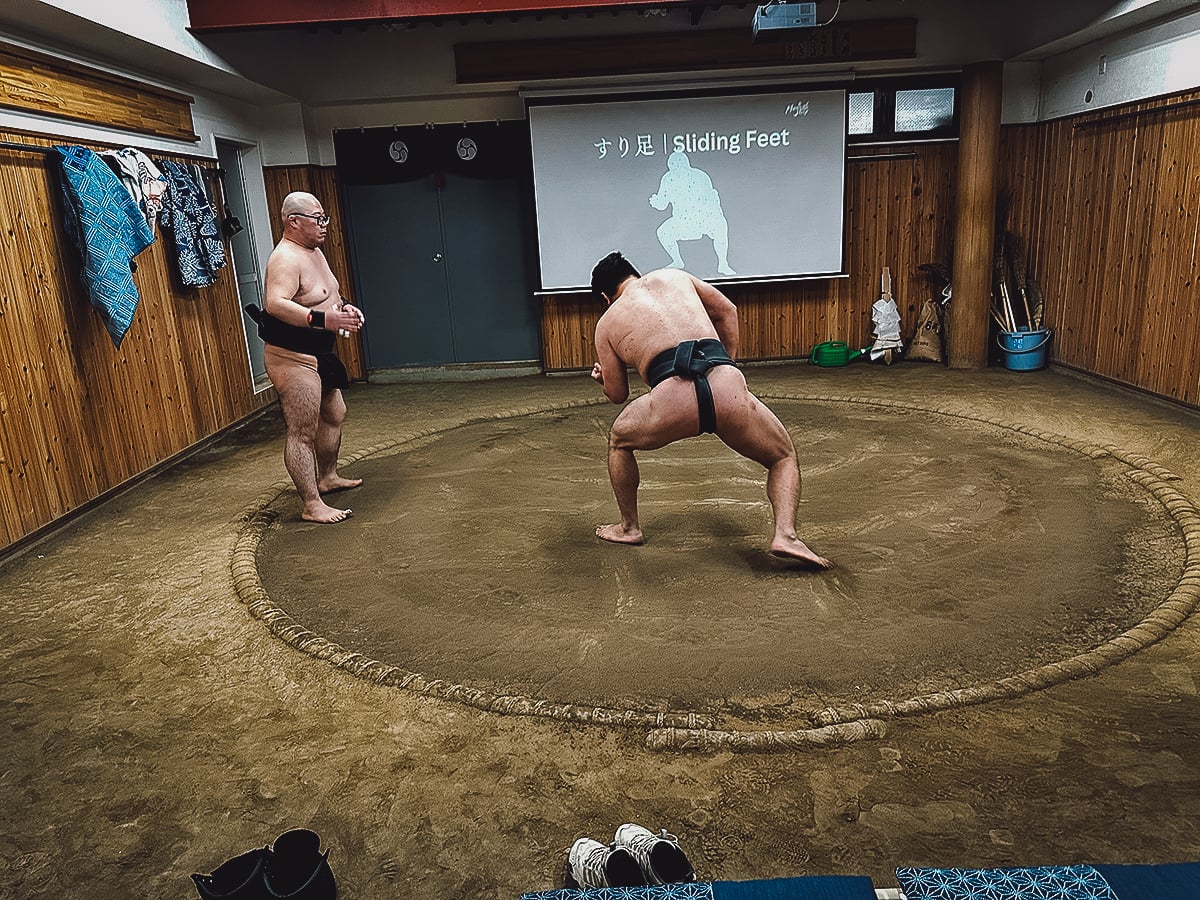
Aside from shiko, the rishiki also demonstrated a few techniques, like sliding the feet without lifting them too high off the ground. This was key for maintaining balance.
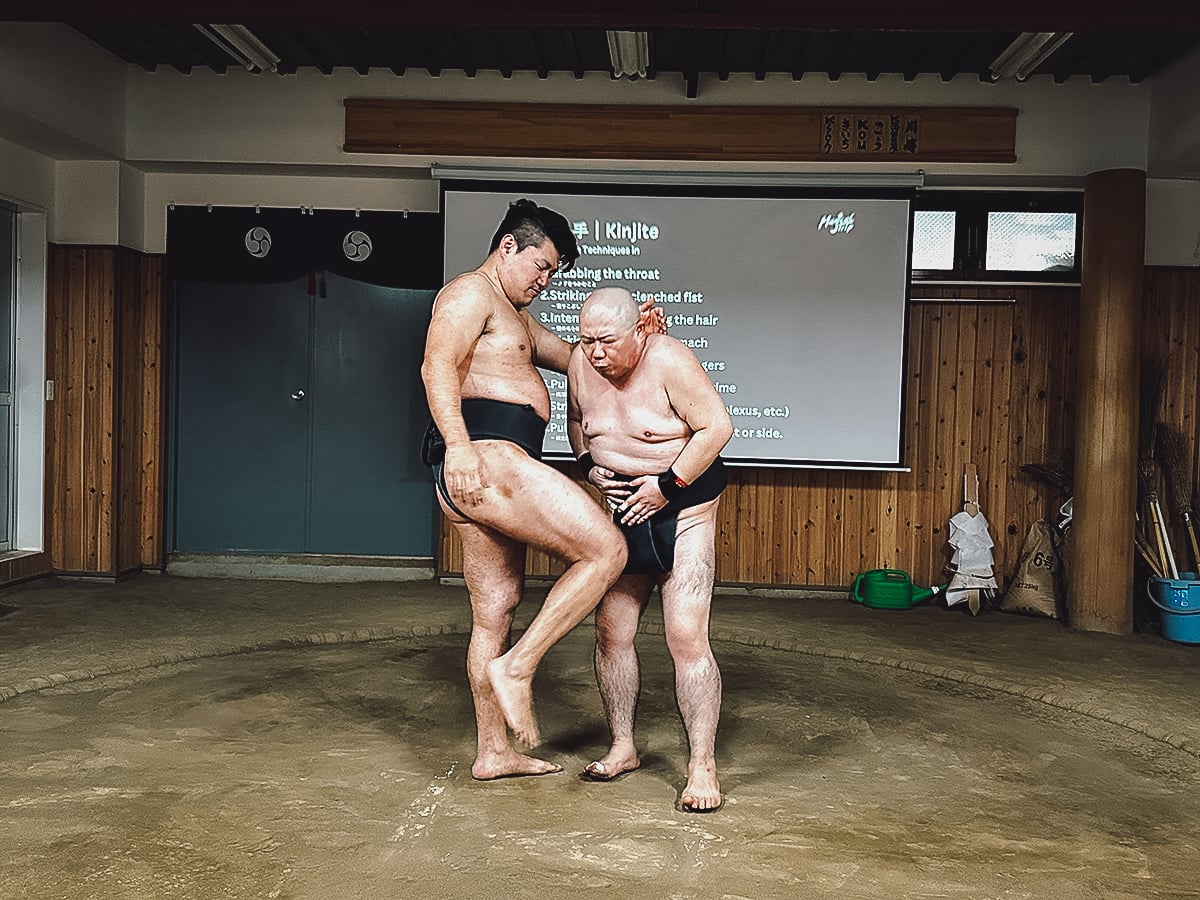
They also demonstrated kinjite, or illegal maneuvers. Moves like kneeing the groin or eye gouging were obvious, but it was interesting to learn that a wrestler’s mawashi (fabric belt) coming undone during a bout – whether intentional or not – was cause for immediate disqualification.
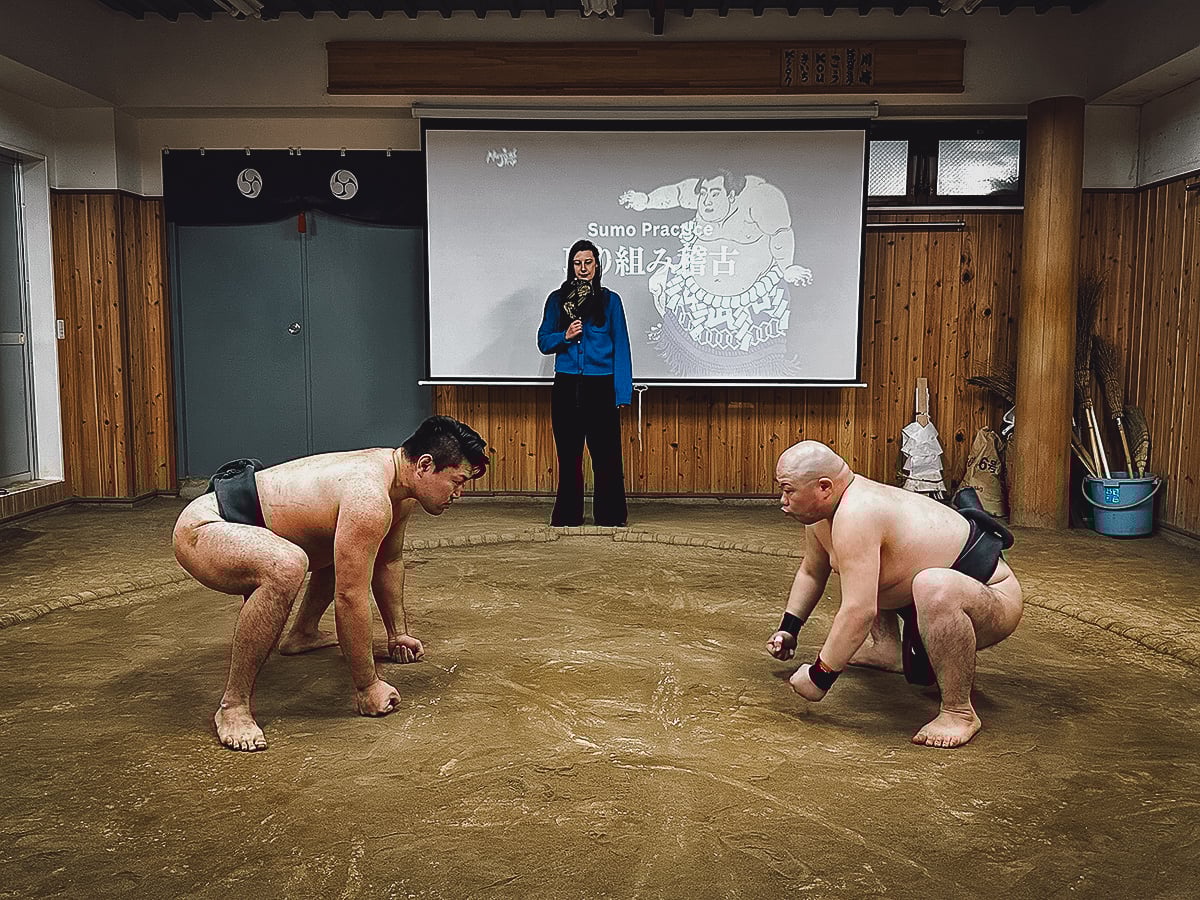
After the demonstrations were over, it was time for a few friendly matches! They went hard, but not all out, just enough to help you appreciate just how intense these practice sessions can get.
WHEN TOURISTS BECOME WRESTLERS
Now that we had the basics down, it was time for us to step up and enter the dohyo. This part of the tour is entirely optional – willing participants are required to sign a waiver – but it’s what makes this experience truly unique. When will you ever get the opportunity to wrestle with actual rikishi ever again?
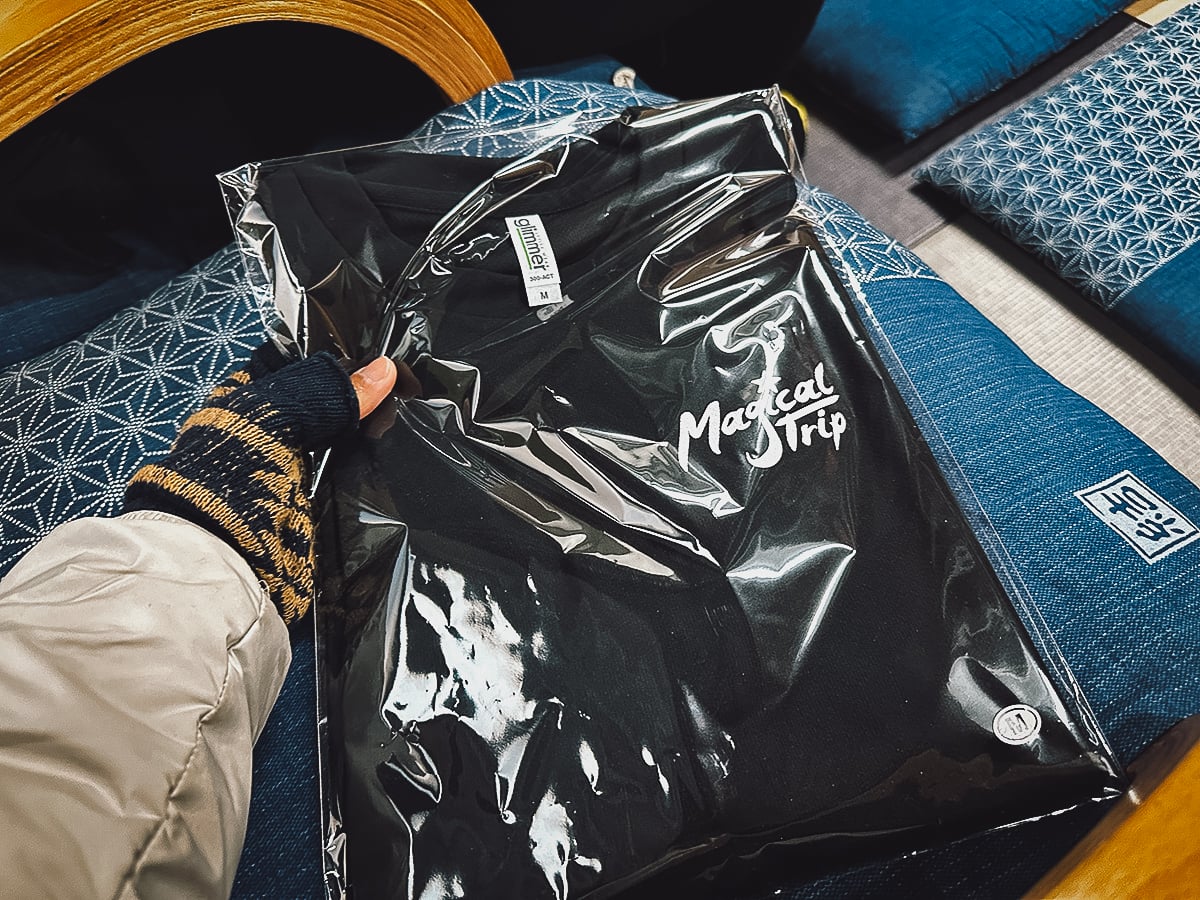
Participants are asked to change into shorts and these Magical Trip shirts, which you’re welcome to bring home as a souvenir. The wrestlers will also wrap you in a mawashi and prepare you for battle, just like a real rikishi.
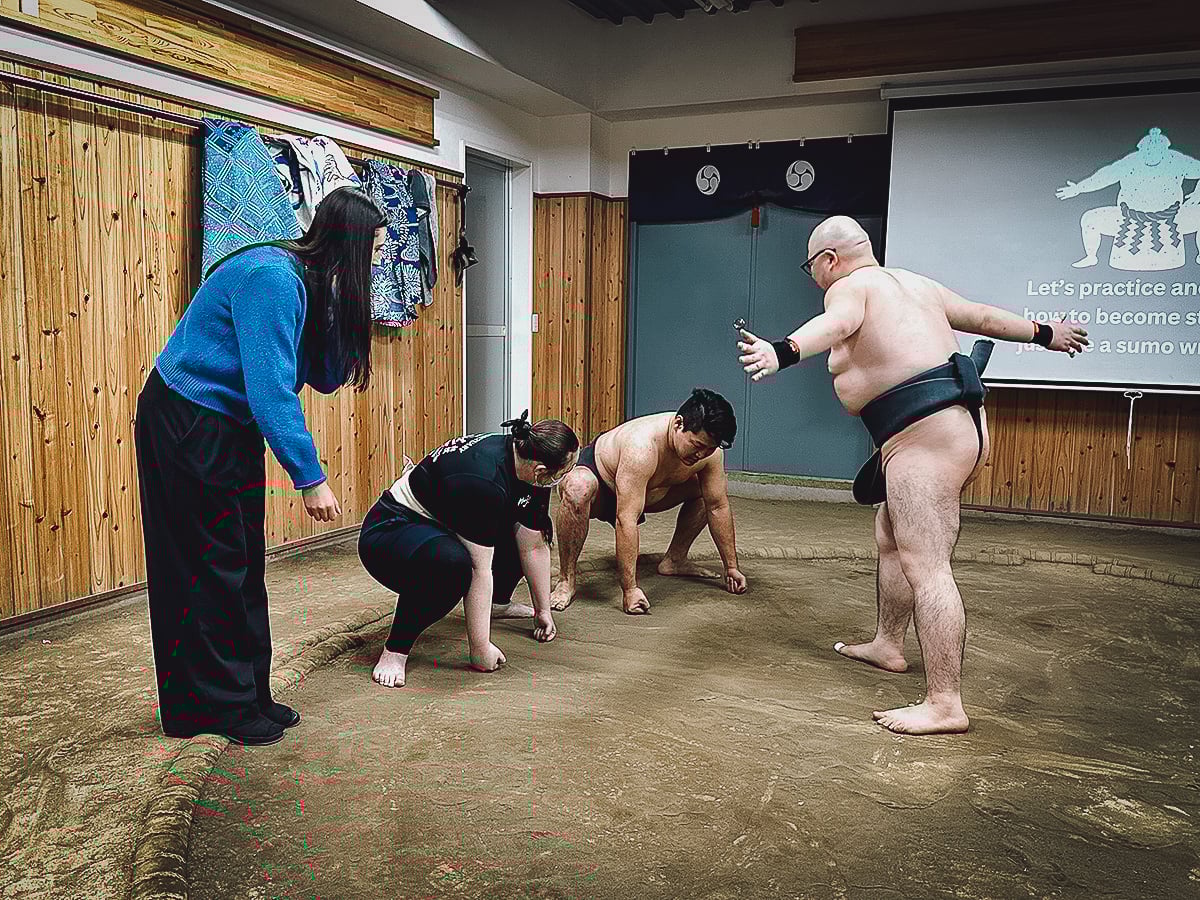
Before squaring off with a rikishi, participants will practice some of the moves first – like shiko, sliding the feet, and getting into the crouched starting position with both fists on the ground.
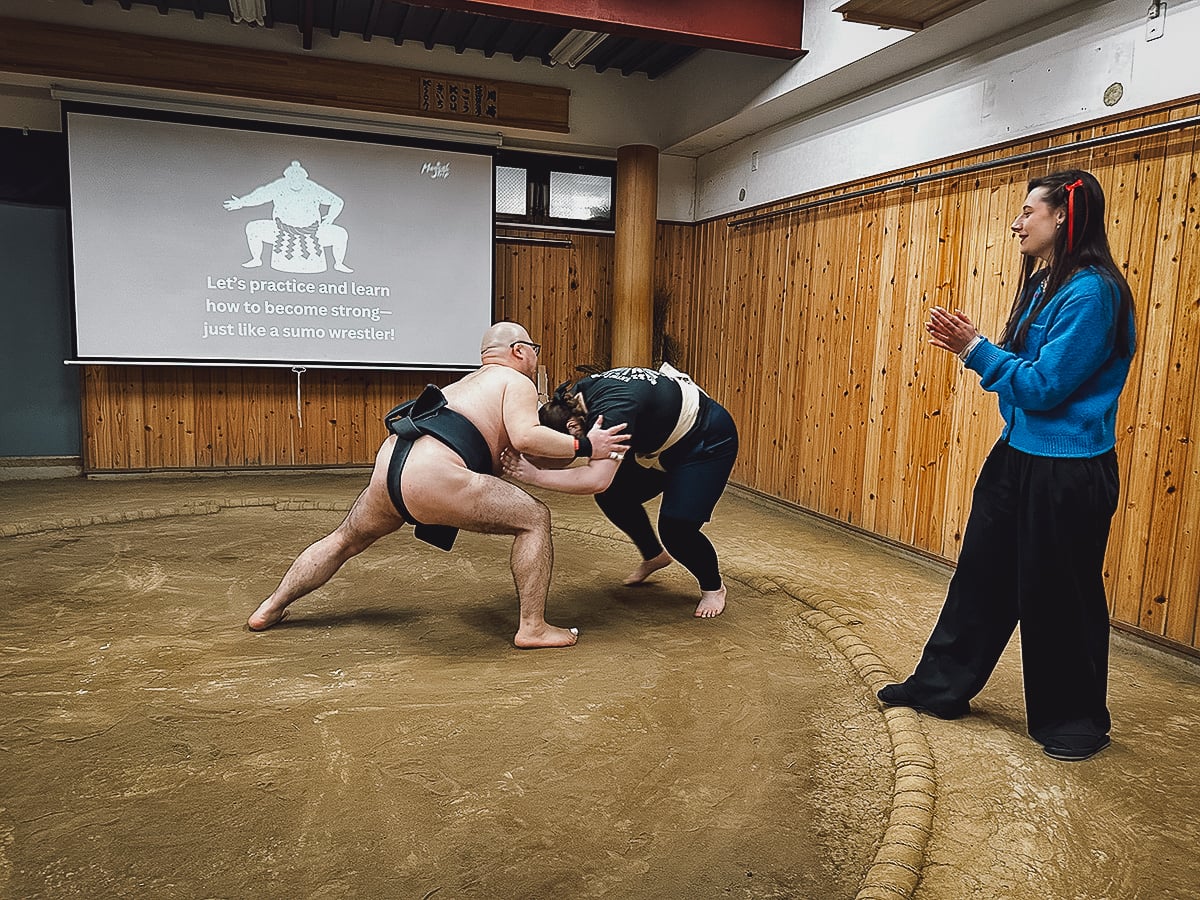
And before you know it, you’re ready for your match. Hakkeyoi!
Hakkeyoi is a call shouted by the referee during a match, to encourage wrestlers to keep pushing and stay active. It roughly translates to “put some spirit into it!” or “keep going!”
Marie served as the referee, and you can see just how much she gets into it. The woman really does love Sumo!
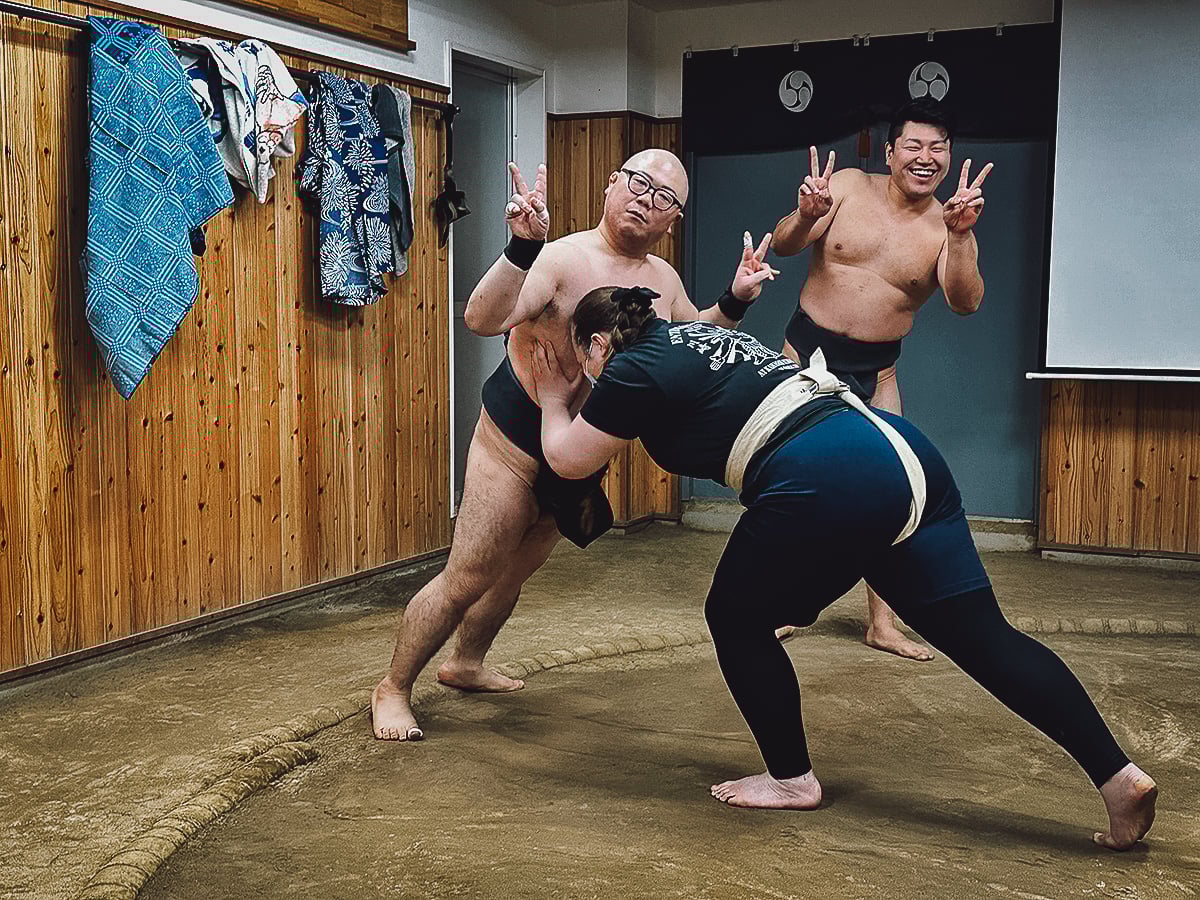
These wrestlers weren’t even as big as some of the top competitors in the division, but they were both incredibly strong. They make you feel like you have a chance, but in reality, the average person stands no chance at all!
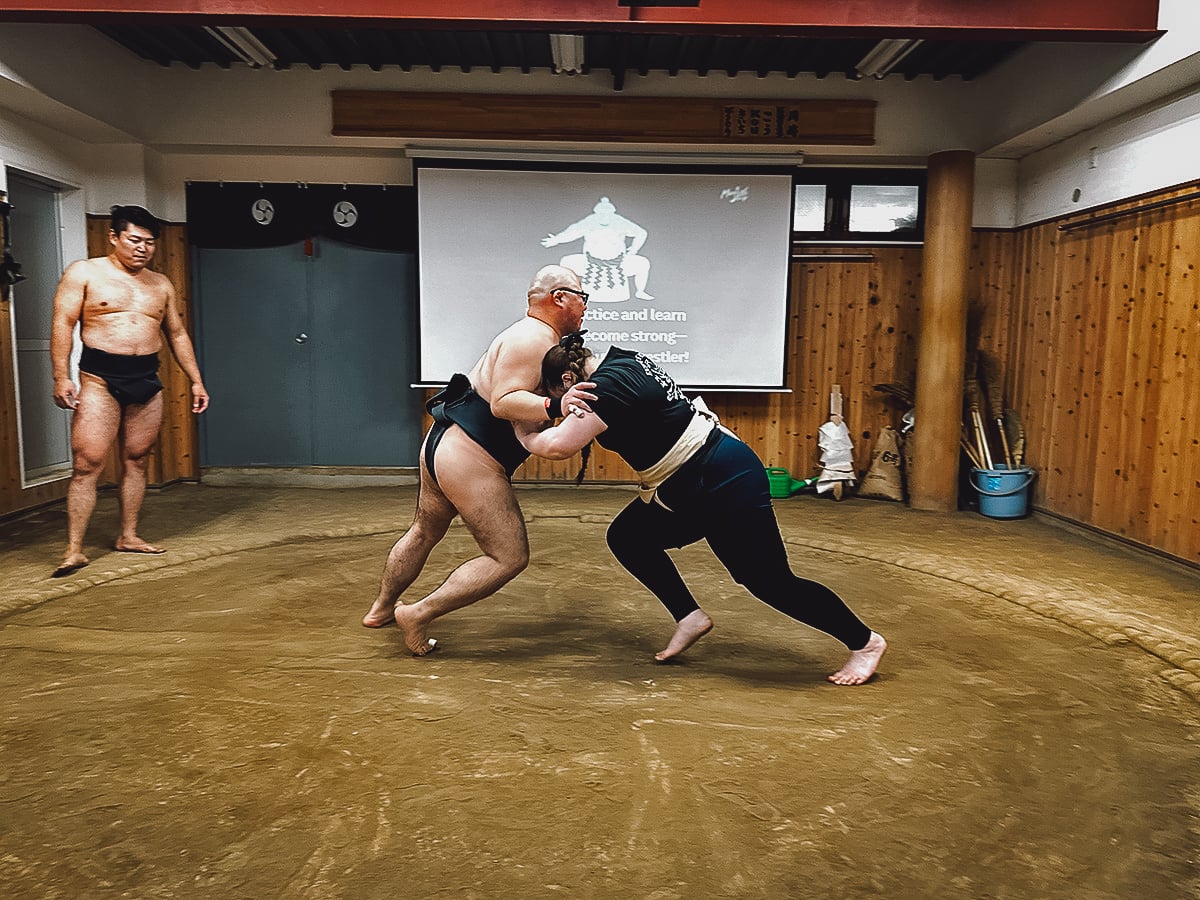
Here are the wrestlers hamming it up for the camera before ending the bout. In my match, the rikishi picked me up by the mawashi and flung me around like a helicopter before setting me down gently outside the ring. Ha!
CHANKO NABE: EATING LIKE A RIKISHI
Pushing against an immovable force like a Sumo wrestler burns a lot of calories, so I left the dohyo extremely hungry. We washed the sand and clay off our feet and proceeded to the dining room for lunch, where we were met with this giant cauldron of chanko nabe prepared by the wrestlers themselves.
Chanko nabe is a traditional Japanese hot pot dish famously eaten by Sumo wrestlers to gain bulk. Nutritious and calorie-dense, it’s made with some type of protein – usually chicken, fish, or meat – simmered in a flavorful broth with vegetables, tofu, mushrooms, and noodles.
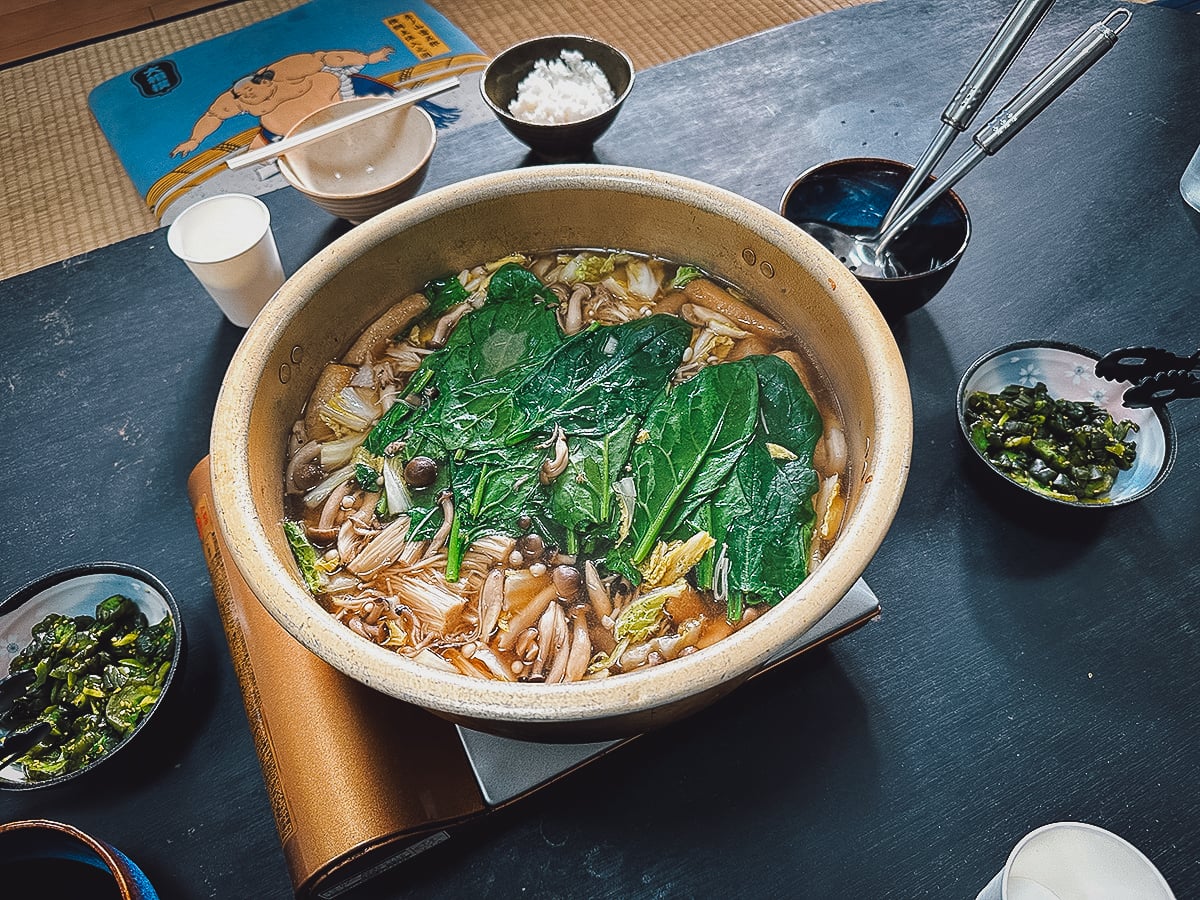
How delicious does this look? Chanko nabe may be calorie-dense, but it can be a healthy meal when consumed in regular quantities. This one was made with chunks of chicken and chicken meatballs as its primary sources of protein.
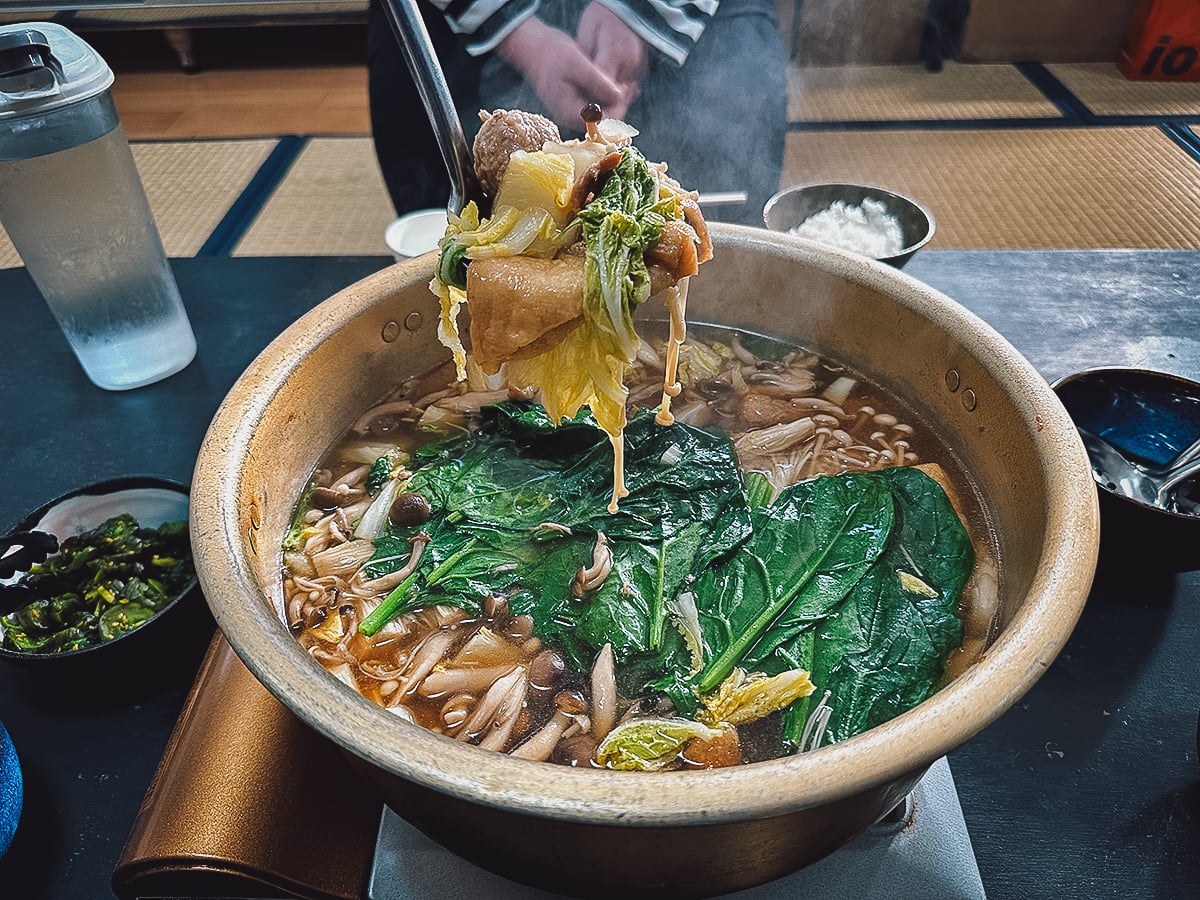
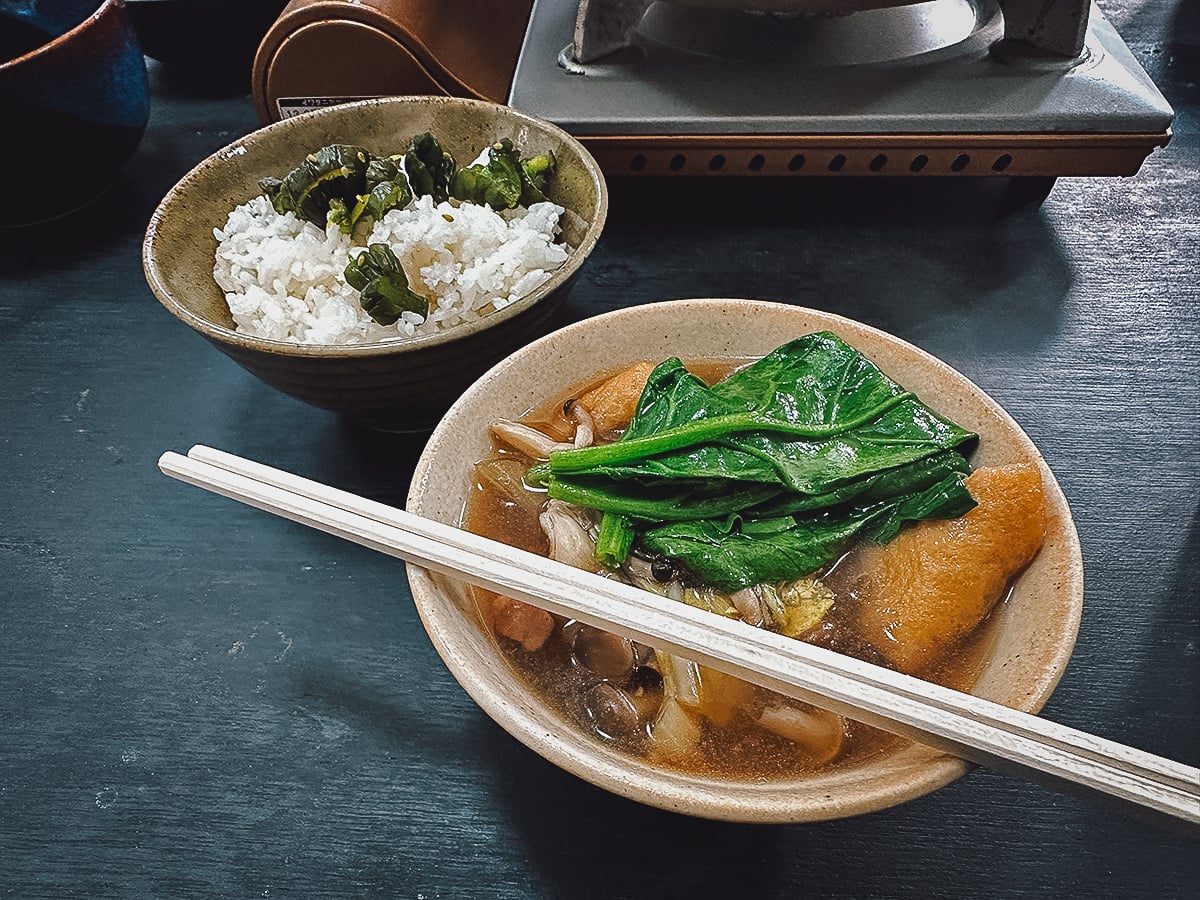
Marie and the Sumo wrestlers sat down with us as we tucked into the chanko nabe. Served with steamed white rice and pickles, we were free to eat as much as we wanted. It was absolutely delicious.
According to Marie, some rikishi open restaurants after retiring, thanks to the cooking skills they acquire during their time in Sumo stables. This meal was seriously tasty and something I’d happily pay money for at a restaurant. Oishi!
A SOUVENIR YOU CAN’T BUY
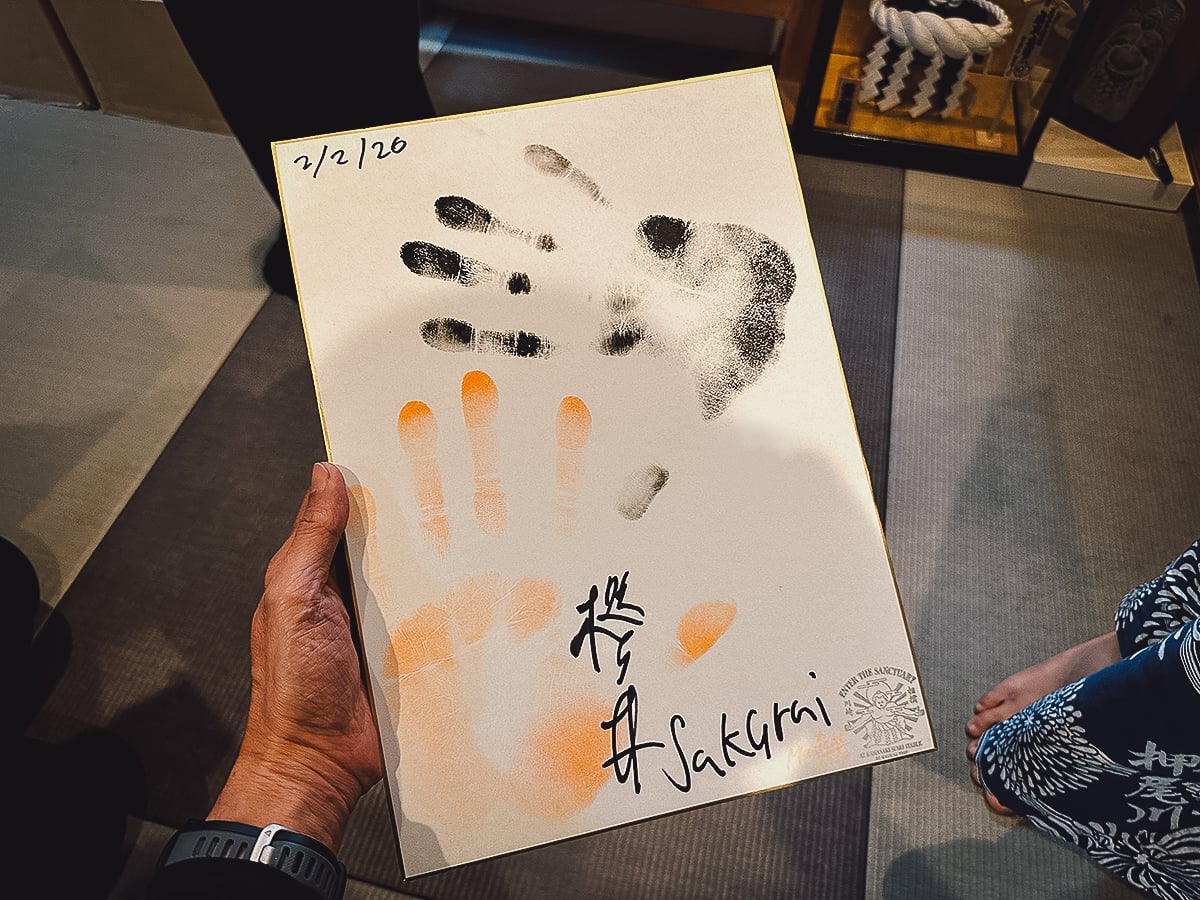
After our delicious lunch, we had our handprints taken with the rikishi for a one-of-a-kind souvenir.
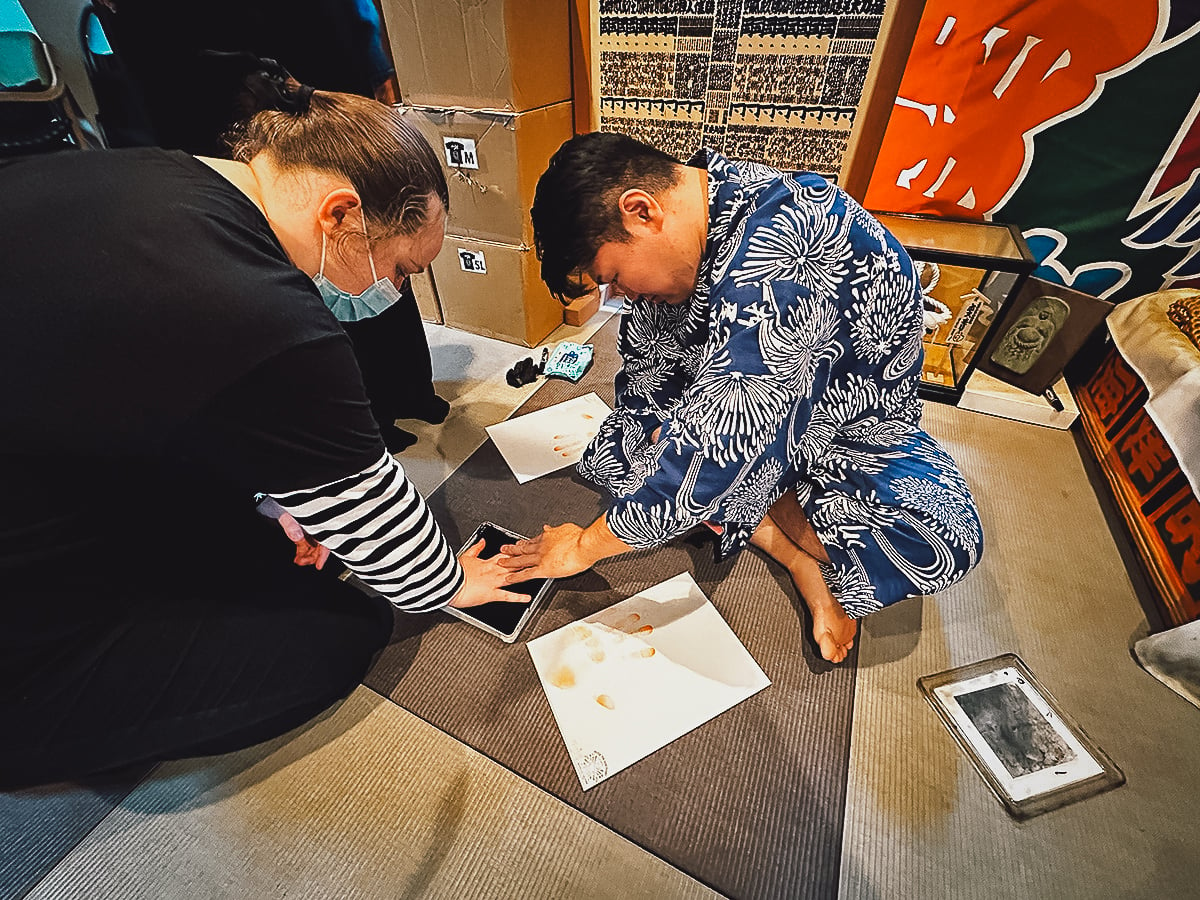
You can clearly see how much bigger his hand was compared to mine. Arigato gozaimasu Sakurai-san!
After one last photo outside the stable, we said our goodbyes and took a taxi with Marie back to Shin-Kawasaki Station. It was a fun and enlightening day – certainly one of the most unique experiences I’ve had in Japan so far.
FINAL THOUGHTS ON THIS SUMO EXPERIENCE IN TOKYO
It was fun interacting with the rikishi so closely, but it’s important to understand that this Sumo experience was designed for tourists. It gives visitors the unique opportunity of stepping into the dohyo and experiencing what it’s like to be a Sumo wrestler. The venue is a real Sumo stable, and the rikishi are retired Sumo wrestlers, lending the experience a genuine sense of authenticity.
If you’d prefer to see active Sumo wrestlers in training, then you may be interested in one of Magical Trip’s morning practice tours instead. They have several options to choose from: Option A | Option B | Option C.
I joined one of those morning sessions too, and it was a much more intense experience seeing active rikishi engaged in real training. Silence is enforced, so the atmosphere is more rigid, but the intensity of the sessions was something to behold.
Personally, I enjoyed both experiences, but if I had time for just one, then I might give the slight nod to the morning practice tour. This “Enter the Sanctuary” experience was more fun, but the intensity of the morning training sessions was exactly what I was looking for.
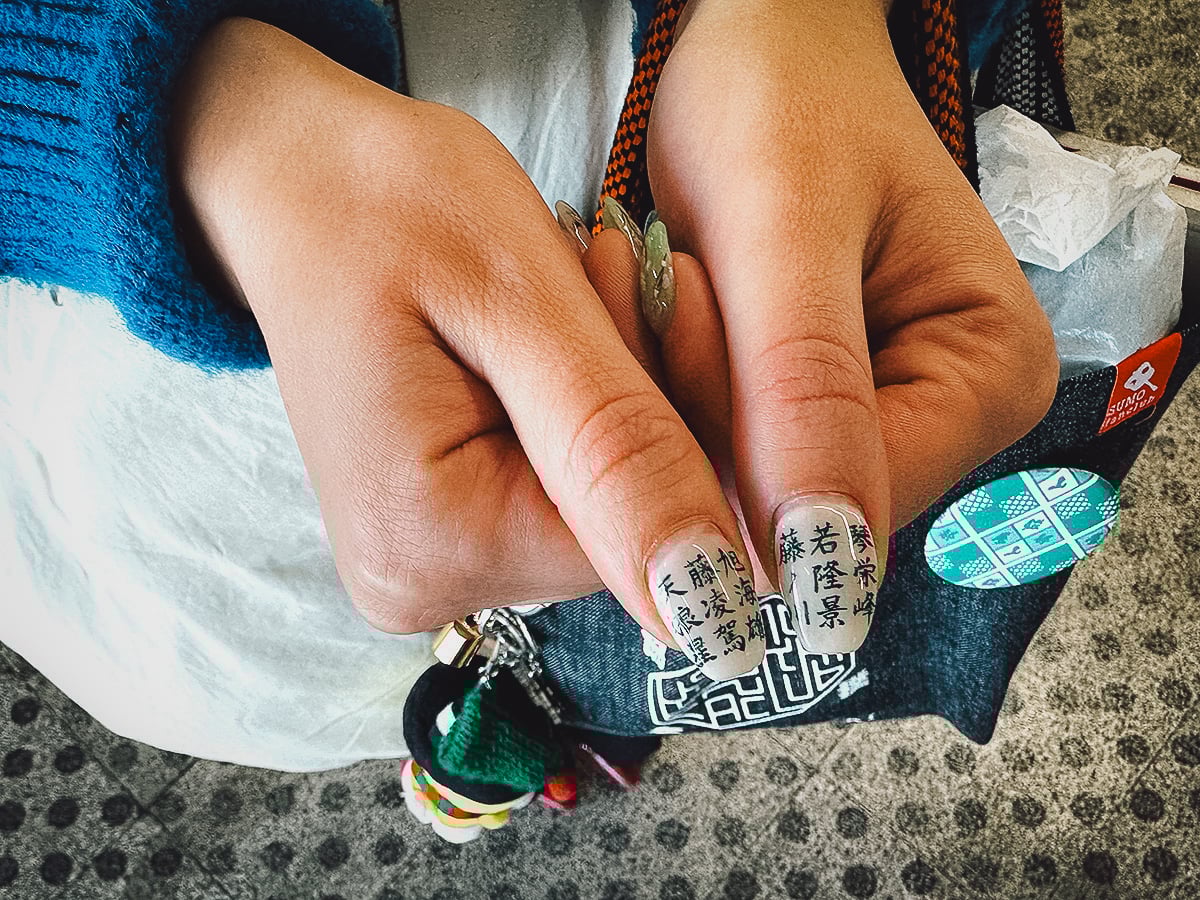
In any case, before I let you go, I wanted to show you this picture of Marie’s fingernails. Decorated with kanji, can you guess what they say? They’re the names of her favorite Sumo wrestlers. She really wasn’t kidding when she said she was obsessed with Sumo!
If you’re lucky, she may be the guide on your tour too.
Disclosure
This article on Sumo wrestling in Tokyo was written in partnership with Magical Trip. As always, all words, thoughts, and opinions expressed in this article are mine and mine alone.
Some of the links in this article are affiliate links, meaning we’ll earn a small commission if you make a booking at no additional cost to you. We really appreciate your support, as it helps us make more of these free travel and food guides. Arigato gozaimasu!