
Mrs Traveleater and I binge-watched Live to 100: Secrets of the Blue Zones when it was released on Netflix a few years ago. The series explored five regions around the world with unusually high concentrations of centenarians and looked at their daily habits – from how they lived and moved to, of course, what they ate. Okinawa was one of those five Blue Zones.
Being middle-aged ourselves, I think watching that series was the single biggest reason why we wanted to visit Okinawa. Closer to Taiwan than Tokyo and with a subtropical climate unlike most of mainland Japan, we had the impression that Okinawan food would be vastly different from what we’d eaten elsewhere in the country. It was, and it didn’t take long for us to see why diet is one of the key factors behind Okinawa’s remarkable longevity.
If you’re planning a trip to this part of Japan and have a curiosity for regional Japanese food, then this article showcases some of the most delicious – and, in many cases, remarkably healthy – local dishes you should try in Okinawa.
FOOD IN OKINAWA QUICK LINKS
To help you make the most of your time in Okinawa, we’ve compiled links to recommended hotels, tours, and other activities here.
HOTELS
Top-rated hotels in Naha, one of the best areas to stay for first-time visitors to Okinawa island.
- Luxury: Hotel Collective
- Midrange: Hotel Gracery Naha
- Budget: Santiago Guesthouse Naha
TOURS & ACTIVITIES
- Sightseeing Tour: Okinawa Shuri Castle Peace Walking Tour
- Bar Hopping Tour: Best Naha Izakayas & Nightlife with Local Guide
- Street Kart: Original Street Kart Experience in Naha, Okinawa
- Snorkeling Tour: Full-Day Kerama Islands Snorkeling Tour
- Scuba Diving: Intro | Certified
- Cooking Classes: Cooking Classes in Okinawa
OTHER SERVICES
- Visa Services
- Travel Insurance (non-US residents get 5% off)
- Airport Transfer
- Car Rental
- Japan eSIM
LOCAL DISHES TO TRY IN OKINAWA
1. Champuru
If there’s one dish that captures the spirit of Okinawan home cooking, and perhaps unlocks the secret to the people’s longevity, it’s champuru. The dish essentially refers to a stir-fried mixture, usually combining vegetables, tofu, and some type of meat or protein.
Look at any local restaurant’s menu in Okinawa, and you’ll find several versions of champuru. The best-known is goya champuru, made with bitter melon, tofu, egg, and pork or luncheon meat. Goya is such a beloved ingredient in Okinawa that you’ll find all kinds of souvenirs – from T-shirts and caps to bags – featuring the distinctive bitter melon sold throughout the islands. Personally, we brought home a large wheeled shopping bag featuring cartoon goya on the front.
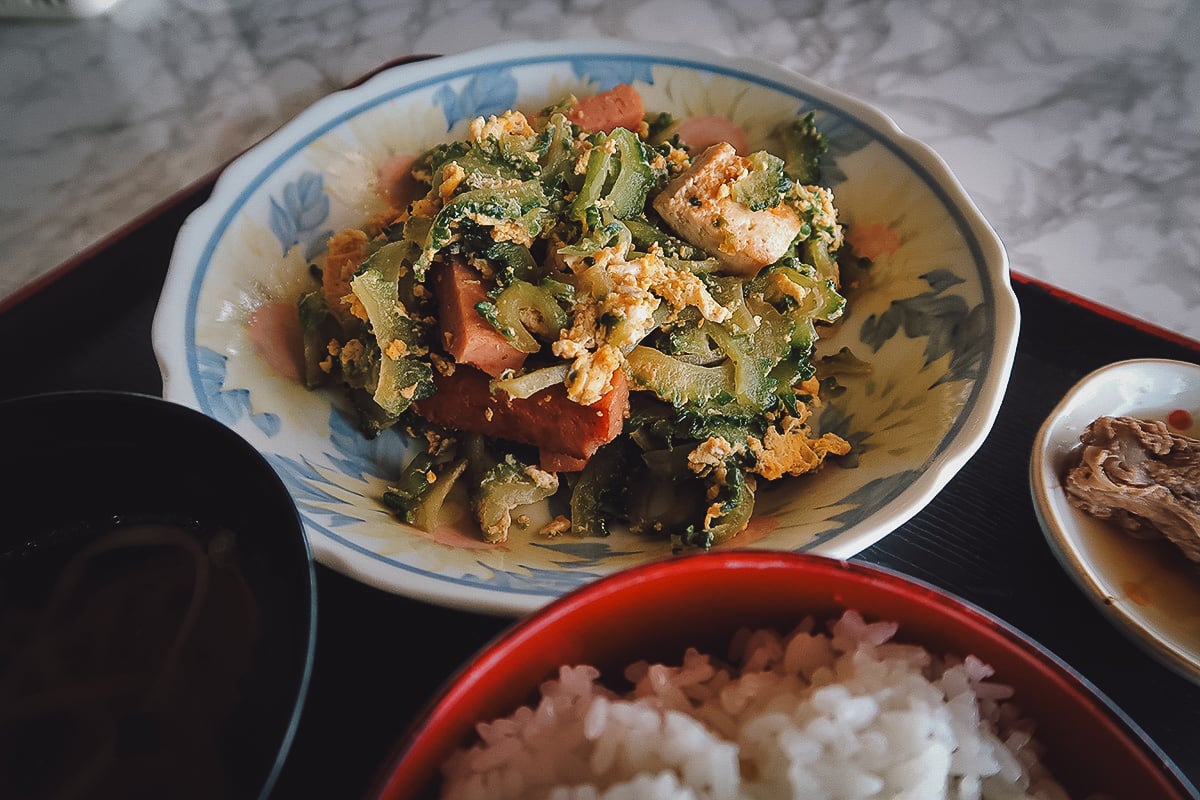
Champuru (or chanpuru) is simple, hearty, unglamorous, and adaptable. Meaning “something mixed”, sit down to any version of it, and you’ll see it’s the kind of dish traditionally made with whatever ingredients were available. Like taco rice (#3) and some other dishes in Okinawan cuisine, champuru reflects Okinawa’s long history of absorbing influences from different cultures.
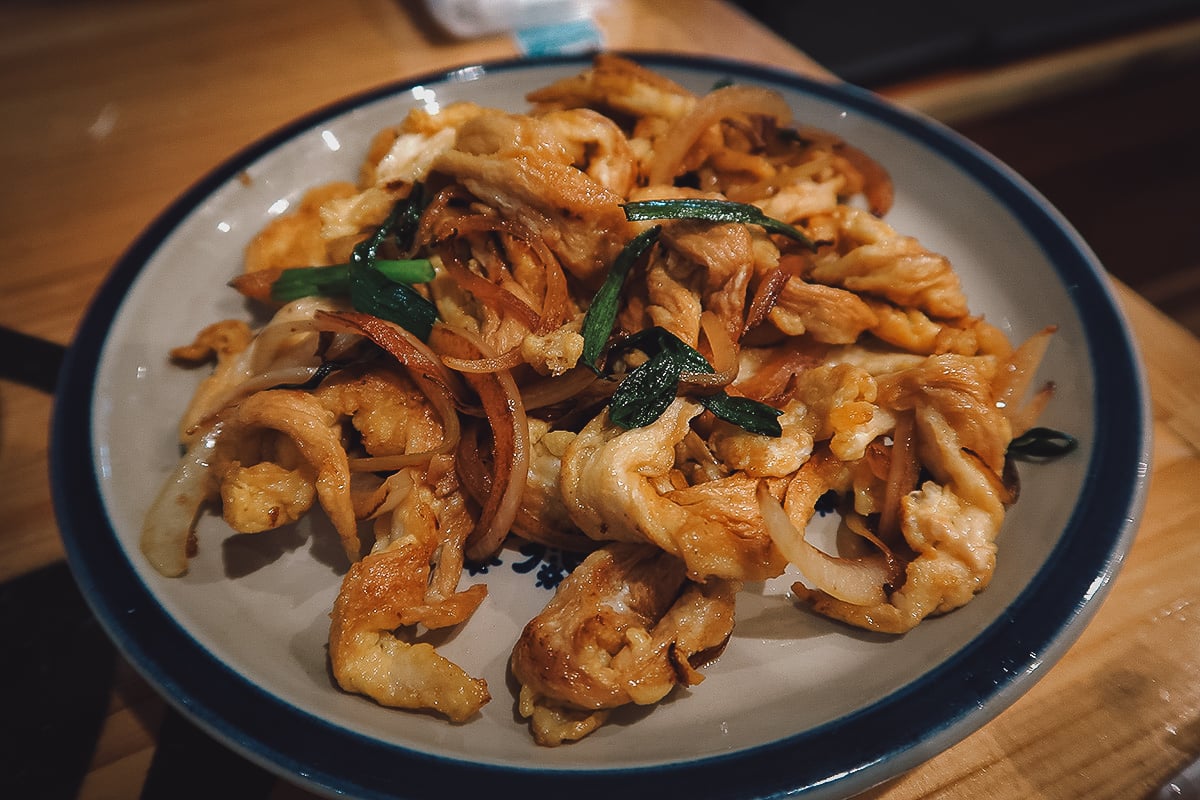
We enjoyed several versions of champuru in Okinawa. Aside from goya champuru, some of our other favorites include tofu champuru and fu champuru, which uses wheat gluten.
2. Okinawa Soba
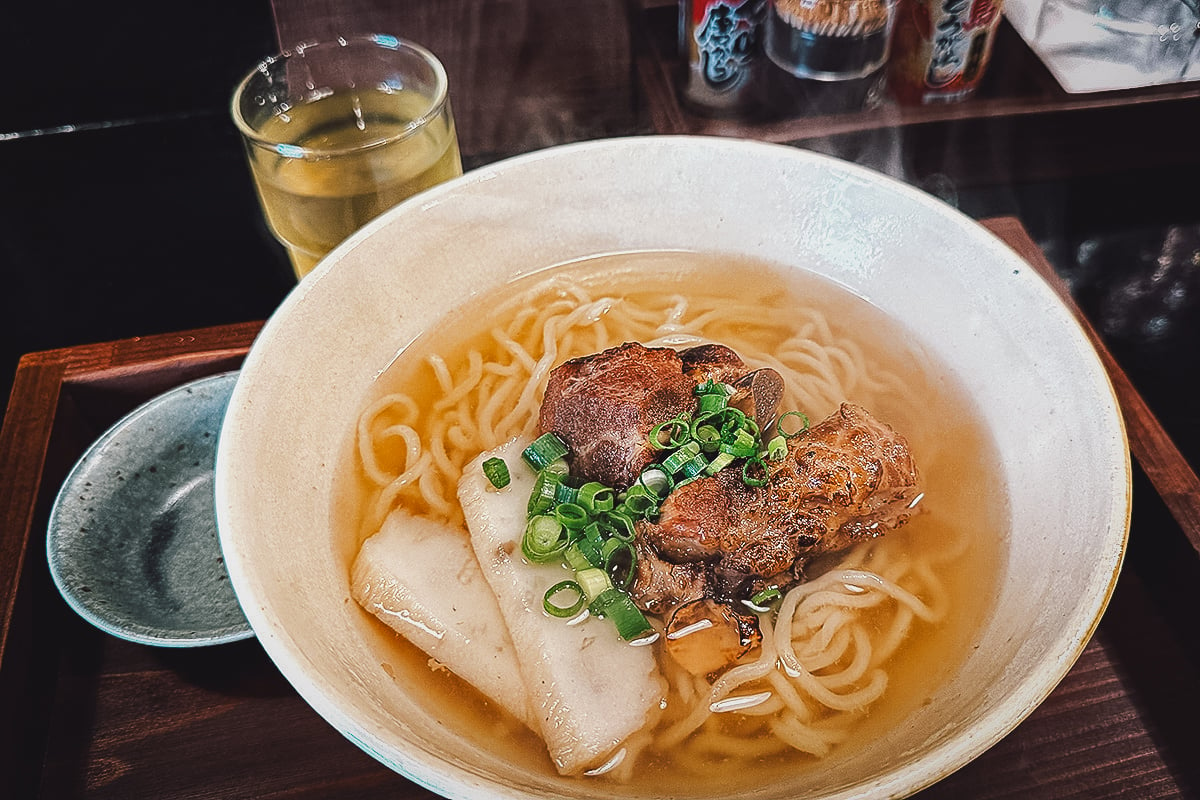
Okinawa soba is a bit of a misnomer. Despite its name, it contains no buckwheat. Unlike the thin, ashy-hued noodles associated with soba elsewhere in Japan, Okinawa soba is made from wheat flour. They’re thick and chewy and served in a light but flavorful broth made from pork and bonito.
A quintessential Okinawa comfort food, a typical bowl is usually topped with slices of simmered pork – often stewed san-mai niku (pork belly) or soki (boneless pork ribs) – along with kamaboko fish cake and sliced scallions. It can be garnished with beni shoga (pickled ginger) and made spicy with a few drops of koregusu, a Ryukyuan chili sauce made of chilis infused in Awamori rice spirit.
3. Taco Rice
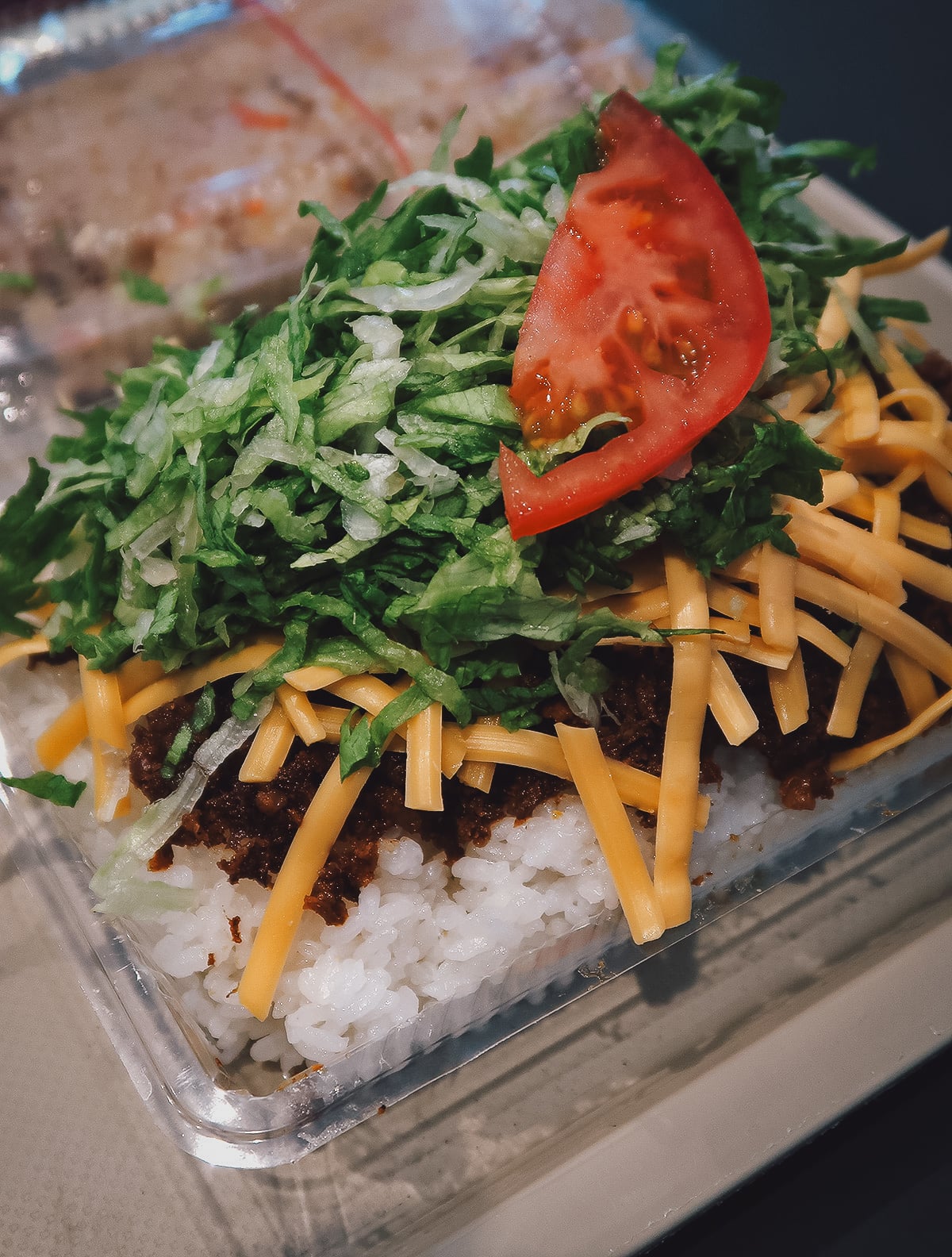
Like Okinawa soba, taco rice is a beloved local comfort food. Though not the healthiest dish, it’s one of Okinawa’s tastiest examples of cultural fusion. It takes the fillings of a taco – seasoned ground beef, lettuce, tomato, shredded cheese, and salsa – and serves them over a bed of white rice instead of inside a tortilla.
The dish was created in 1984 by Matsuzo Gibo, founder of the popular Okinawan chain King Tacos. Opening his first restaurant in Kin, Okinawa, near the main gate of Camp Hansen, he created the dish as an inexpensive and filling meal for American military personnel. Popular with servicemen, it quickly caught on with locals as well, eventually becoming one of Okinawa’s signature comfort foods.
Today, you’ll find taco rice everywhere in Okinawa, from casual restaurants in American Village to convenience stores throughout the main island. We enjoyed the tasty example below from the original King Tacos shop in Kin. From the looks of it, the restaurant is still as popular as ever.
4. Pork Tamago Onigiri
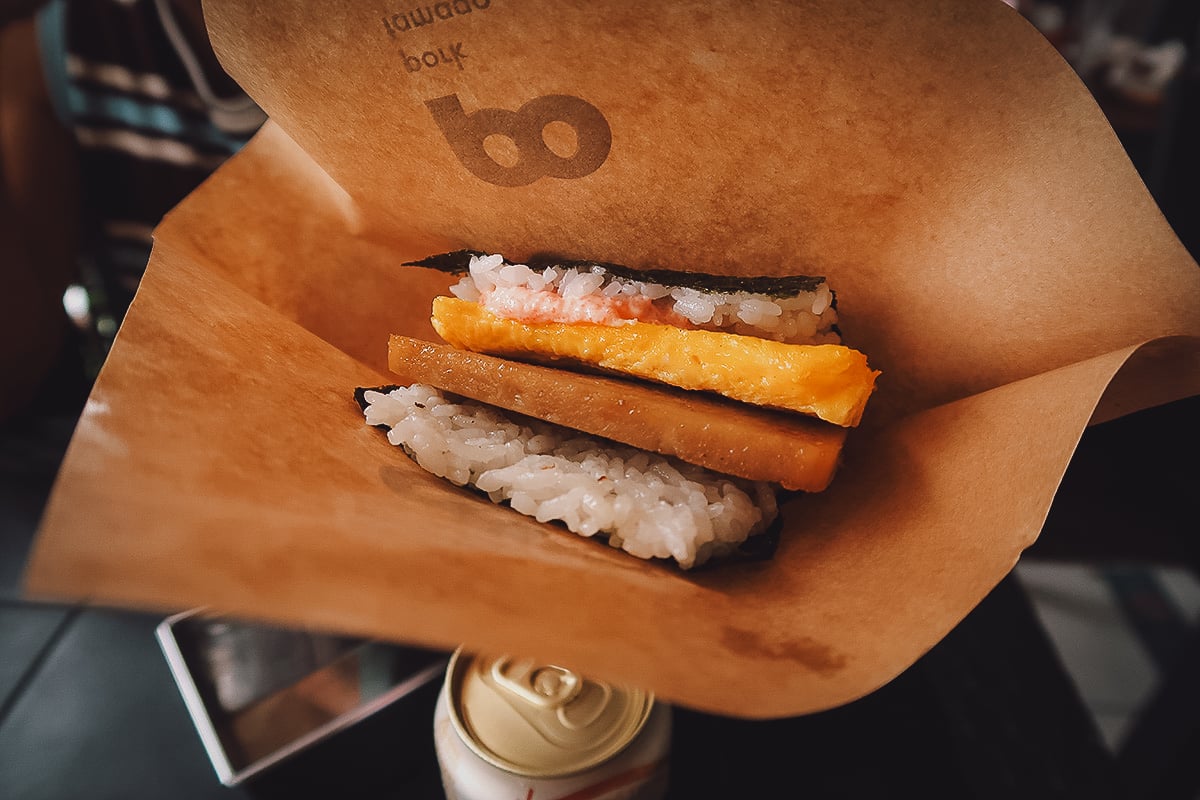
If you’re a fan of SPAM musubi, then you’ll definitely want to try pork tamago onigiri. Available even in vending machines, it’s one of Okinawa’s most delicious grab-and-go foods.
TRAVELEATER DEALS
Going on a trip soon? Enjoy up to 50% off on selected experiences and activities with Klook and Get Your Guide. Click on the links for a list of discounts, promo codes, and limited-time offers.
Pork tamago onigiri consists of a thick slice of grilled pork luncheon meat and a layer of Japanese-style omelette sandwiched between rice and nori. You’ll sometimes see it described as “SPAM onigiri”, though pork tamago onigiri is the name you’ll more commonly encounter in Okinawa. Luncheon meat became popular in Okinawa during the postwar period, when American food products became widely available.
Compared to Hawaii’s SPAM musubi, the Okinawan version is generally softer and more substantial, with egg being a key addition. It’s traditionally made with just luncheon meat and egg, but you’ll commonly find variations made with other ingredients as well, like goya, shrimp, miso, and local vegetables. Personally, my favorite is the version made with unagi (freshwater eel).
5. Agu Pork
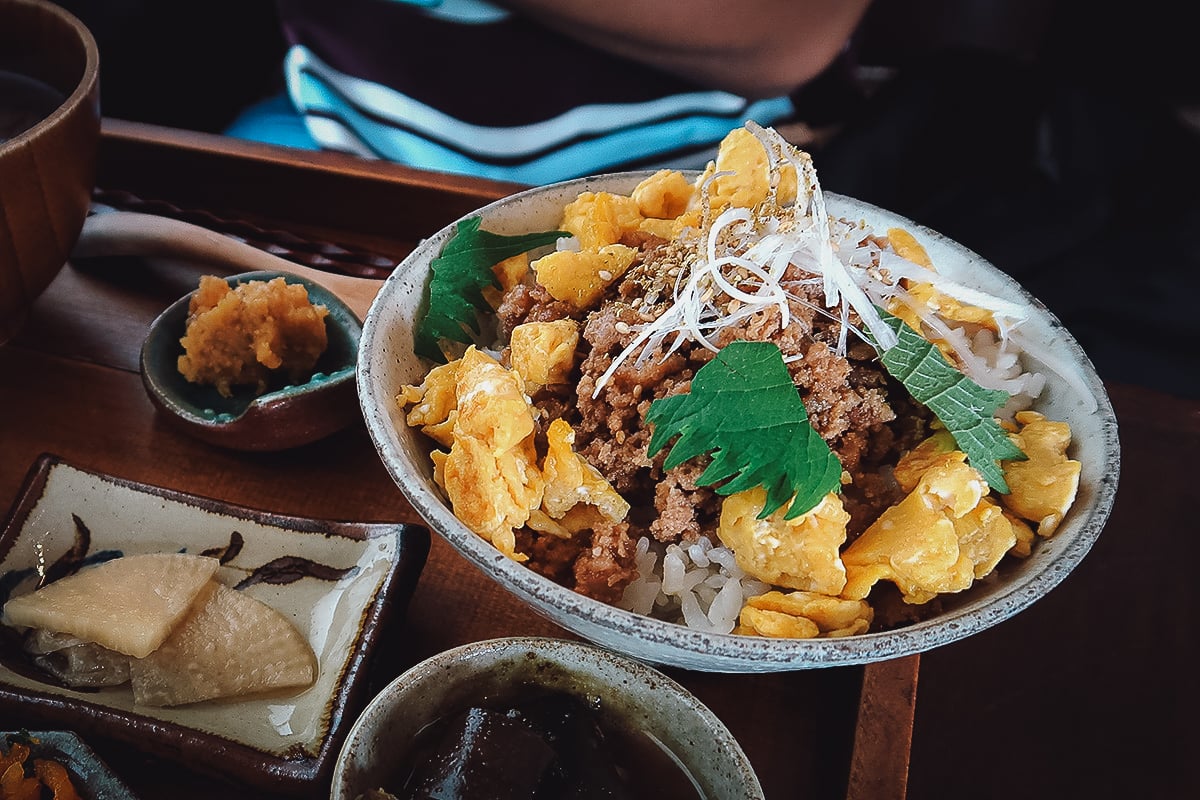
Agu is a distinctive Okinawan breed of pig prized for its rich marbling, sweetness, and softer texture. Selectively bred from native Okinawan pigs, it’s been raised on the islands for centuries and is considerably smaller than the pigs typically used for commercial pork production.
Agu pork isn’t a particular dish so much as a premium local ingredient, so you’ll encounter it in everything from shabu-shabu and yakiniku to Okinawa soba and stir-fries. In the dish pictured below, it’s served minced with egg and topped over steamed white rice.
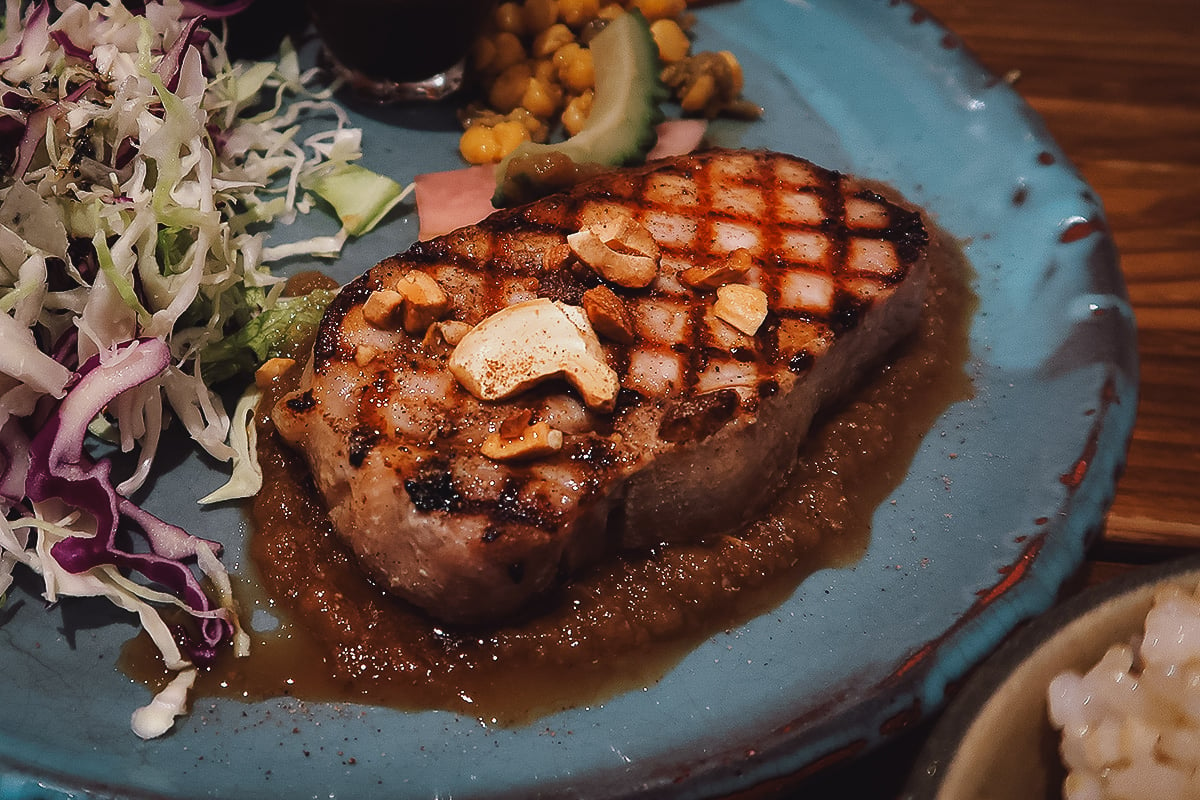
Agu pork is often used as an ingredient in Okinawan dishes, but sometimes, it takes center stage. This beautifully marbled Agu steak we enjoyed at a restaurant in Okinawa was incredibly tender and delicious.
6. Mozuku
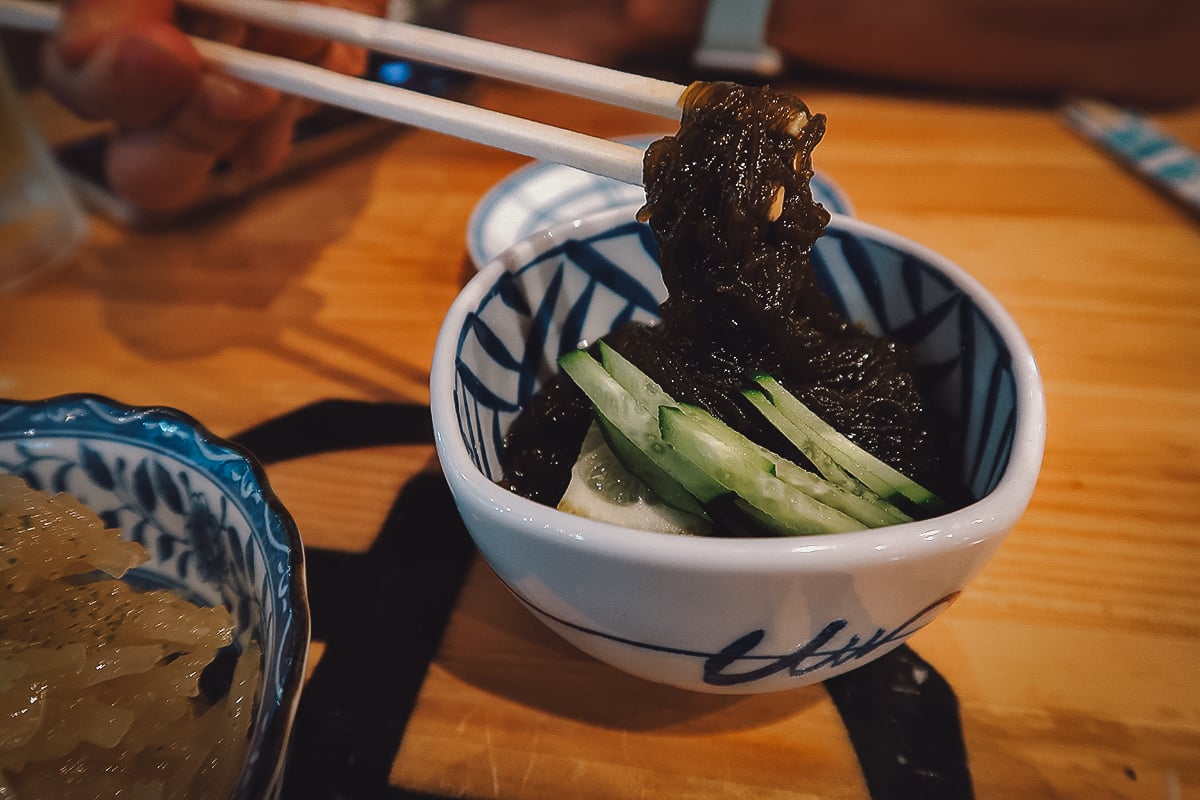
Mozuku is an edible seaweed that’s become one of Okinawa’s signature ingredients. It has a slippery, almost gelatinous texture and a mild ocean flavor, and is commonly served cold with a sweet-and-tart sanbaizu vinegar dressing.
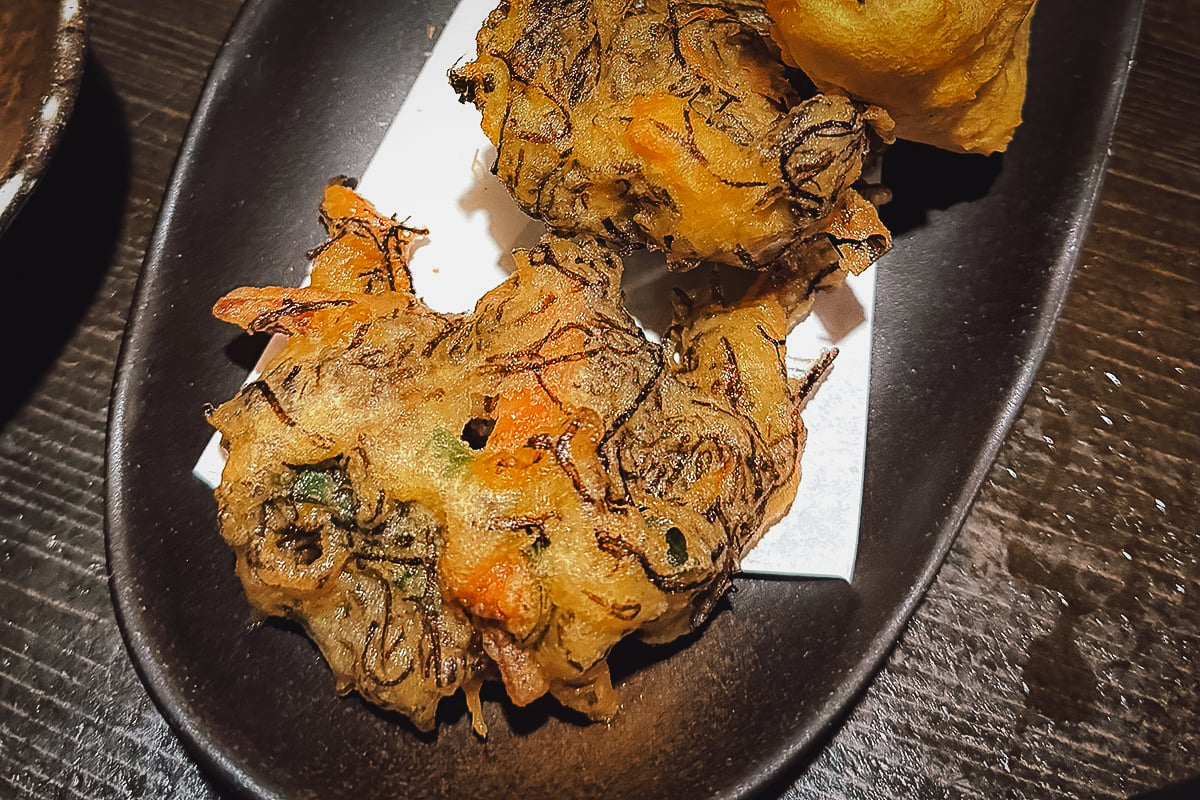
Okinawa is by far Japan’s biggest producer of mozuku, and most of what you’ll eat is cultivated in the shallow coastal waters around the islands. You’ll find it served as a simple side dish, added to salads and soups, or my personal favorite – incorporated into tempura.
More like a fritter than traditional tempura, one of the most delicious local dishes made with this seaweed is mozuku tempura. You’ll find it at many restaurants serving traditional Okinawan food.
7. Umibudo
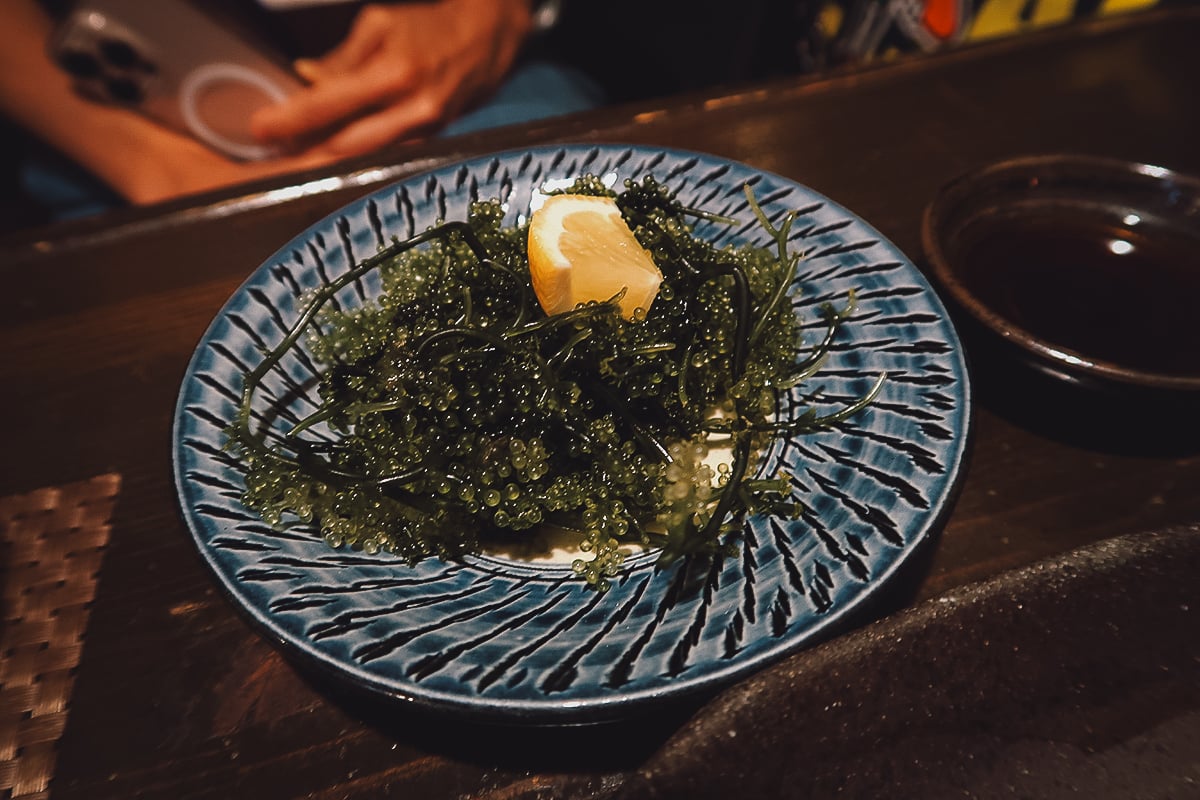
If an ingredient like mozuku appeals to you, then you may enjoy umibudo as well. Known as sea grapes – umi means “sea” and budo means “grape” – they’re tiny green seaweed clusters that look like miniature bunches of grapes. Interesting in texture and flavor, bite into one, and the little spheres pop in your mouth, releasing a mild, briny taste.
Sea grapes are usually eaten raw, often with ponzu or another dipping sauce, and are best appreciated for their unusual texture rather than a particularly strong flavor. Because they’re delicate, they’re generally served fresh rather than cooked.
Umibudo are strongly associated with Okinawa and are sometimes referred to as “sea caviar”. We enjoyed eating them as an appetizer at traditional Okinawan restaurants and izakayas.
8. Sukugarasu Tofu
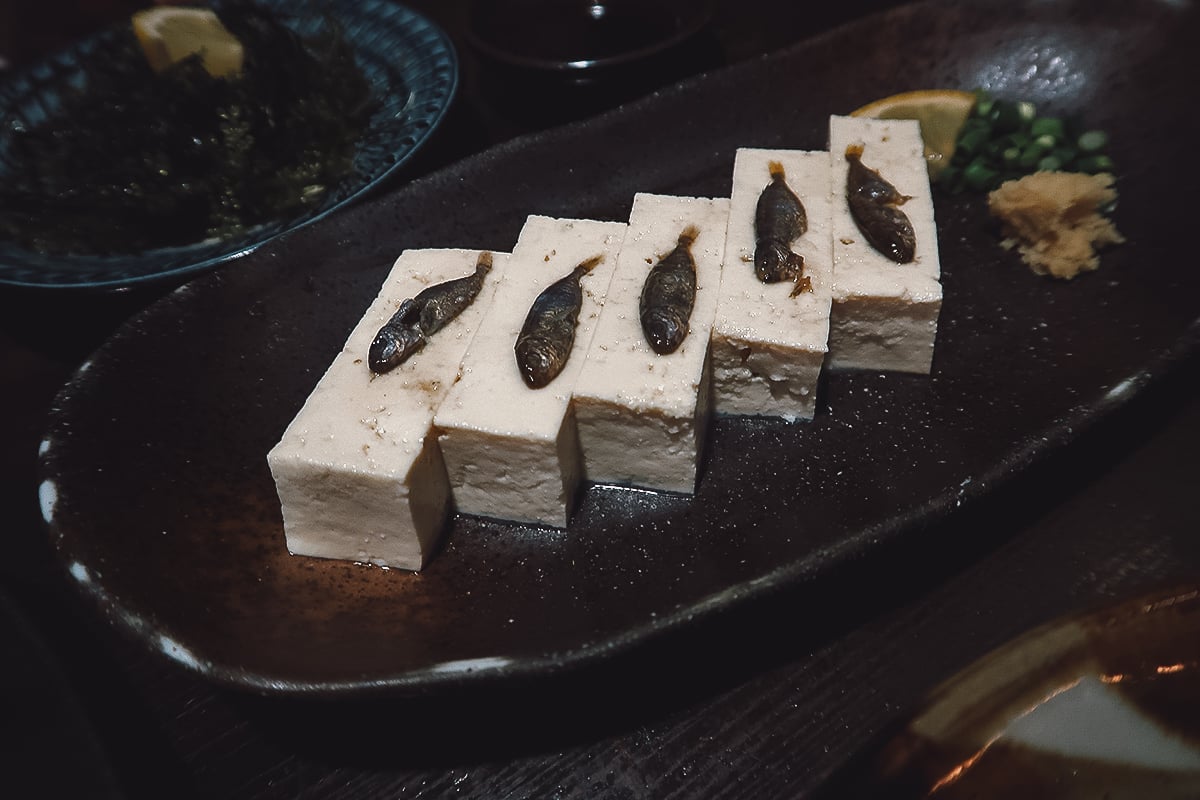
Sukugarasu tofu is one of Okinawa’s more unusual izakaya dishes. It consists of a block of firm shima tofu (Okinawan island tofu) topped with small salted fish called sukugarasu. The fish are typically young rabbitfish that are seasonally caught and preserved in salt.
The contrast in flavor and texture is what makes the dish interesting. The tofu is mild and firm while the tiny fish are intensely salty and savory. Like many salty or strongly flavored snacks, it’s traditionally enjoyed alongside alcoholic drinks like awamori or beer.
Sukugarasu is particularly associated with late summer, when the young fish appear in Okinawan waters. Preserving them in salt allowed people to enjoy the seasonal catch long after the fishing season ended.
9. Squid Ink Soup
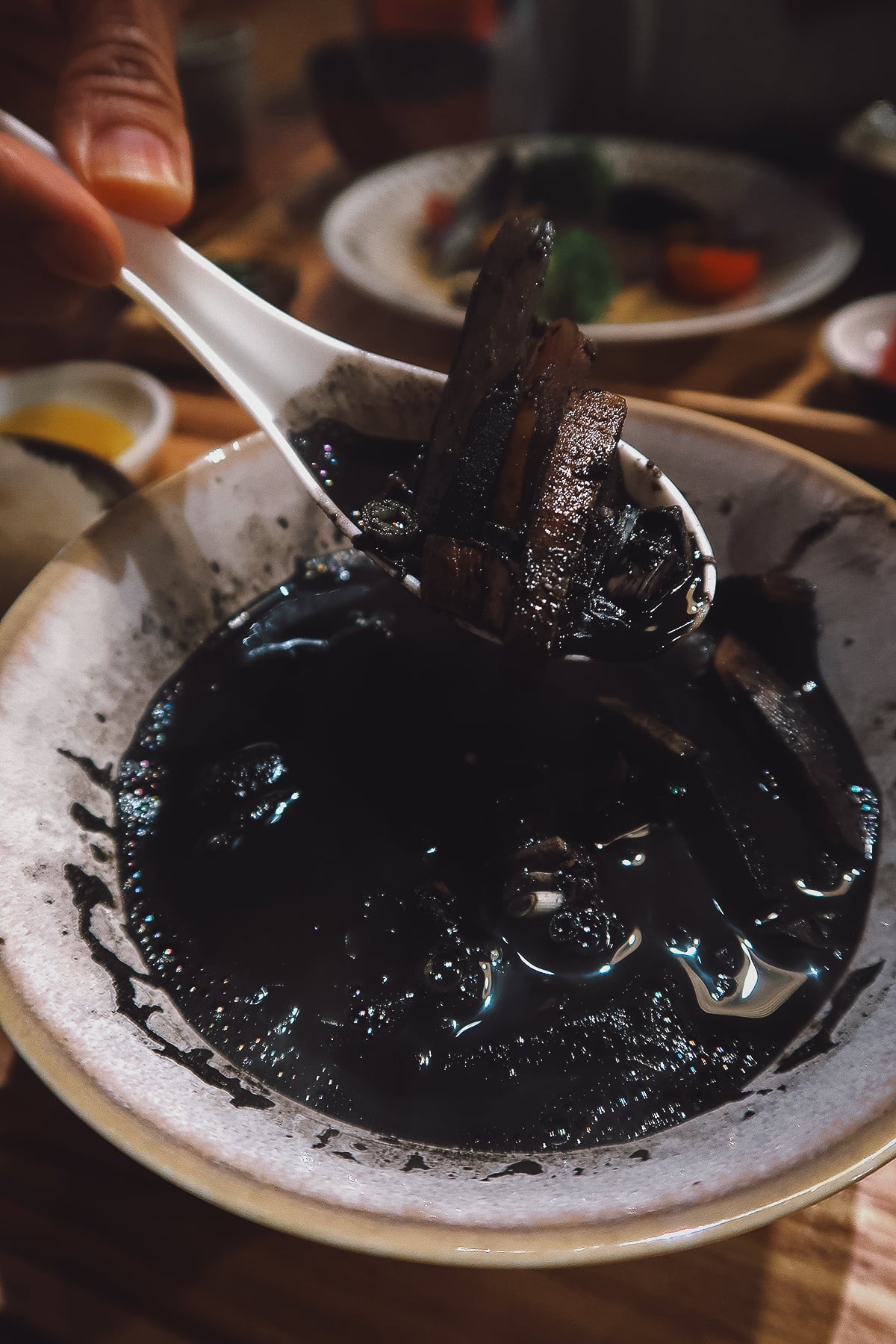
I love squid cooked in its own ink, so this was one of the dishes I was most excited to try in Okinawa. Squid ink soup, or ikasumi-jiru, is a traditional Okinawan dish made with squid and its ink, which gives the broth its dramatic color and deep seafood flavor.
Although it’s referred to as a “soup”, ikasumi-jiru is eaten more like a stew. Commonly paired with steamed white rice, the soup is made with a substantial amount of squid, pork, and vegetables. The squid ink adds a rich savory quality without making the soup overwhelmingly fishy.
If you’ve never sat down to a bowl of black soup before, ikasumi-jiru is one of the more unusual traditional dishes to seek out in Okinawa, and certainly one of the most memorable visually.
10. Okinawan Tempura
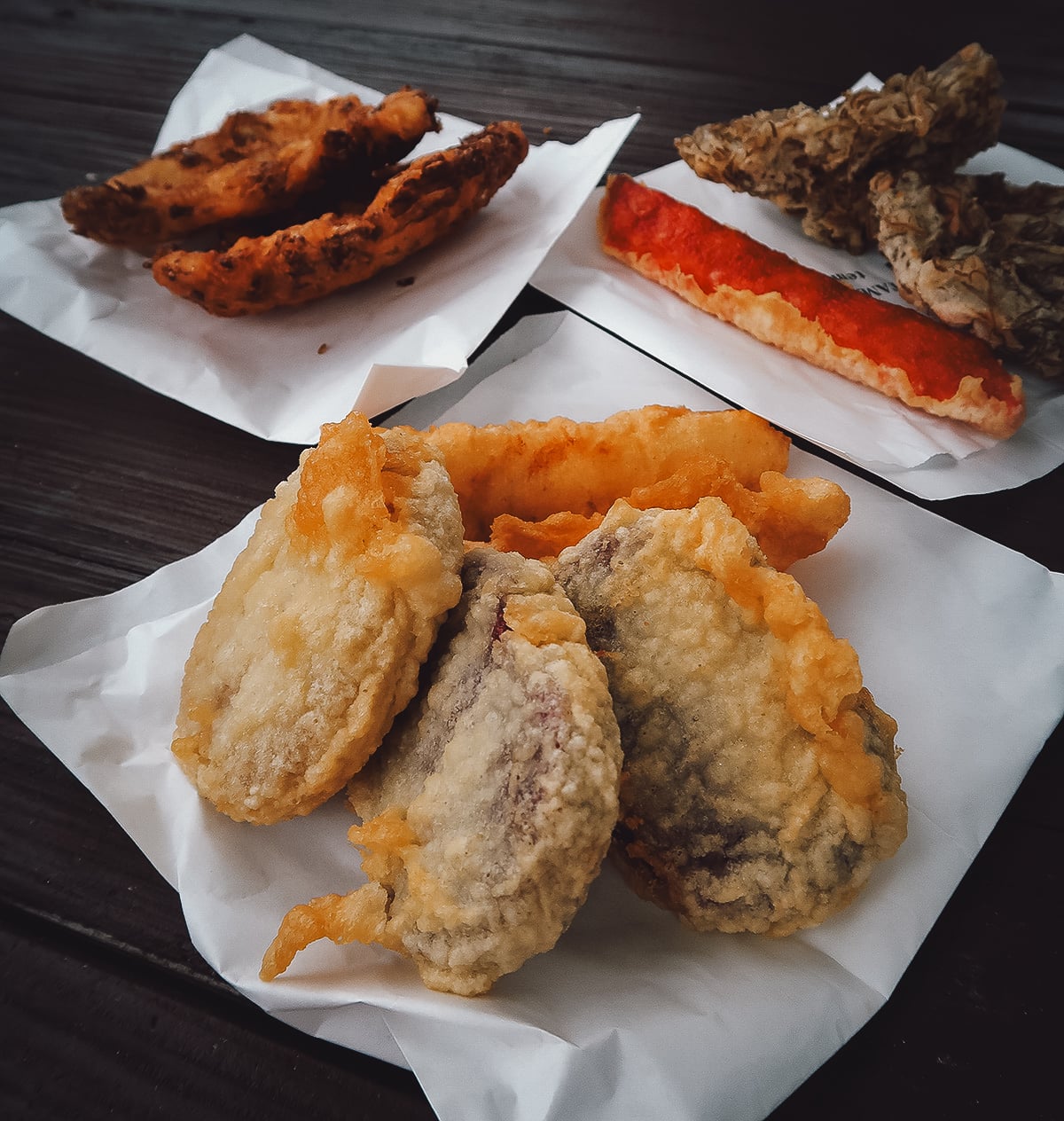
Mozuku tempura may be one of the most interesting, but it’s just one of many types of tempura you’ll encounter in Okinawa. Okinawan tempura looks familiar, but it tastes quite different from the more delicate tempura found elsewhere in Japan. The batter is considerably thicker and more substantial, producing something closer to a savory fritter than the light, lacy coating associated with Japanese tempura.
Common ingredients include fish, squid, vegetables, sweet potato, and mozuku. Often enjoyed as an appetizer or snack, you’ll find them at traditional restaurants, izakayas, food stalls, or local markets.
11. Beni Imo
Beni imo, or Okinawan purple sweet potato, is one of the island’s most recognizable ingredients. We first learned about this prized crop when a beni imo tart was part of a box of goodies sent to us by Sakuraco.
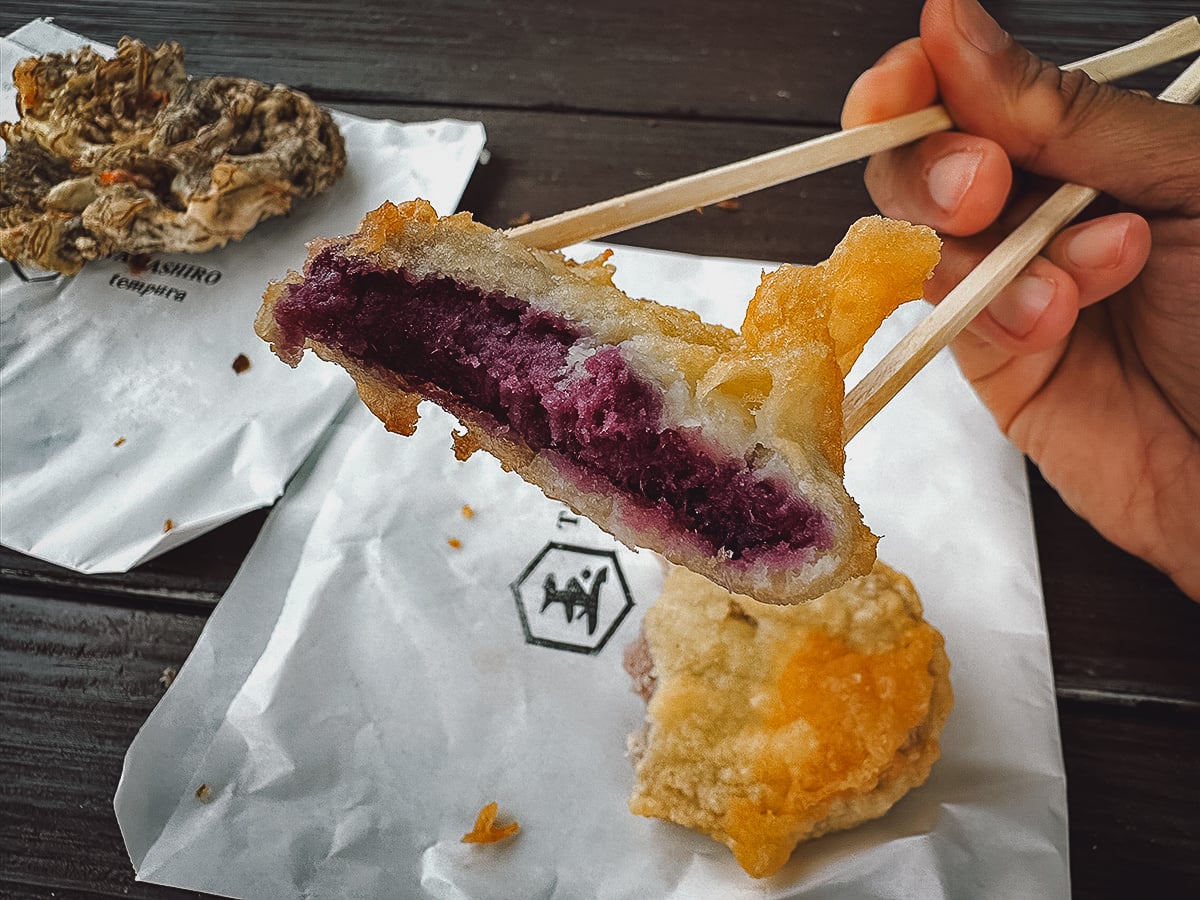
Like ube, beni imo’s vivid purple flesh makes it instantly photogenic, but the appeal goes beyond its color. It has a naturally sweet, earthy flavor and is used in everything from traditional sweets and pastries to ice cream, cakes, and tempura.
Sweet potatoes have been an important crop in Okinawa for centuries, having been introduced to the islands in the early 1600s by the Portuguese, long before the modern Japanese era. Today, beni imo is so closely associated with Okinawa that you’ll encounter it everywhere, particularly in souvenir shops and dessert counters.
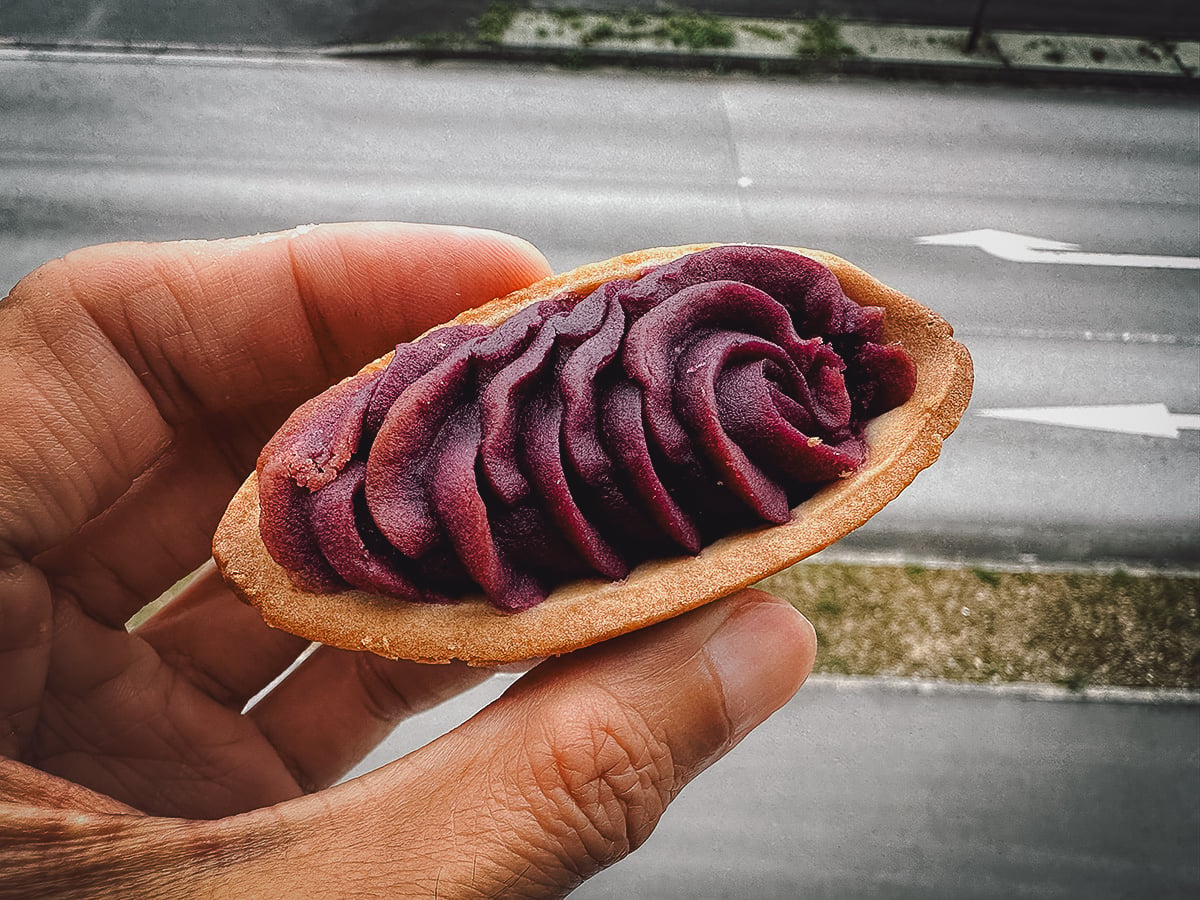
Beni imo is most commonly used in sweet snacks, but it can be made into tempura as well. The brilliant purple color is completely natural, and its unmistakable appearance has made it something of a culinary symbol of Okinawa.
12. Sata Andagi
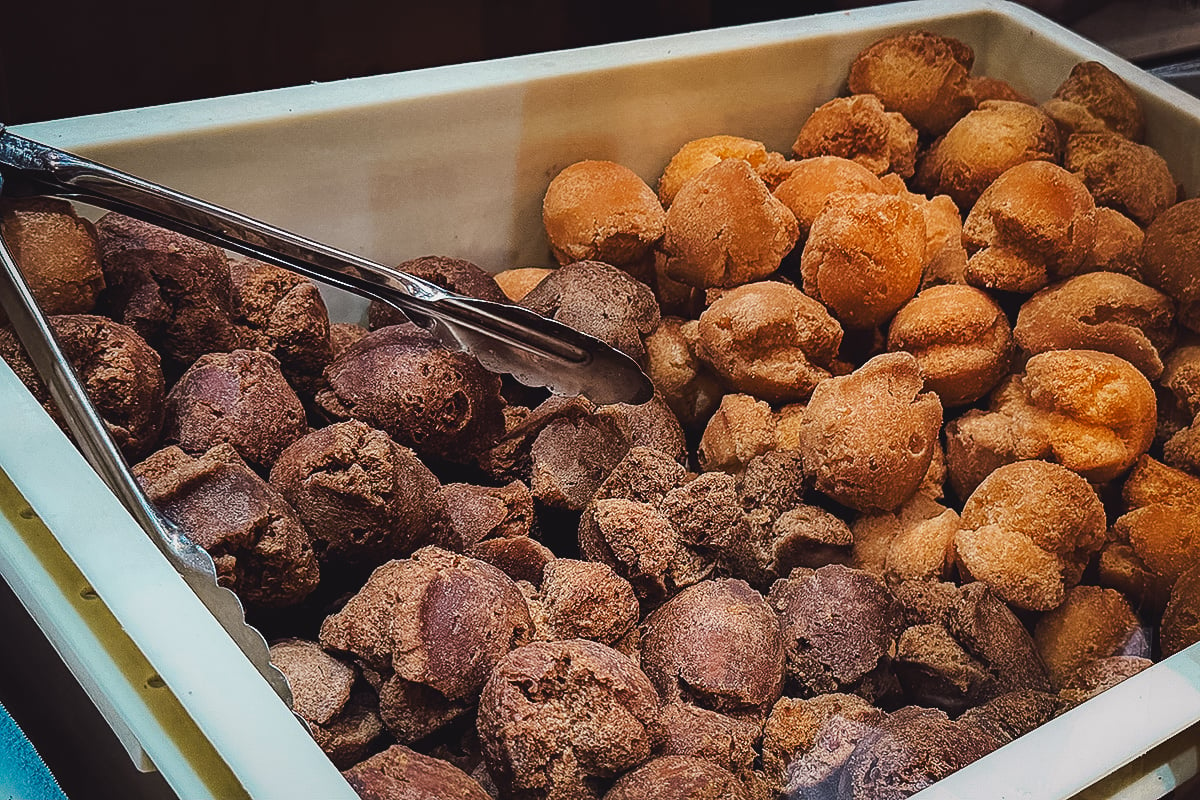
Often described as an Okinawan doughnut, sata andagi are deep-fried balls of sweet batter with a crisp exterior and a dense, cakey interior. They have no hole and look more like munchkins than typical doughnuts.
The basic batter is made with flour, sugar, and eggs, although you’ll find variations flavored with other ingredients like black sugar, beni imo, pumpkin, and cheese. Sold throughout the islands, they’re particularly good when eaten fresh from the frier, when the outside is crisp, and the inside is still warm.
13. Jimami Dofu
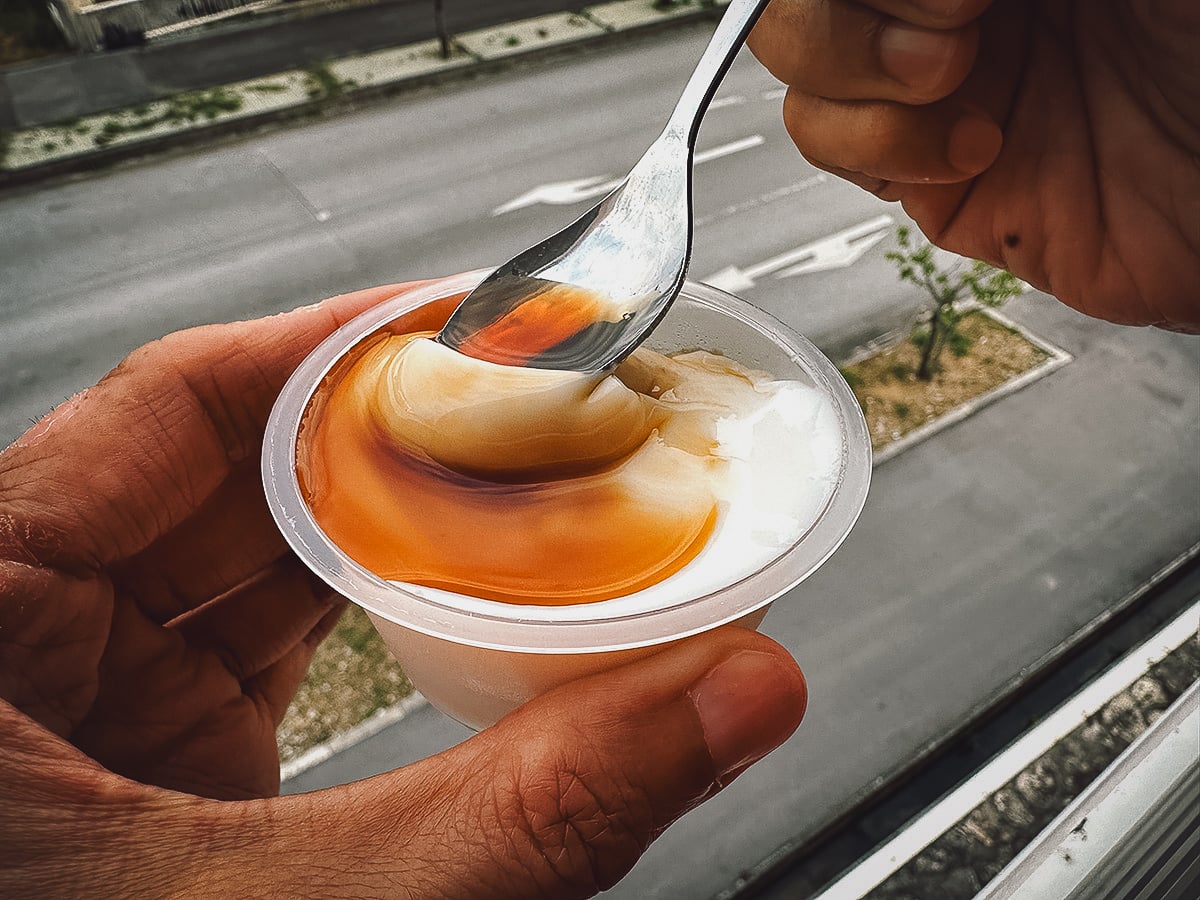
Jimami dofu is a type of Okinawan tofu made from peanuts and sweet potato starch instead of soybeans. It has a smooth, almost pudding-like texture and a distinctly nutty flavor.
Served chilled, jimami dofu can be enjoyed as either an appetizer or dessert. This small cup we picked up at 7-Eleven was topped with a sweet brown sugar syrup, while savory versions are typically served with soy sauce or a light dashi-based sauce.
14. Zenzai
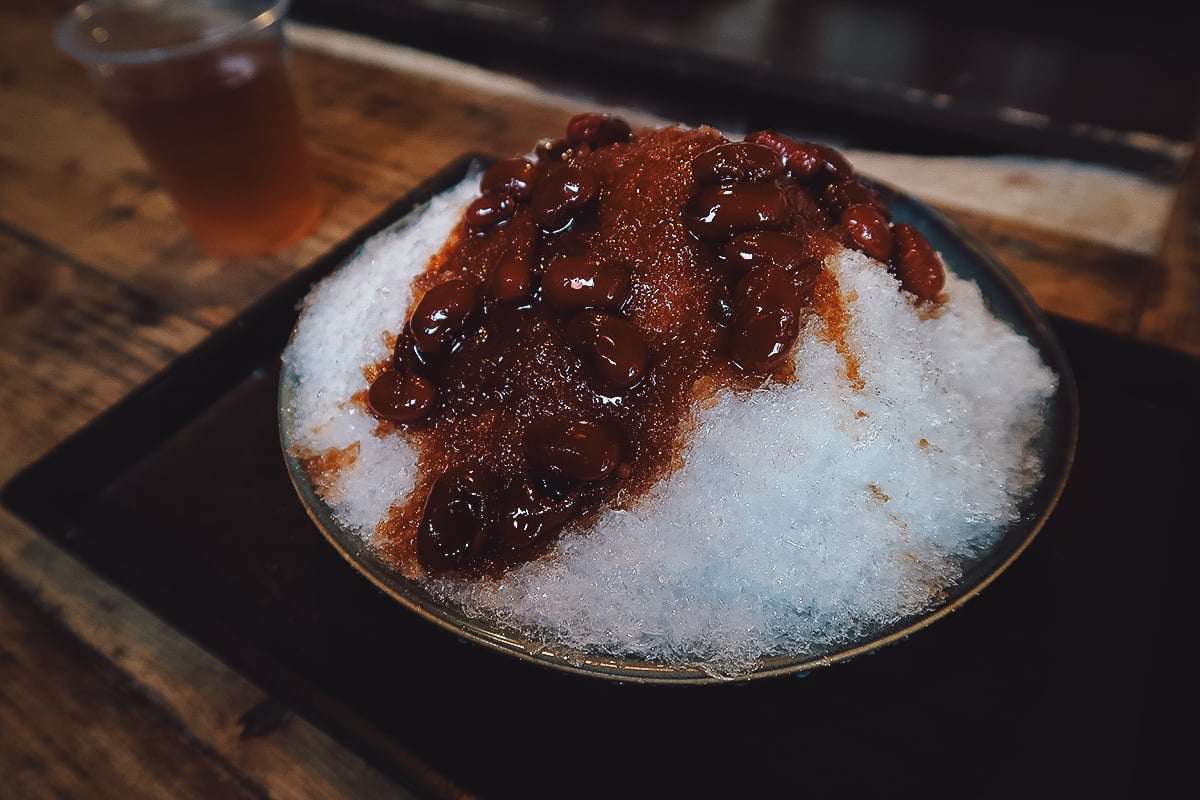
I’ve never had zenzai before, but apparently, it’s a popular Japanese dessert. Depending on where it’s from, it can be prepared in different ways, but at its core, it’s a traditional Japanese sweet red bean soup made with cooked azuki beans served with toasted mochi or soft rice flour dumplings. On the mainland, zenzai is typically served warm, but in Okinawa, it’s prepared as a cold dessert with shaved ice.
Okinawan zenzai is traditionally made with large kidney beans cooked with brown sugar. The sweetened beans are served with mochi dumplings before being topped with a generous mound of shaved ice.
Considering Okinawa’s subtropical climate, I’d much rather have this version than the warm variety found on the mainland. It’s quite refreshing, especially when enjoyed with the optional add-on of condensed milk.
15. Blue Seal Ice Cream
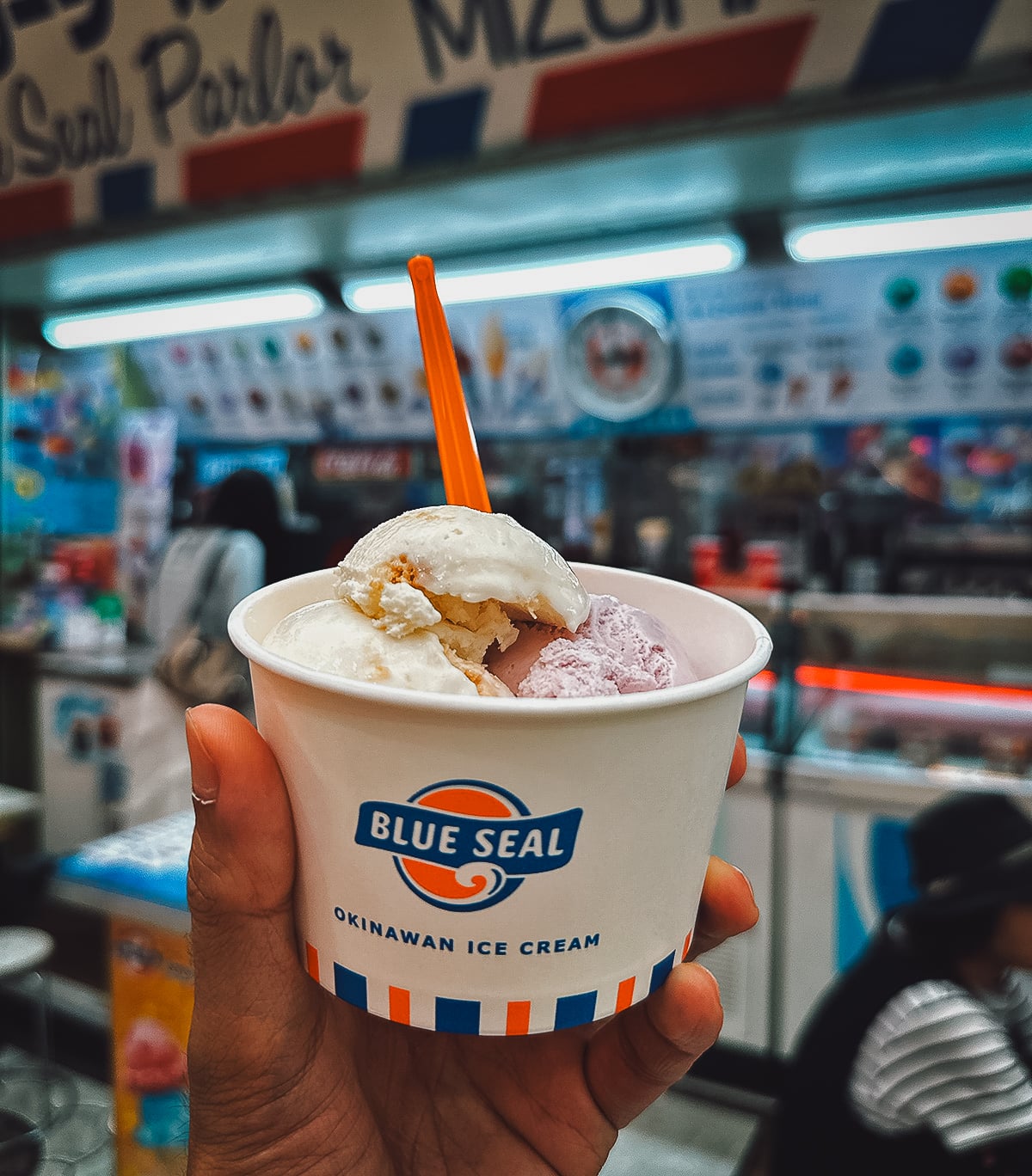
Blue Seal is more than just an ice-cream brand. An Okinawan icon, it’s become part of the island’s food culture and is closely associated with Okinawa’s postwar relationship with the United States.
The company traces its Okinawan history to 1948, when American dairy company Foremost established a milk plant on a U.S. military base in Okinawa. Blue Seal eventually moved outside the base and began developing its identity as an Okinawan ice-cream brand.
Today, you’ll find familiar flavors alongside distinctly Okinawan ones like beni imo (highly recommended!), Okinawan brown sugar, and salt biscuit. Its history makes Blue Seal an interesting example of how an American influence was gradually absorbed into local culture and transformed into something that’s now considered quintessentially Okinawan.
16. Orion Beer
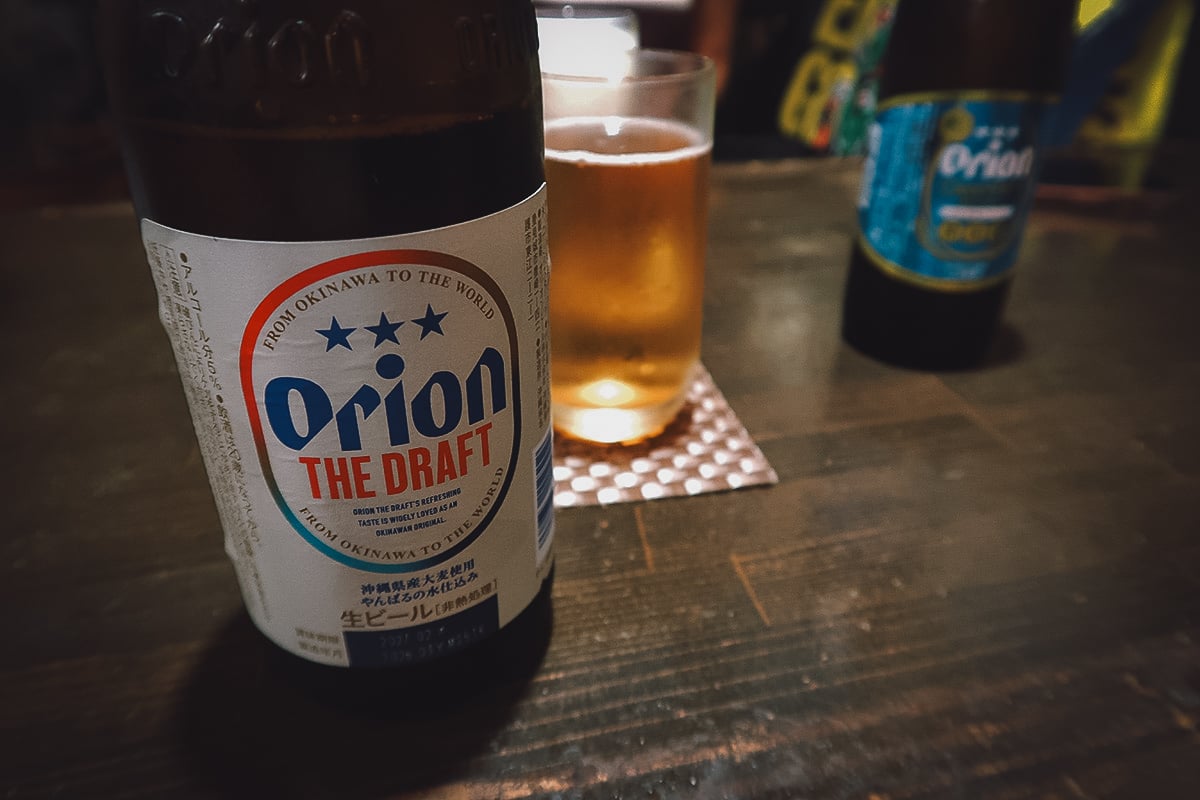
Speaking of legendary brands, you’d be hard-pressed to find an Okinawan brand more iconic than Orion Beer. From Kokusai-dori to Shuri Castle, you’ll see tourists – both Japanese and foreign – sporting Orion T-shirts. Apparently, buying and wearing one has become part of the Okinawa tourist experience.
Orion was first brewed in Okinawa in 1959, with its brewery established in Nago. The company developed its beer specifically for the local market, and it has since become an integral part of Okinawan drinking culture. Commanding approximately 60% of the Okinawan beer market, you’ll see the distinctive Orion logo everywhere, from izakayas and restaurants to convenience stores and vending machines.
If you have a particular fondness for beer, then you may want to book a tour at the Orion Happy Park Brewery in Nago. We did it on our last day in Okinawa and found it to be one of the most enjoyable experiences of our trip.
FINAL THOUGHTS ON OKINAWAN FOOD
One of the things we loved most about visiting Okinawa was tasting first-hand just how different its food culture is from the rest of Japan. Goya and mozuku were particularly interesting, as was beni imo.
And while our interest in Okinawa was initially sparked by its reputation as a Blue Zone, we quickly learned that its food is about much more than longevity. Okinawan cuisine reflects the islands’ unique history and geography, with influences from China, mainland Japan, and the United States woven into its culinary traditions.
So if you’re visiting Okinawa, don’t limit yourself to the familiar Japanese dishes you already know. Try the local specialties, sample ingredients you’ve never eaten before, and wash it all down with an Orion Beer. You may not discover the secret to living to a hundred, but you’ll certainly eat well while you’re there.
Disclosure
This Okinawan food guide contains affiliate links, meaning we’ll earn a small commission if you make a booking or reservation at no extra cost to you. We really appreciate your support as it helps us keep this free website going. Arigato gozaimasu!