
Tokyo is one of the greatest food cities in the world, but some of our best food experiences didn’t come from Michelin-starred restaurants or expensive sushi-yas. Sometimes, the best experiences can be found down a narrow alley, squeezed between buildings, where a handful of tiny izakayas serve simple fare like yakitori, oden, and other Japanese drinking-food favorites.
These alleyways are known as yokochos, and they’re among our favorite places to eat and drink in Tokyo.
A yokocho can be as simple as a single narrow lane lined with tiny izakayas, or a maze of interconnected alleys packed with dozens of small eateries. Some are famous and crowded with tourists, while others remain neighborhood drinking spots patronized mostly by local office workers and regulars.
For this guide, I’ve narrowed down the many yokochos we’ve visited in Tokyo to eight of our favorites. If you enjoy Japanese food, especially casual izakaya fare, then these are some of the most atmospheric places in the city to eat, drink, and rub elbows with locals.
EXPLORE TOKYO QUICK LINKS
To help you plan your trip to Tokyo, we’ve compiled links to recommended hotels, tours, and other activities here.
HOTELS
Top-rated hotels in Shibuya, one of the most convenient areas to stay for first-time visitors to Tokyo.
- Luxury: Cerulean Tower Tokyu Hotel
- Midrange: Shibuya Tokyu REI Hotel
- Budget: Meguro Midori Hotel
TOURS & ACTIVITIES
- Izakaya Tour: Shinjuku Local Bar & Izakaya Crawl Tour
- Food Tour: Shinjuku Food Tour
- Gastronomy: Modern Shojin Ryori with Wine/Sake Pairing
- Sightseeing Tour: Shibuya Highlights Walking Tour & Secret View Spot
- Cultural Experience: Private Geisha Tea Time with Traditional Dance and Shamisen Performance
- Market Tour: Tsukiji Fish Market Guided Walking Tour
- Cooking Classes: Cooking Classes in Tokyo
OTHER SERVICES
- Visa Services
- Travel Insurance (non-US residents get 5% off)
- Airport Transfers: Narita Airport | Haneda Airport
- Tokyo Subway Ticket
- Japan Rail Pass
- Japan eSIM
TOKYO TRAVEL GUIDE
If you’re visiting Tokyo for the first time, be sure to check out this detailed Tokyo travel guide. It’ll tell you everything you need to know – like where to stay, which attractions to visit, how to get around, etc. – to help you make the most of your trip.
WHAT IS A YOKOCHO?
The word yokocho (横丁) literally translates to “side street” or “alleyway”. In contemporary Japanese culture, however, it specifically refers to a small cluster of casual restaurants, bars, and izakayas packed into a compact area.
Many of Tokyo’s historic yokochos developed in the years following World War II. Black-market stalls and informal food businesses sprang up around busy railway stations, serving a population rebuilding after the war. Some of those makeshift markets eventually evolved into permanent drinking and dining districts.
That history helps explain why so many yokochos are found near train stations. It also explains their atmospheric retro look. Think paper lanterns, cramped storefronts, counter seating, and enough charcoal grill smoke to whet your appetite even before you’ve chosen a restaurant.
Yokochos are particularly well suited to izakaya hopping. Because many establishments are tiny, you can have a drink and a few small plates at one place before moving on to another.
THE BEST YOKOCHOS IN TOKYO
This is a curated list of our favorite yokochos in Tokyo. Be sure to check out this more comprehensive guide to Tokyo’s yokochos for more recommendations.
1. Omoide Yokocho
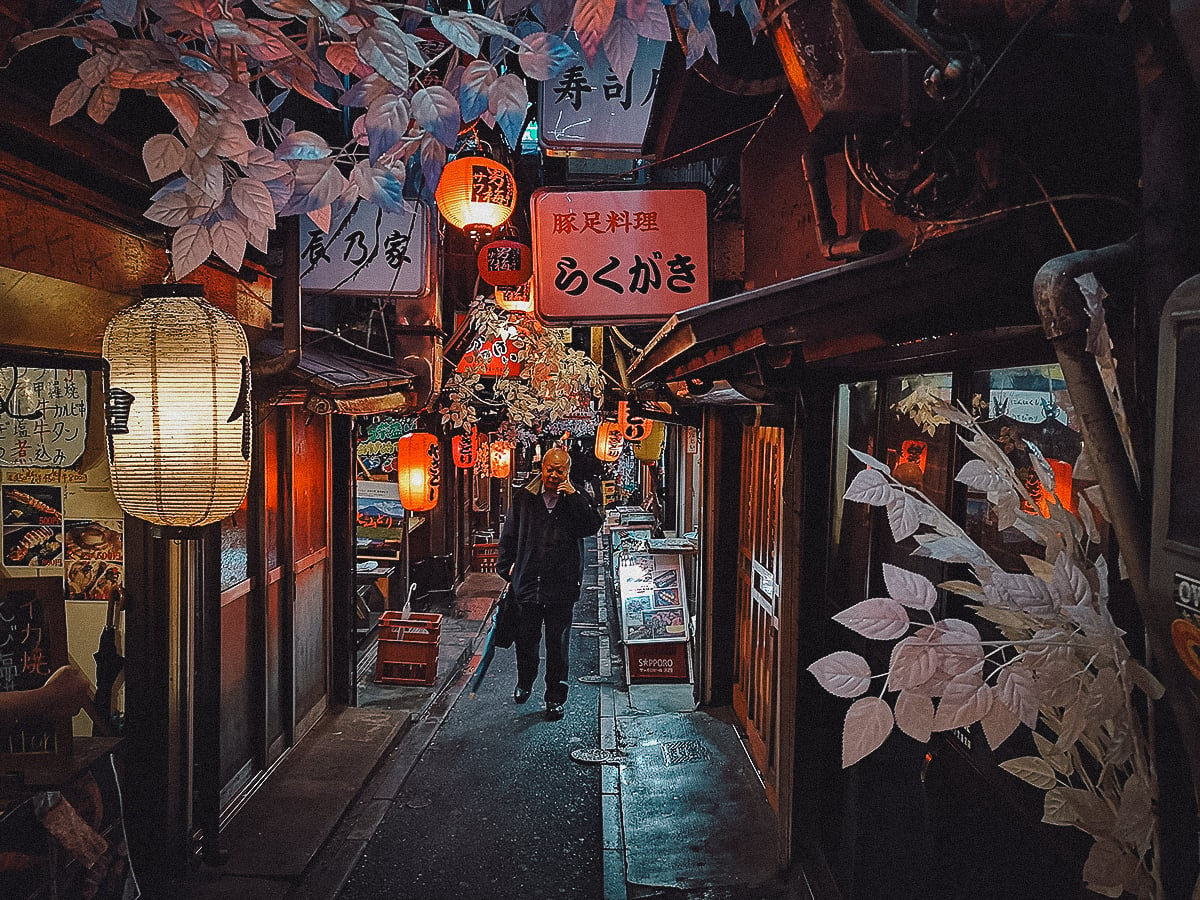
If you only have time to visit one yokocho in Tokyo, Omoide Yokocho is an easy choice. Located immediately west of Shinjuku Station, this compact collection of restaurants feels almost comically out of place beside the skyscrapers and enormous department stores surrounding it.
The alley is best known for its tiny yakitori restaurants. Walk through in the evening, and you’ll see skewers of chicken, meat, and vegetables grilling over charcoal. Many establishments specialize in yakitori and other simple izakaya dishes that pair perfectly with beer or sake.
Omoide Yokocho began as a postwar black market and gradually developed into the restaurant and drinking district you see today. Its Japanese name translates roughly to “Memory Lane”, while its old nickname, “Piss Alley”, came from the lack of proper toilets in its early years. Thankfully, that particular aspect of its history is firmly in the past.
TRAVELEATER DEALS
Going on a trip soon? Enjoy up to 50% off on selected experiences and activities with Klook and Get Your Guide. Click on the links for a list of discounts, promo codes, and limited-time offers.
Because of its location and reputation, Omoide Yokocho is one of Tokyo’s most tourist-friendly yokochos. That can make it busy, particularly at night, but I still think it’s worth experiencing. For first-time visitors, there may be no easier introduction to the quintessential Tokyo yokocho experience than this one.
2. Golden Gai
Just a short walk from Omoide Yokocho is Golden Gai, another legendary Shinjuku nightlife district. Although it doesn’t fit the strictest definition of a yokocho, it has the same basic appeal – tiny establishments packed into an improbably small area.
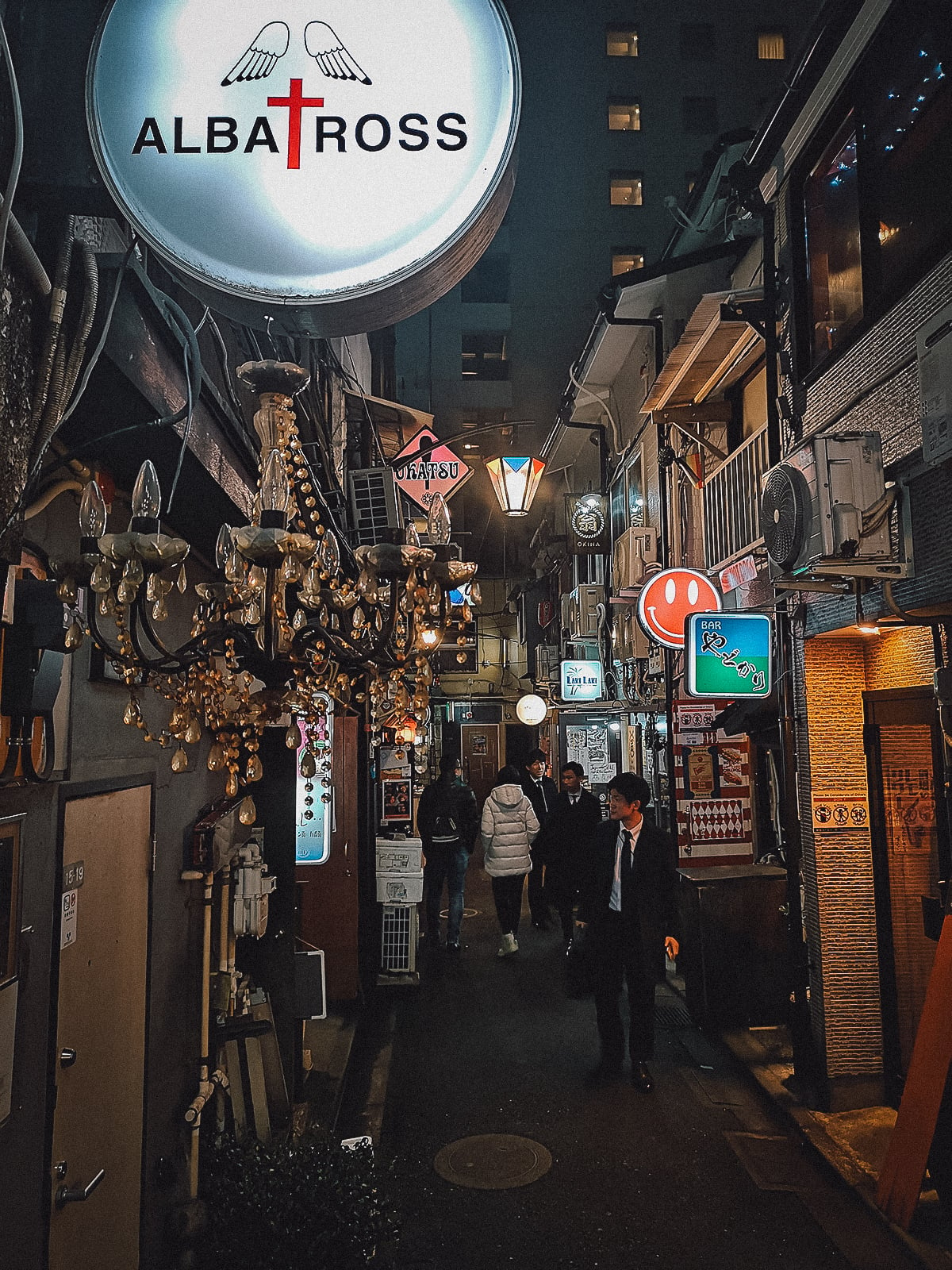
The difference is that Golden Gai is much more about bars than food. Six narrow alleyways form a dense grid of two-story buildings containing roughly 200–300 bars, many of which can accommodate fewer than a dozen people.
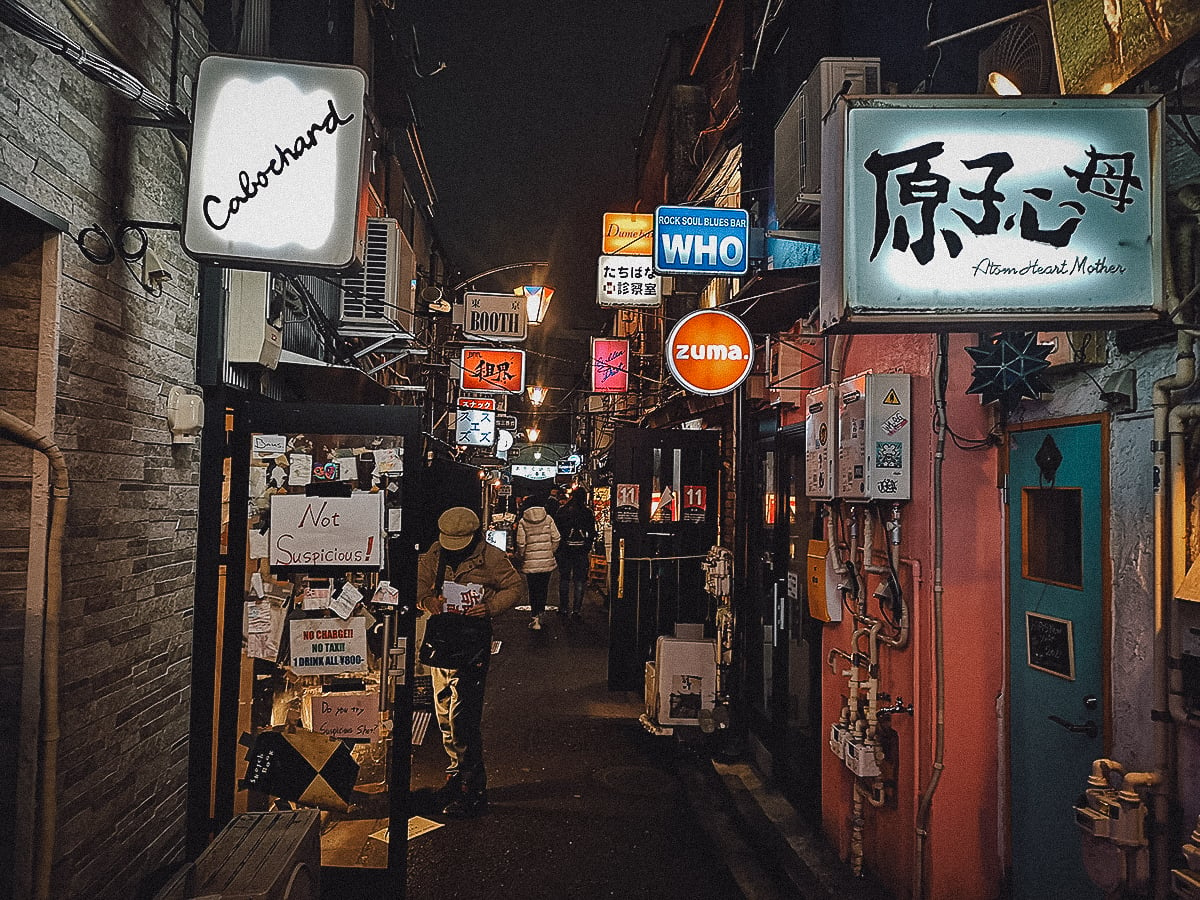
What makes Golden Gai particularly fun to explore is how different each bar can be. One might specialize in jazz, another in punk, another in flamenco. Others cater to highly specific interests, creating a collection of tiny drinking establishments that feel more like individual personalities than businesses.
The neighborhood also has a fascinating postwar history. It began as a black-market district and was once associated with prostitution before becoming a gathering place for writers, artists, and intellectuals in the 1950s and 60s.
Golden Gai is much more touristy than it once was, but it remains one of Tokyo’s most atmospheric places for an evening drink. If Omoide Yokocho is about yakitori and casual izakayas, Golden Gai is where you go to find a tiny bar with a character all its own.
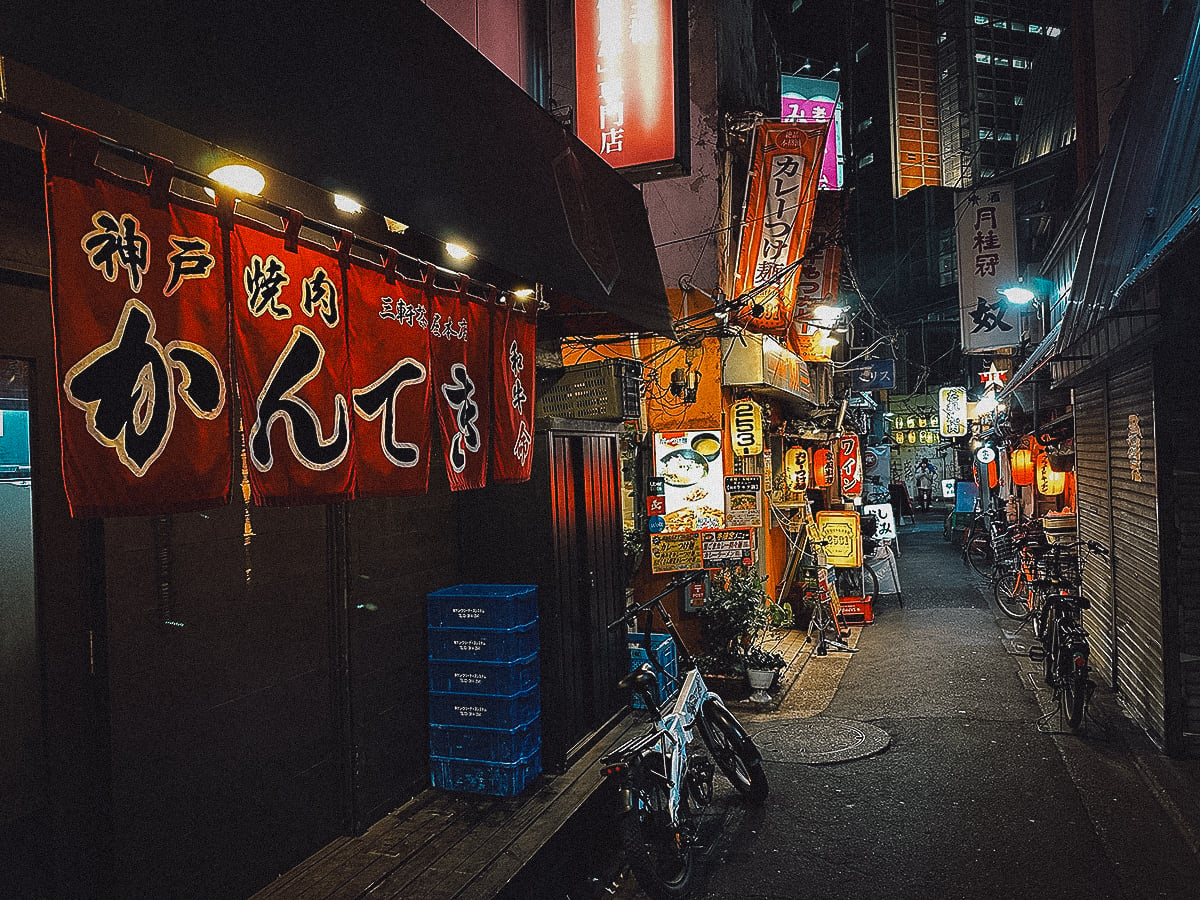
3. Sangenjaya Sankaku Chitai
For a yokocho that feels considerably more local, head to Sankaku Chitai in Sangenjaya. The name literally means “Triangle Zone”, referring to the triangular piece of land occupied by this dense collection of narrow lanes. The area sits directly across from Sangenjaya Station, but once you enter its maze of tiny streets, the chaos of Tokyo becomes surprisingly distant.
Sankaku Chitai is packed with small bars, izakayas, and restaurants, many of which cater to a younger local crowd. Compared with Omoide Yokocho and Golden Gai, you’re far less likely to encounter large groups of foreign tourists here.
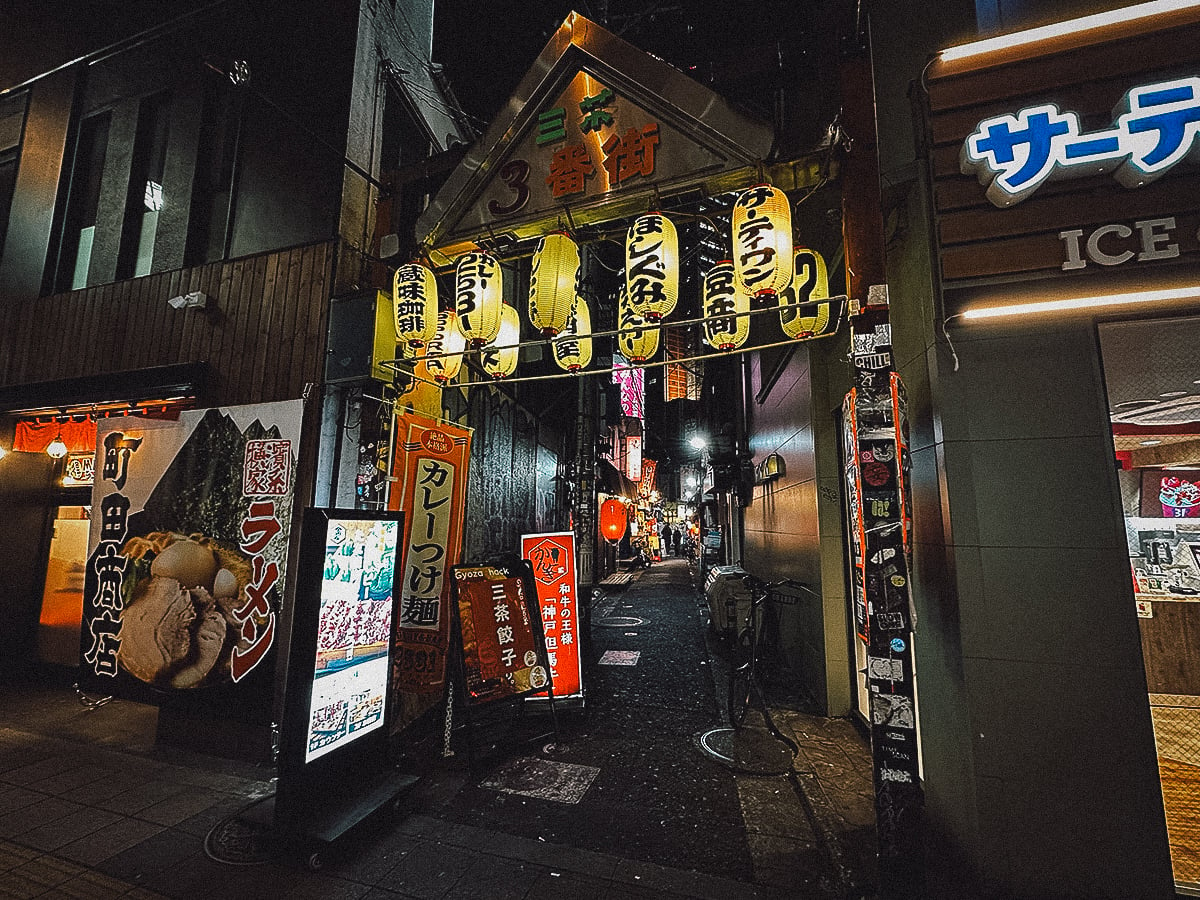
I particularly like the slightly rough-around-the-edges character of Sankaku Chitai. The narrow lanes twist and branch unexpectedly, graffiti adds a bit of grit, and every turn seems to reveal another tiny drinking establishment.
It’s the kind of place where I’d recommend arriving hungry and without a strict plan. Wander around, look at the menus, and choose whichever little restaurant looks most inviting.
4. Harmonica Yokocho
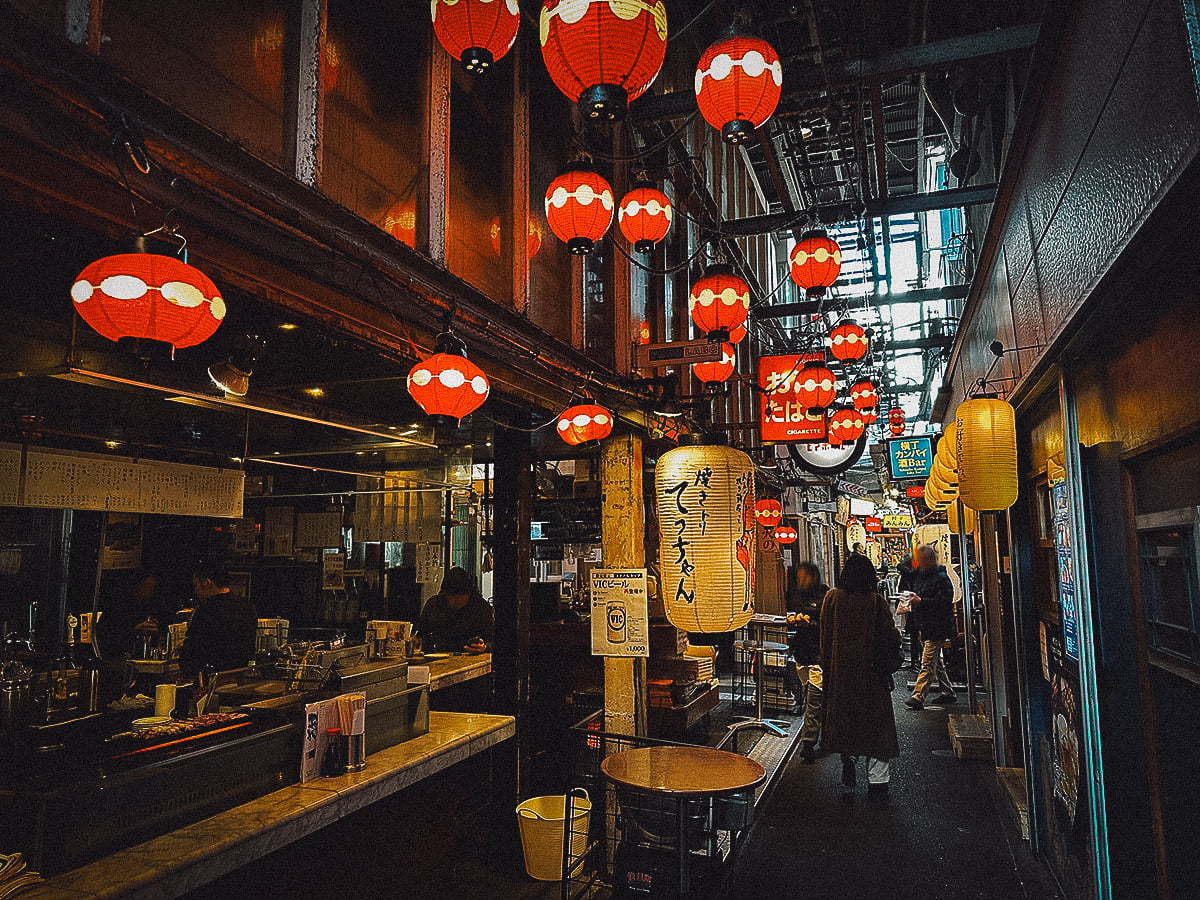
Harmonica Yokocho is one of Tokyo’s more interesting yokochos because it doesn’t shut down when the sun comes up.
Located just outside Kichijoji Station, this compact neighborhood of shops and eateries gets its name from the tightly packed storefronts, which supposedly resemble the reeds of a harmonica. Its roots go back to a postwar flea market, but the area has since evolved into a lively mix of restaurants, bars, shops, and other small businesses.
Food and drink are a big part of the appeal. You’ll find standing bars and small restaurants alongside more everyday neighborhood businesses, creating a yokocho that feels less exclusively focused on nightlife. That makes Harmonica Yokocho a nice alternative to some of Tokyo’s better-known drinking alleys. You can explore during the day, return in the evening for dinner and drinks, or simply stop by whenever you happen to be in Kichijoji.
It’s also considerably less tourist-heavy than the yokochos around Shinjuku, which gives it a more relaxed neighborhood atmosphere.
5. Oimachi Yokocho
If your idea of a great Tokyo night involves finding somewhere that doesn’t feel like a tourist attraction, put Oimachi Yokocho on your list.
Located near Oimachi Station in southern Tokyo, this yokocho consists of two parallel alleys lined with roughly sixty bars, izakayas, and restaurants. One side is particularly dense, with around forty establishments packed along both sides of the alley.
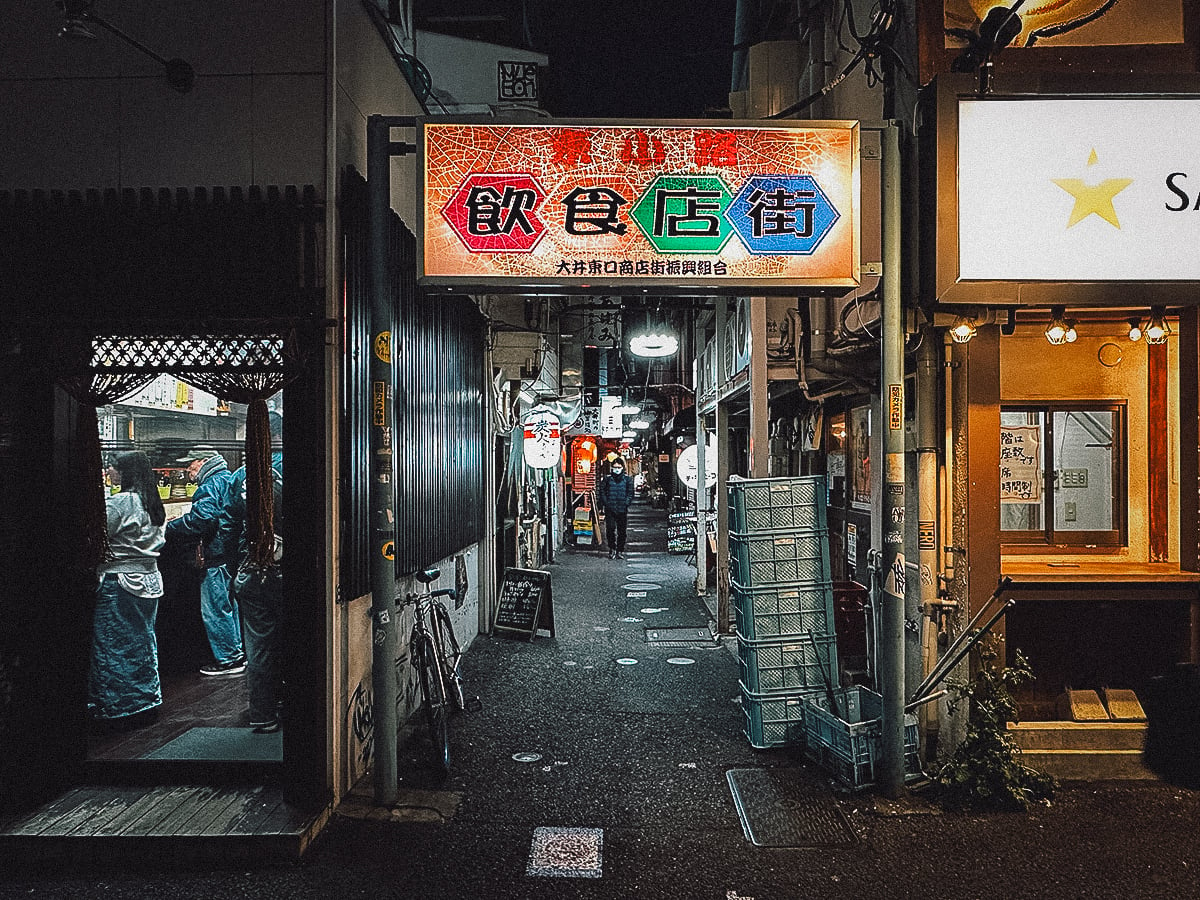
Oimachi Yokocho has a distinctly neighborhood-oriented character. It isn’t as famous internationally as Omoide Yokocho or Golden Gai, and its location isn’t particularly obvious on Google Maps, which may be part of the reason it remains relatively free of tourists.
That obscurity is actually part of the fun. Rather than arriving at a destination that’s been polished and packaged for visitors, you get the feeling that you’ve stumbled upon one of Tokyo’s everyday drinking districts.
Come in the evening when the izakayas are buzzing, pick a place that catches your eye, and settle in for skewers, beer, and perhaps a few interesting conversations with locals.
6. Hoppy Street
Located a short walk from Senso-ji, Hoppy Street offers a very different take on the Tokyo yokocho.
The street is named after Hoppy, a low-alcohol, beer-flavored drink that became popular in postwar Japan as an inexpensive alternative to beer. It’s traditionally mixed with shochu, and although Hoppy isn’t nearly as ubiquitous as it once was, you’ll still find it served throughout this part of Asakusa.
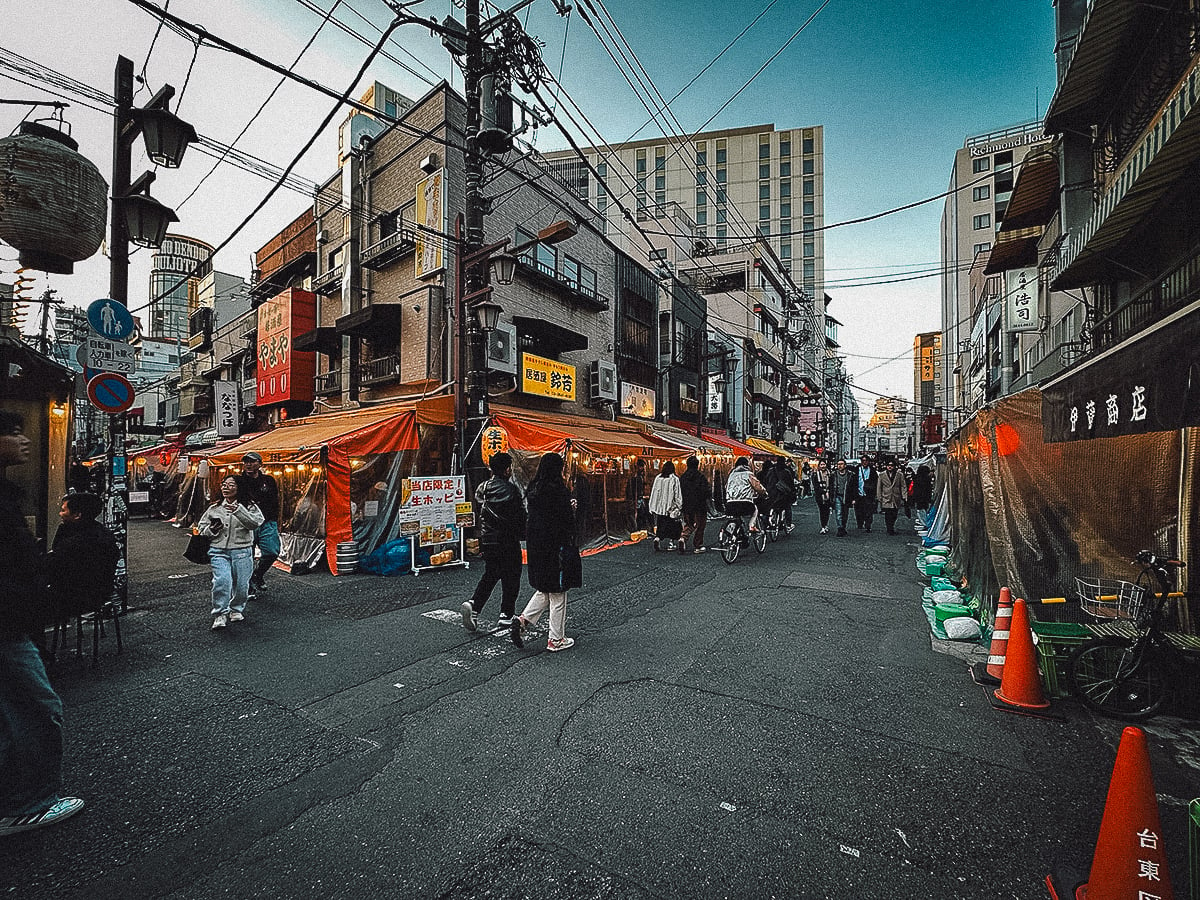
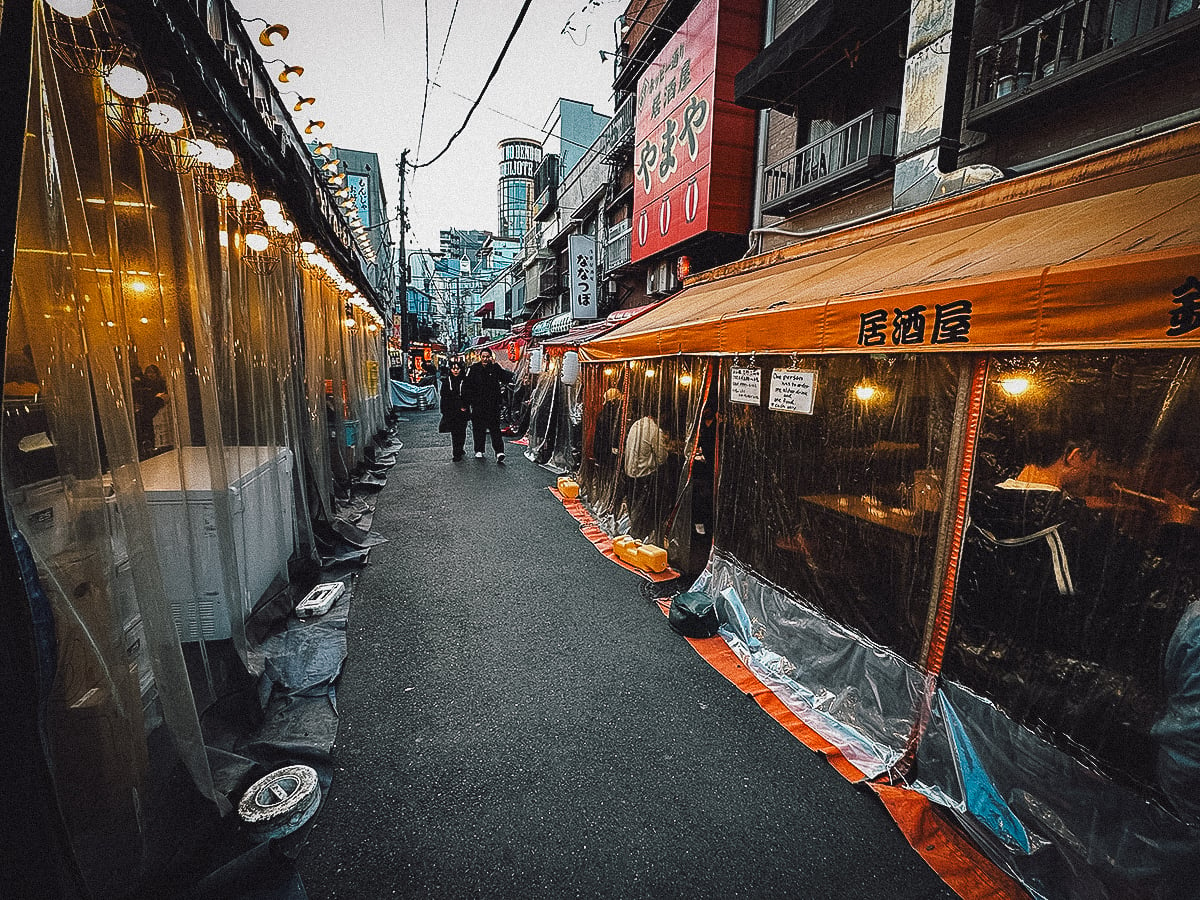
The real draw of Hoppy Street, however, is the atmosphere. Around three dozen casual restaurants line the street, many with plastic-covered outdoor seating that spills onto the pavement. The setup has a vaguely Korean pojangmacha feel, making it one of the more distinctive places in Tokyo to eat and drink outdoors.
Asakusa itself can be extremely touristy, but Hoppy Street has a surprisingly local feel. When I visited in the afternoon, many of the tables were occupied by Japanese customers enjoying lunch and drinks.
For a relaxed afternoon of eating, drinking, and people-watching, this is easily one of my favorite yokochos in Tokyo.
7. Bourbon Road
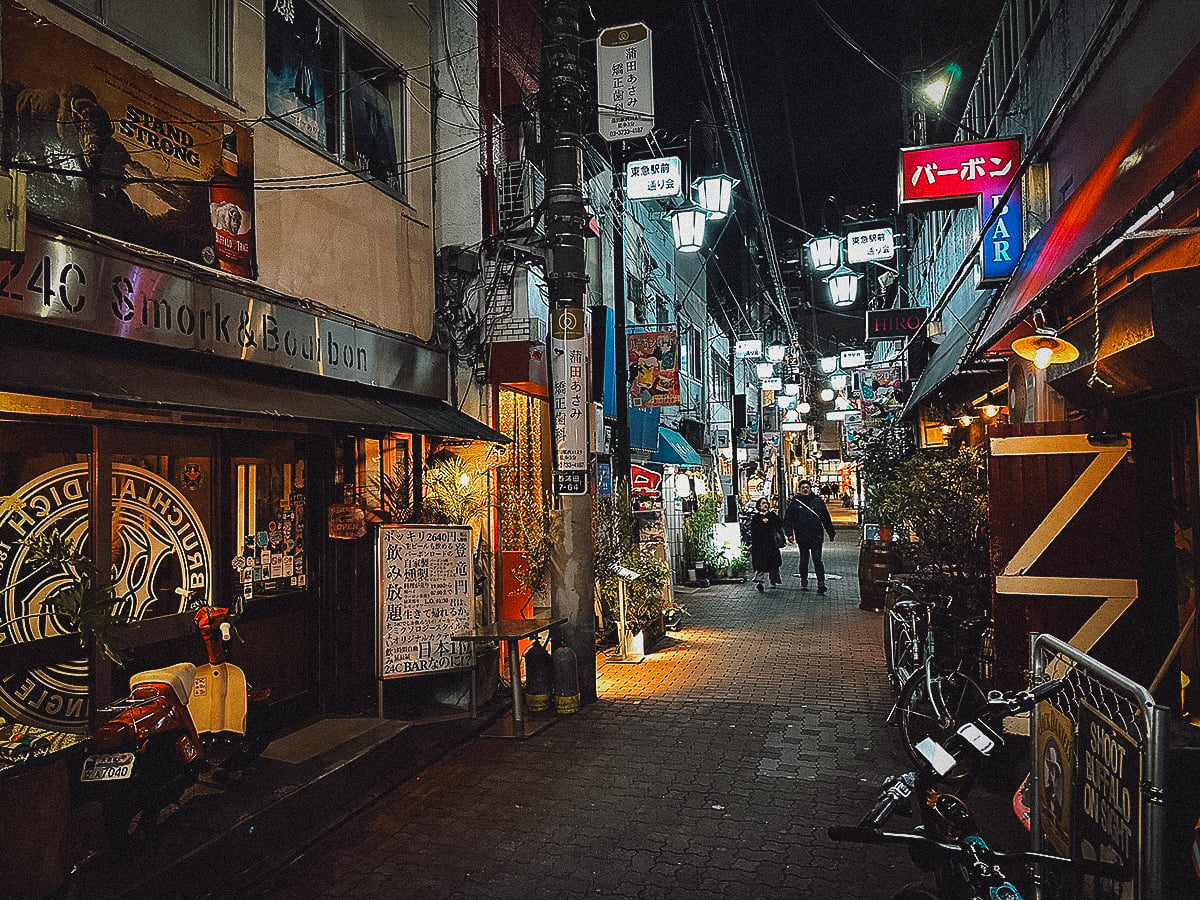
Way down in southern Tokyo, not far from Haneda Airport, you’ll find Bourbon Road, a yokocho that feels a world away from the tourist centers of Shinjuku and Shibuya.
The name sounds more American than Japanese, but Bourbon Road is very much a product of postwar Tokyo. The precise origin of the name is unclear, though it’s commonly thought to have something to do with the popularity of American whiskey during the postwar occupation.
Today, around sixty bars and izakayas occupy the area, including a number of establishments with Western-inspired themes. The result is a lively neighborhood drinking scene that feels considerably more local than the famous yokochos in central Tokyo.
There’s another good reason to visit Kamata if you’re a food lover – the neighborhood is widely regarded as the birthplace of hanetsuki gyoza, or “winged gyoza”. These dumplings are fried with a thin layer of batter that crisps into a delicate skirt around the edges.
So if you’re staying near Haneda or simply want to explore a less touristy side of Tokyo, Bourbon Road makes for an excellent evening food crawl.
8. Willow Alley
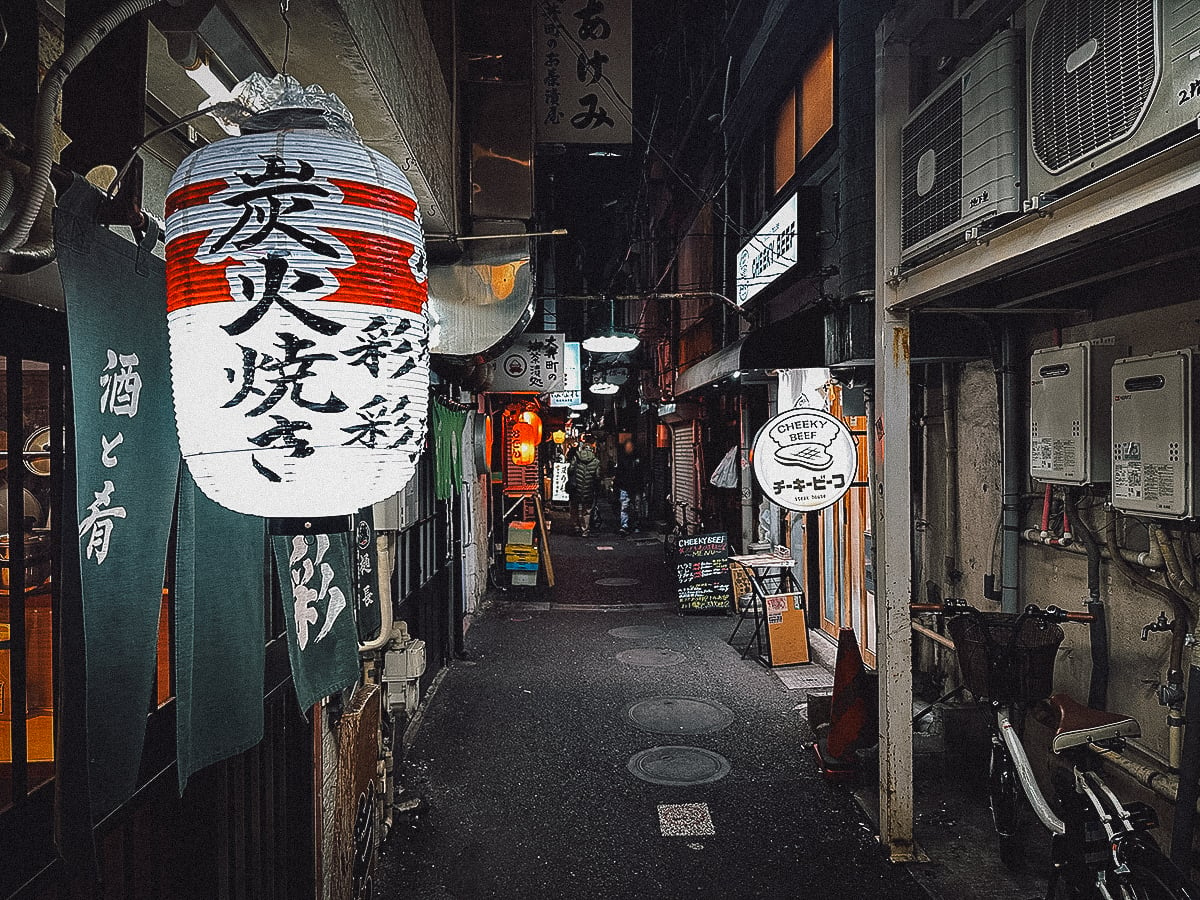
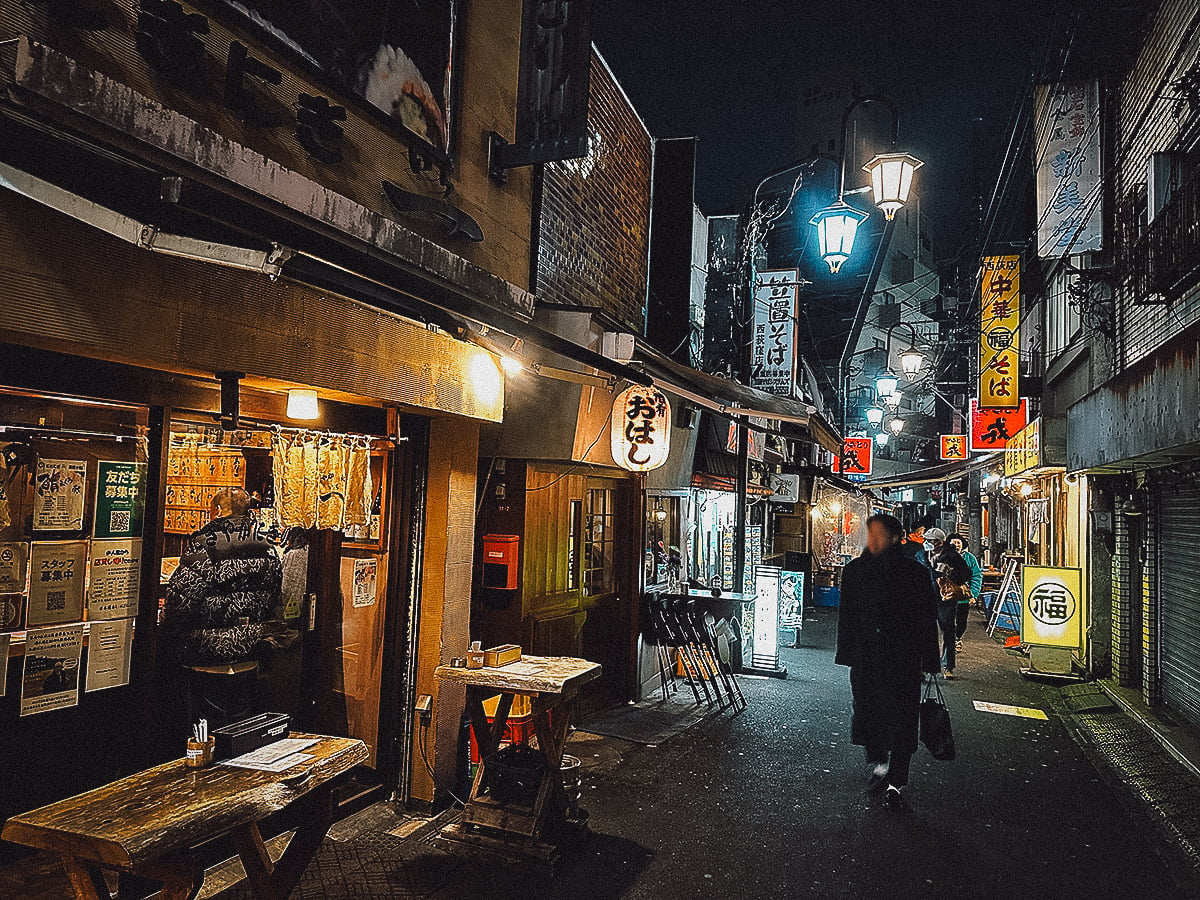
If the big-name yokochos feel too crowded, make your way west to Willow Alley in Nishi-Ogikubo.
Known locally as Yanagi Koji, this tiny yokocho sits just outside Nishi-Ogikubo Station and contains only around fifteen establishments. It’s much smaller than Golden Gai or Oimachi Yokocho, but that’s precisely what makes it appealing.
Willow Alley dates back to the 1940s and was built on the site of a postwar black market. Despite sharing some of the same history as Tokyo’s more famous yokochos, it receives far fewer international visitors because of its location outside the city center. The result is a compact neighborhood drinking spot where the emphasis is less on sightseeing and more on simply having a meal or a few drinks.
I once stayed in Nishi-Ogikubo for several weeks, and Willow Alley became part of my nightly routine. If you’re staying in the area, it’s an easy place to visit regularly. If you aren’t, it’s a good excuse to explore one of Tokyo’s lesser-known neighborhoods.
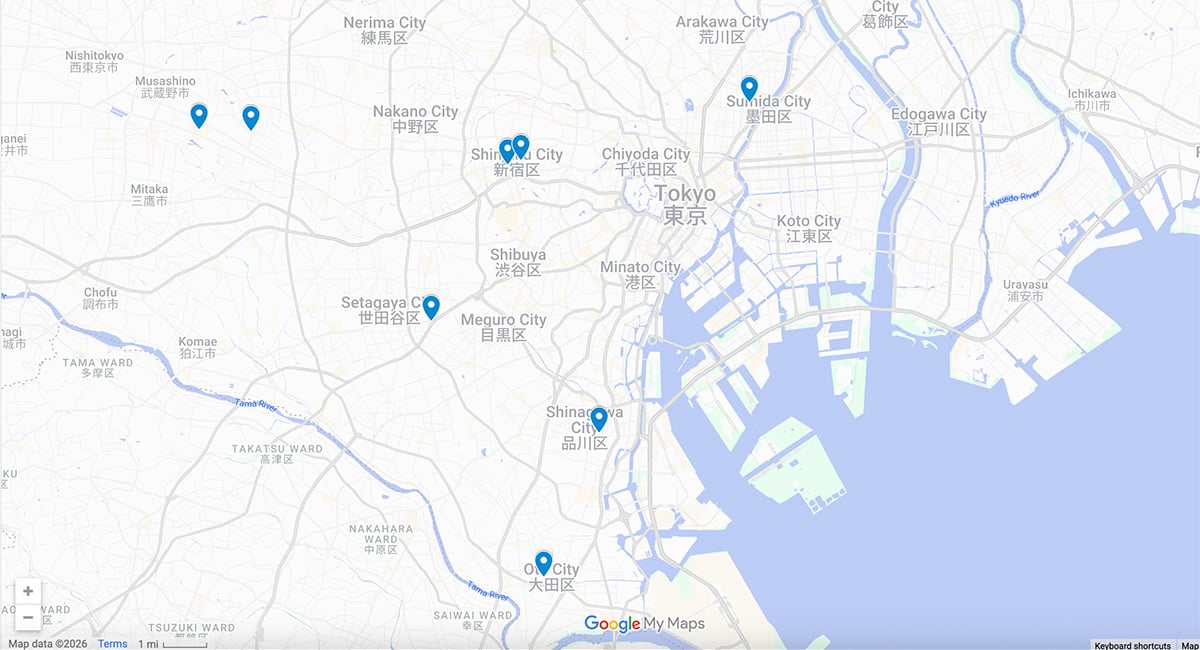
TOKYO YOKOCHOS LOCATION MAP
To help you navigate, I’ve pinned the yokochos recommended in this guide on this map. Click on the link to open the map in a new window.
FINAL THOUGHTS ON TOKYO’S YOKOCHOS
There’s no shortage of amazing restaurants in Tokyo, but some of the most enjoyable meals can happen in places that barely look like restaurants at all.
That’s the magic of the yokocho. You squeeze into a tiny counter seat, order a few skewers and a cold beer, and find yourself eating shoulder-to-shoulder with strangers in an alley that may have been serving Tokyo diners for decades.
The eight yokochos in this guide offer very different experiences. Omoide Yokocho is the classic introduction. Golden Gai is best for bar-hopping. Hoppy Street is ideal for casual daytime drinking and eating, while places like Sankaku Chitai, Oimachi Yokocho, Bourbon Road, and Willow Alley offer a more local side of Tokyo.
And perhaps the best thing about a yokocho is that you don’t necessarily need a plan. Pick an alley, follow your nose, and see which tiny restaurant catches your eye. As we’ve learned time and time again, sometimes, the most memorable meals in Tokyo are the ones you never planned to have.
Disclosure
This Tokyo yokocho guide contains affiliate links, meaning we’ll earn a small commission if you make a booking or reservation at no extra cost to you. We really appreciate your support as it helps us keep this free website going. Arigato gozaimasu!